
This year’s production is a comedic, time-travelling odyssey to past performances in the theatre company’s 45-year history.
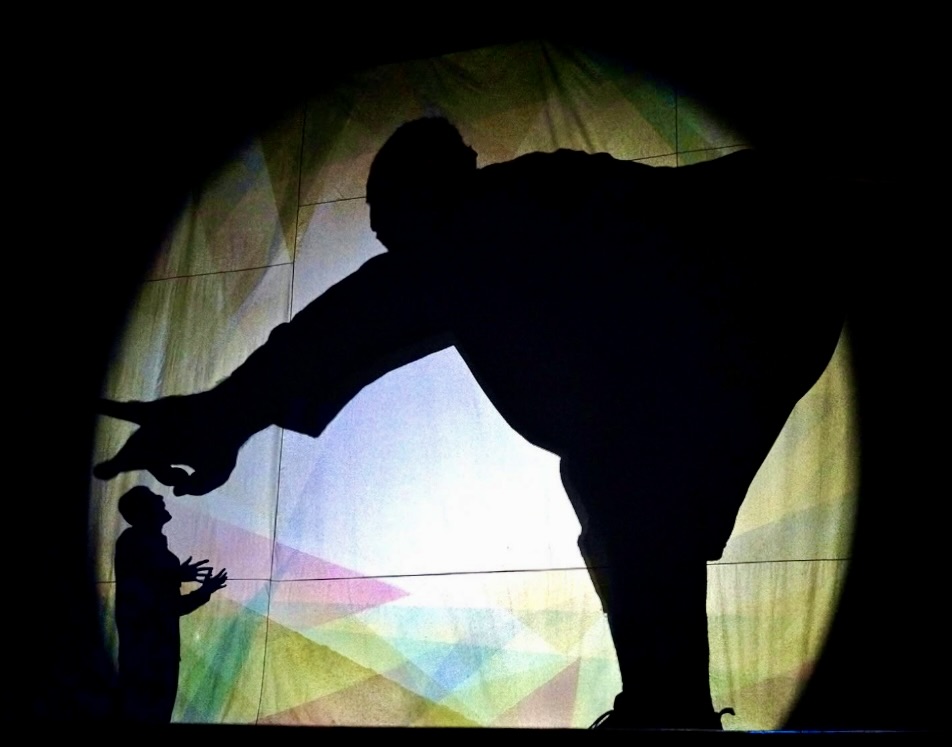
Photo via SNAFU.
2026 marks the 45th year that William Head on Stage (WHoS) — the only theatre company run by incarcerated artists in North America. The company has been operating at the William Head Institution in Metchosin. To celebrate its anniversary, their latest show, 45 Years in Orbit, takes a retroactive look at the production history through comedy.
45 Years in Orbit follows Josh, an alien from the planet Kalgon, which has never had to punish someone. Josh decides to break a ceremonial orb to test the virtues his society claims to uphold, and the high council decides to send him, and a reluctant sidekick, to find a planet with experience in punishment — Earth. Once they decide on a prison to visit, thanks to some (real) Yelp reviews, they decide on William Head, and travel through time to learn what it means to properly punish someone.
Unlike last year’s production, Baile de la Familia (Dance of the Family), which had a variety show format framed around the men’s personal stories, 45 Years in Orbit is a scripted play.
“The men wanted a play,” said Kate Rubin, the show’s director and project lead. “We ask[ed] them what they want[ed], and they wanted a play play. They also wanted comedy, and then the question was ‘Could we do something that reflects the 45 years?’”
The show is structured around the two aliens visiting three play rehearsals at William Head. The Birthday Party in 1981, One Who Flew Over the Cuckoo’s Nest in the 2000s, and Our Country’s Good — all plays that deal with some form of incarceration or powerlessness. References to other productions (like Dracula, Macbeth, and Fractured Fables) are included in the time travelling sequences.
“I think people [were] just a little worn out from telling their own stories,” said Rick Waines, the playwright behind this year’s script. “We made every effort and I think were successful in telling stories that were beautiful and uplifting, but there’s no way you can be telling the personal stories about family and guys that are incarcerated, and not bump into some challenging stuff, and that is challenging for everyone,” he said.
As one performer said during the opening night Q&A, playing a comedy was a chance to ‘‘bring out his inner diva.”
But before the audience is whisked away to Kalgon, the show begins very metatextually, with the performers explaining that they’re in play, and they need to figure out who is playing who.
While this meta setup does lead to some good laughs (the lighting technician commenting on a pyramid of books collapsing, that not even he can make that look good) and set ups (Oscar Wilde and Harold Pinter speaking on their own imprisonment), it does slow down the initial action for a time, until the audience is properly settled into the logic of the play. From there, things pick up once the plot starts in earnest, and the aliens provide a lot of comedy as they struggle to understand human culture and are baffled by plays in general.
The show also features a very smart allusion to Samuel Beckett’s Waiting for Godot — a tragicomedy about two men waiting for someone named Godot, who never shows up across the play’s two acts. When it was first published 1952, many did not understand it, though the men of the Lüttringhausen Prison in Germany and San Quentin State Prison in California — who both put on productions of the play in 1953 and 1957, respectively — understood the feeling of waiting for salvation that may never come.
Sitting on stage, watching the action and providing Statler-and Waldorf-style jabs at the performance, are Mudge and Mortimer. But as the play progresses, they reflect on why they’re watching in the first place, and the nature of time itself before quietly transforming into Waiting for Godot’s Estragon and Vladimir respectively, and end the play with the final lines from Waiting for Godot, staring at the projected shadow of a tree that has been on stage the entire time.
Whenever I’m asked to describe the appeal, the draw, of a WHoS production, it’s that there is something specific to WHoS, a kind of earnestness and a perspective I usually can’t find anywhere else. 45 Years in Orbit is comedy poking fun at theatre, but also an exploration of its appeal and impact. It’s fun and earnest, and I wouldn’t miss it for the world.
45 Years in Orbit is playing at the William Head Institute on Fridays and Saturdays until Oct. 24. Tickets can be purchased at the WHoS website.