
New federal funding enabling 1 000 new climate testimonies, fostering new partnerships and possibilities for trauma-informed storytelling.
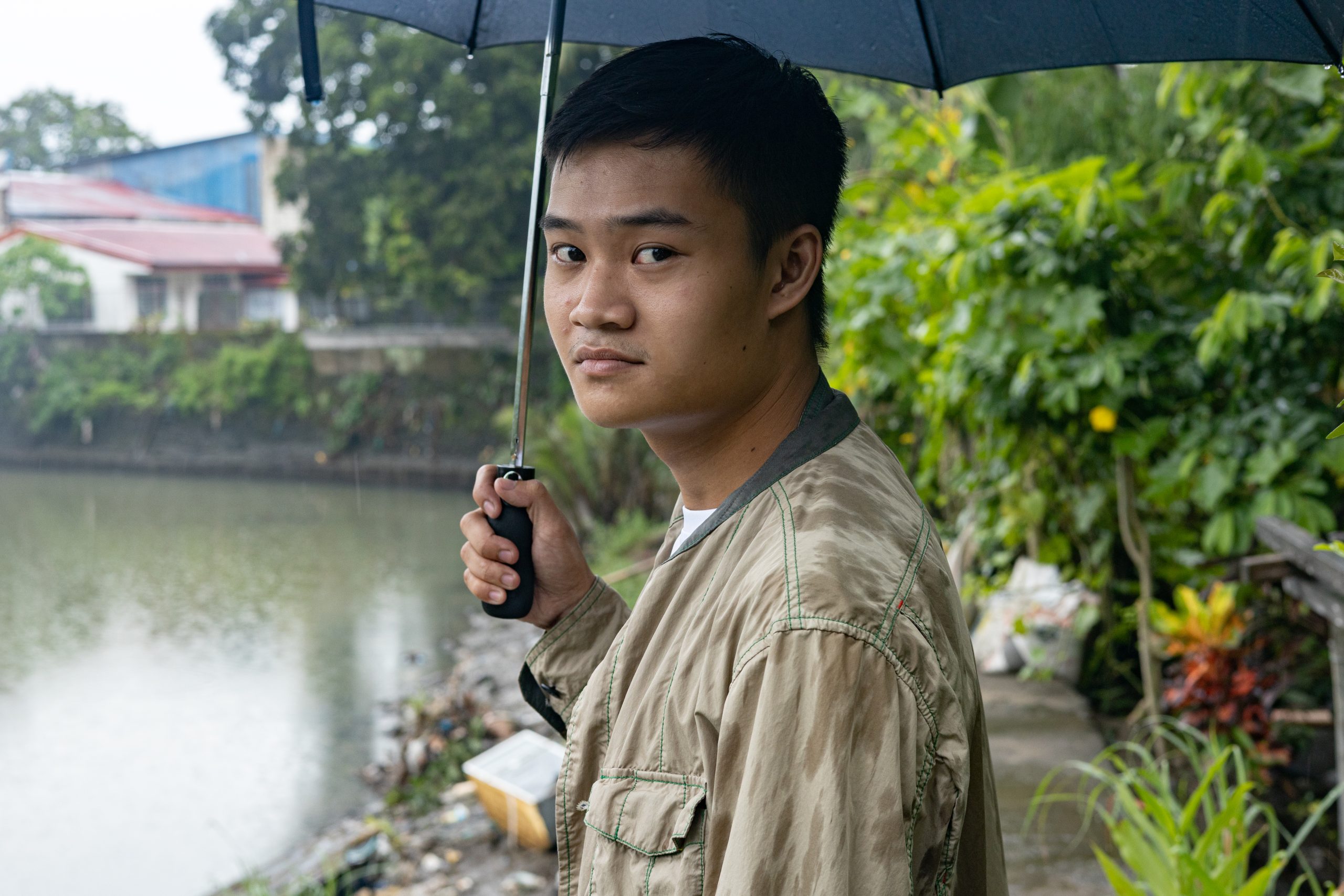
Photo courtesy of Sean Holman.
The Climate Disaster Project, co-founded and directed by UVic journalism professor Sean Holman, has received a $2.5 million grant from the Social Science and Humanities Research Council (SSHRC) Partnership Fund. The funding, provided for six years, will support the documentation of climate change through human-rights focused journalism in a major expansion of the initiative, known as ‘The Climate Disaster Project: From Catastrophe to Community.’
This expansion of the Climate Disaster Project (CDP) involves institutional partners across Canada and the world, including Simon Fraser University, the University of Denver, Colorado and the University of Stirling, UK.
The CDP — founded in 2021 — is an international teaching newsroom based at UVic, and offers a fresh approach to climate journalism. It moves away from impersonal statistics and expert commentary, focusing instead on lived experiences of everyday individuals affected by climate change.
The project has already trained hundreds of young journalists using trauma-informed techniques. These journalists co-create climate testimonies using survivors’ own words. To date, over 320 testimonies have been created with people who’ve lived through extreme climate-related events.
With the new funding, Holman and the project co-directors plan to train 500 additional journalists to document more than 1 000 new survivor testimonies from around the world. The project now includes 27 institutional partnerships, whose collective donations will help bring the project to regions such as Brazil, the UK, and Malawi. Despite their differences, the locations are selected because of what each partner shares — a commitment to reaching their communities’ needs.
“All of the partners in ‘From Catastrophe to Community’ came together because of the ethos of the project, because it was about sharing stories in a good way — because it was about refocusing climate change from being just an environmental issue, to also a humanitarian issue,” said Holman in an interview with the Martlet.
Holman’s shift in perspective was sparked in 2017, when they were living in Calgary and teaching at Mount Royal University. During a record-breaking forest fire season, thick smoke flooded the city, and public health warnings were issued for over 100 days. At the time, Holman wondered why local media was failing to report the wildfires’ connection to global warming.
This moment led Holman to reflect on the responsibility news media has toward climate-impacted communities.
“Climate change is going to be the defining experience of this century. Our lives will be defined by the perennial disasters that each season brings,” Holman said. “If the news media isn’t effectively responding to those disasters, and the needs of disaster communities, [then] the world is going to become even more brutal and inequitable than it already is.”
Climate disasters are often imagined as distant events. Holman challenges this view. Though they recognize that marginalized communities typically suffer “first and worst,” the effects will be felt by everyone in society, regardless of identity or status.
“It’s a global experience we’re all living through unequally, and we want to capture that inequality, but we also want to capture the commonality in that experience too,” Holman said.
Though the subject matter is difficult, the project draws a clear line between trauma-informed journalism and ‘disaster porn’ — gratuitous news imagery of devastation without proper context. Testimonies are created carefully, with full consent of the survivors. The result is storytelling that deepens our understanding of experiences, recording potential solutions, offering resilience and hope.
The project has already received awards and international recognition. CDP stories have appeared in the Guardian during the 2024 UN COP29 summit, and the work has led to collaborations with Vancouver’s Neworld Theatre, the Royal BC Museum, UCLA Sci Arts Gallery, and the Kamloops Art Gallery.
This new funding will allow the team to further expand these storytelling methods — publishing an anthology volume and co-creating four documentary films with APTN News. They will also launch a traveling exhibition in partnership with the Canadian Museum of Human Rights, the Museum of Vancouver, and the Reach Gallery Museum.
Despite diversifying their methods, Holman told the Martlet that they think “the story remains the same. We’re … interested in seeing how the impact of that story changes, depending upon the mode or medium that it’s presented in. With a play, it’s an embodied experience. With a museum, it’s an immersive experience. With a documentary, it’s a visual experience.”
The CDP’s work is just beginning. Over six years, the team and their partners will continue refining their work. Through annual feedback, hearing from survivors and trainees, the project will continue to develop and be re-iterated. Holman hopes that the process they are building may eventually apply to other difficult knowledge, including humanitarian crises, genocide, and torture.
“We are at the cusp of a new age of disaster, and we need new forms of journalism. We need new forms of storytelling that can help us survive.” Holman told the Martlet. “My hope is that after six years, that won’t be the end of this project, but instead a continuation, where we continue doing work globally, to help right the wrongs of climate change, through the power of story.”