
UVic recently revised their non-academic misconduct policy, removing reference to possession and use of illegal drugs and included a ‘Good Samaritan’ approach to substance use emergencies
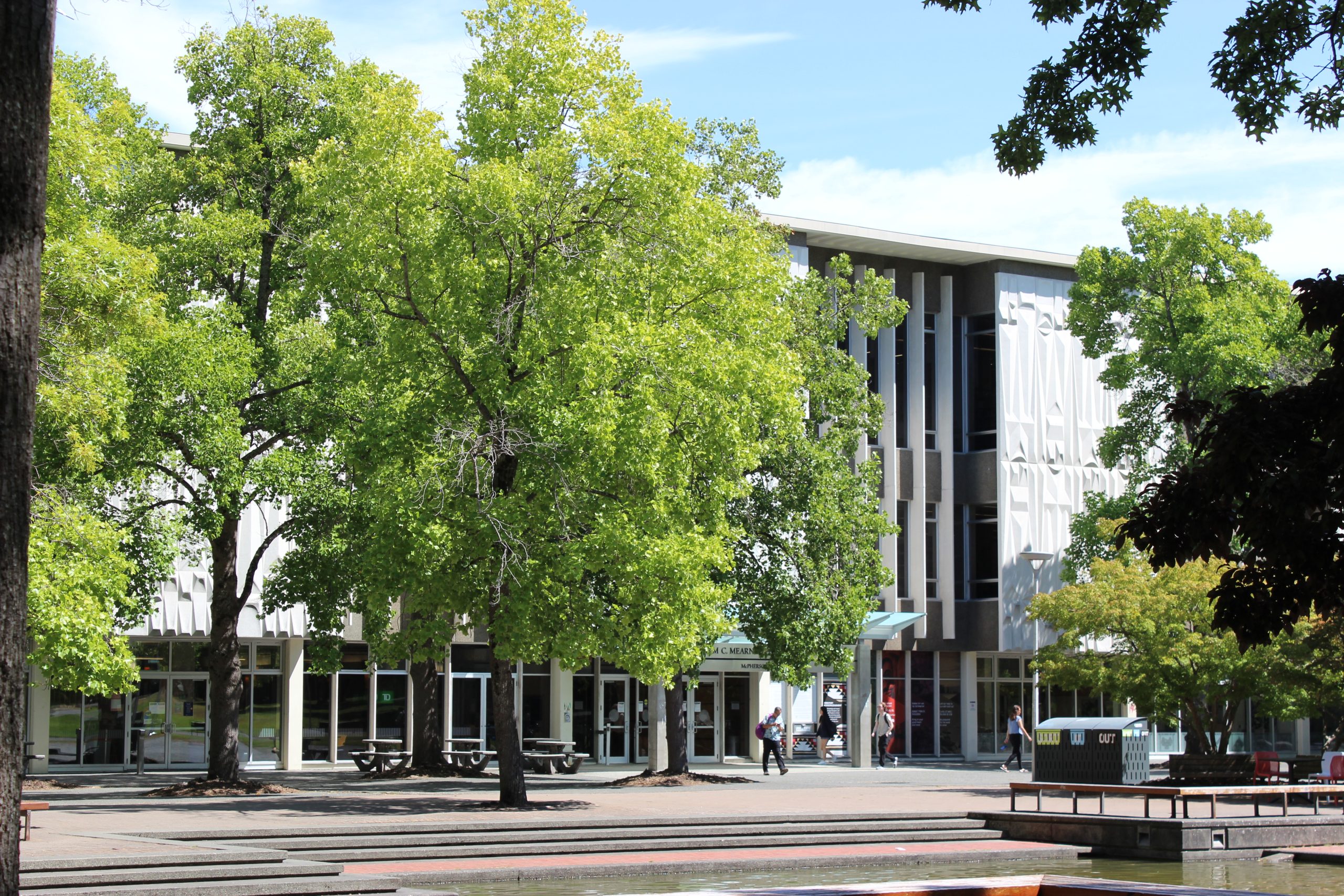
Photo by Ethan Barkley.
Recent changes to UVic’s non-academic misconduct policy have resulted in the removal of the use or possession of illicit drugs from the definition of non-academic misconduct. The policy has also incorporated “good samaritan” principles, modelled after the federal Good Samaritan Drug Overdose Act.
Non-academic misconduct refers to a wide range of conduct that violates university policies, including theft, damage and destruction of property, unlawful entry, fraud or impersonation, and many others — including those which may result in criminal charges, conviction, or a court judgment.
Investigation and resolution of non-academic misconduct allegations falls under the jurisdiction of UVic’s Office of Student Life (OSL).
Until recently, UVic’s policy included use and possession of illegal drugs as an example of non-academic misconduct. “It’s a policy that’s common across all B.C. universities that substance use is prohibited on campus,” said Devin Galway, President of UBC Decrim (Law Students for Decriminalization and Harm Reduction).
“We really saw this structure as out of line with the federal legislation.”
This policy change came into effect on July 1 of this year, and a comprehensive review of the policy will continue into the fall semester. UVic aims to submit the final policy revisions for approval in spring 2026.
Prior to UVic’s revision of the policy, both UVic Law Students for Harm Reduction and Decriminalization (UVic H.A.R.D. Law) and UBC Decrim recommended the adoption of a “Good Samaritan Drug Overdose Policy” based on the federal legislation.
The federal Good Samaritan Drug Overdose Act protects individuals who seek help on the scene of an overdose — whether they stay or leave the site — as well as those who are on the scene when help arrives from legal consequences, however they could still be subject to penalties under the university’s own policies.
According to Galway, UVic is the first university in B.C. to implement a policy like this.
“The fact that UVic is taking this on and is going to be implementing this policy change … is really timely and commendable,” said Galway.
The policy recommendation comes after the May conclusion of a Coroner’s Inquest into the death of Sidney McIntyre-Starko, a UVic student who died from overdose in January 2024.
The incorporation of Good Samaritan principles in UVic’s misconduct policy was not one of the jury recommendations that came out of the Coroner’s Inquest, though the jury did recommend UVic introduce safe drug testing locations, with the stipulation that there be no consequences for requesting testing.
A well-advertised amnesty policy for those in need of help, and those who assist or call for help, was recommended by former Abbotsford police chief and lawyer Bob Rich in his independent report on Ms. McIntyre-Starko’s death, which was released in April.
Prior to the implementation of the Act, the use or possession of illicit drugs was considered a violation of UVic’s non-academic misconduct policy.
But punishing students for use or possession of illicit drugs was not a common practice at UVic, according to both UVic’s submission for the policy change and Galway. However, many students were not aware of that, said Elyse Robinson, co-coordinator of UVic H.A.R.D. Law.
In the policy revision submitted to UVic’s Board of Governors for June 24, 2025, UVic said “it has not been the practice of the university to investigate the “use or possession of illicit drugs” on campus under this policy,” but instead to look at other conduct resulting from drug use, such as “fighting, vandalism, and other concerning behaviour.”
Advocates like Robinson and Galway say what policies are in place matter, whether they are enforced or not. “It’s not about what you do, it’s about what’s on the books,” said Galway. “It’s about what policies are in place and how people understand those policies.”
With the updated policy, students are protected in the event of a substance use emergency and should not hesitate to call for help. UVic’s new policy still specifies that “manufacturing, sale, or distribution for monetary gain of illegal drugs or prescription drugs without a valid prescription will still be considered misconduct.”
The addition of “monetary gain” is not one that is included in the federal legislation, but was necessary to add for UVic to get on board, said Galway.
While this specific change has been implemented, a comprehensive review of the non-academic misconduct policy is ongoing.
“We would really like to see the university be proactive in communicating this policy change,” said Galway. “If it’s not communicated, then the policy might as well not exist.” In Galway’s view, UVic is responsible for making the policy update clear and transparent for students to understand.
Similarly, Robinson said that it’s important for students to not only know the policy, but understand what it means, and to know that they are not going to get in trouble for asking for help in relation to drug use or possession, or in cases of overdose.
In an emailed statement to the Martlet, a UVic spokesperson said that the policy change will be communicated to students during orientation at the beginning of the fall semester this year.
The spokesperson also said that Community Leaders (CLs) will likely be informed of the updated policy during their training in August, and that the university will also have direct email outreach, social media, and public education across campus about the change.
“We just want to prioritize saving lives,” said Galway.
Beyond the revisions to the non-academic misconduct policy, Dr. Jennifer White, UVic’s Special Advisor on Overdose Response and Prevention, is preparing an overdose prevention and response plan for UVic that can be used in the long-term.
The response plan is expected to be ready by the end of August, ahead of the fall semester, and will include the recommendations from the Coroner’s Inquest into Ms. McIntyre-Starko’s death, Rich’s report, and other sources.