

The petition follows a letter submitted to university leaders in April, outlining similar concerns
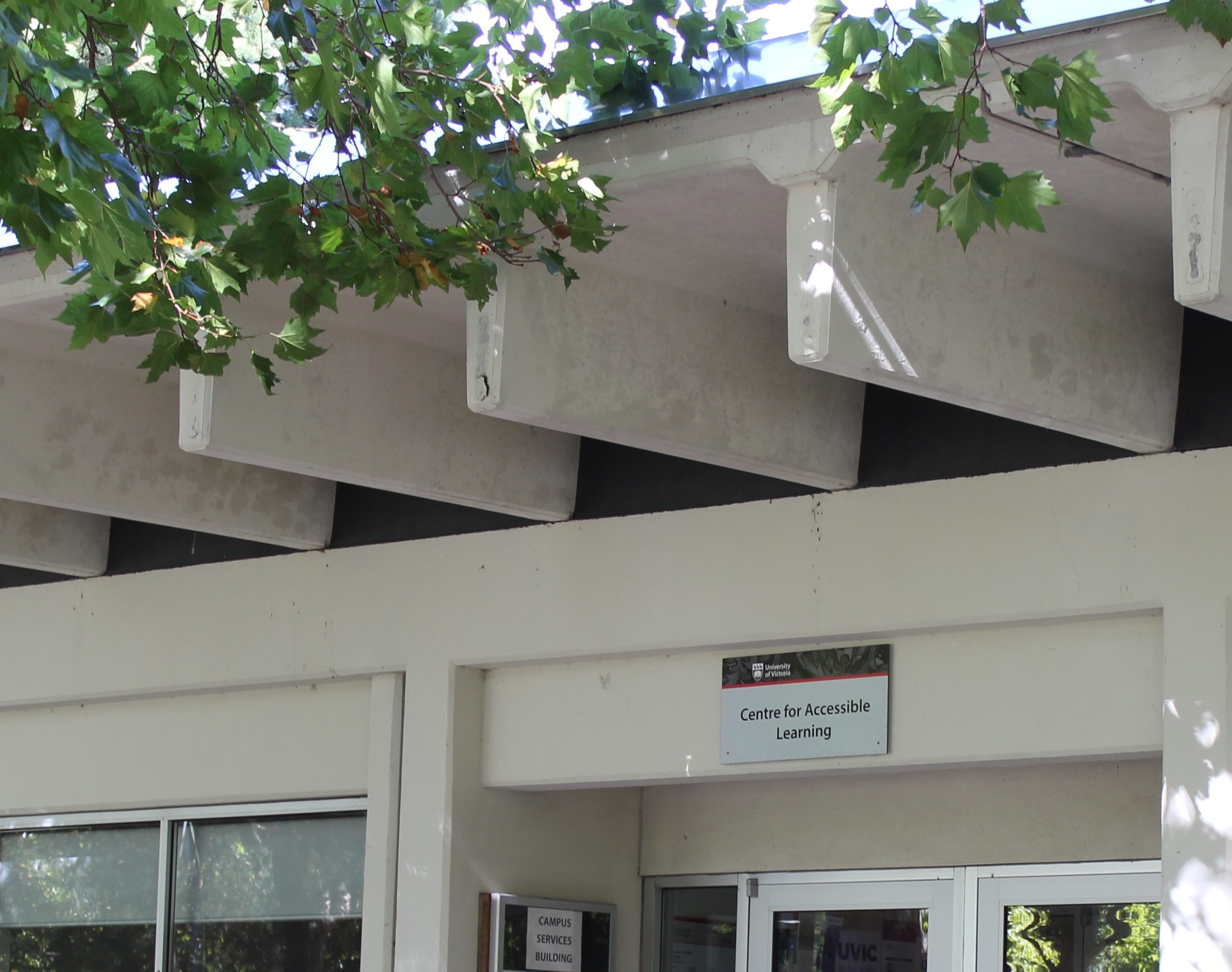
Photo by Ethan Barkley.
On Sept. 8, 2025, a coalition of student and employee organizations launched a petition requesting that university leaders address “serious problems” with UVic’s student accommodation systems.
The petition is undersigned by the University of Victoria Faculty Association, the Professional Employees Association (PEA), Canadian Union of Public Employees (CUPE) 951, CUPE 917, CUPE 4163, UVic Students Society (UVSS), UVic Graduate Student Society (GSS), Society for Students with a Disability (SSD), UVic Pride Collective, Native Students Union (NSU), UVic Campus Community Garden, and Gender Empowerment Centre (GEM).
The petition follows a letter signed by these organisations to UVic administration in April 2025, which raised concerns about a number of issues relating to the way student accommodations are handled at UVic. According to a press release, the coalition says they have seen “no positive action” from the university since.
The April letter mentioned specific concerns — such as a 2023 decision to divide students requiring accommodations into two groups — among other concerns relating to funding, increased responsibilities for instructors who lack the necessary training to provide accommodations, personnel shortages, and exam environments that were not sufficiently “distraction-reduced.”
Following this decision, one group would have exam accommodations handled by the Office of the Registrar and Enrolment Management (OREM) while the other would continue to have exam accommodations provided through the Centre for Accessible Learning (CAL).
In a statement to the Martlet, a UVic spokesperson said that around 3 800 students –– roughly 20 per cent of the student population at UVic –– have an accommodation plan with CAL.
“This reflects a significant increase over time and is expected to grow as more students with disabilities transition successfully from the K-12 system to post-secondary education,” the spokesperson said.
In a statement to the Martlet in April, Dr. Elizabeth Adjin-Tettey, UVic’s Associate Vice-President Academic Programs, said that “CAL has experienced an exponential growth in the number of accommodation requests in recent years,” stating that prior to the COVID-19 pandemic, only about 10 per cent of the student body registered with CAL each year.
“To help support this growth,” Adjin-Tettey stated, “funding for CAL increased by 28 per cent in 2024–2025, and has increased by 150 per cent over the past 10 years.” However, according to the April letter, this statement doesn’t mention the 200 per cent increase to students registering with CAL during the same period
The original letter submitted by the coalition ended with six calls to action related to student accommodations, including a review of testing environments and increased availability of training and support for teaching staff. In an emailed statement, Hannah Brown, co-chairperson of the SSD, said the coalition “have not seen any [concrete] actions” regarding these six requests.
Brown told the Martlet that the coalition received a response to their letter on May 12, 2025, which they said, “did not adequately deal with the concerns of the group.”
The letter, signed by UVic’s Vice-President Academic and Provost, Dr. Elizabeth Croft, said that UVic and other institutions have historically “relied on support models that focused on
accommodation over accessibility.”
“While these approaches provided essential support in the past,” the letter continues, “they are no longer sufficient to meet the diverse and growing needs of our student population.”
The university’s letter goes on to mention a number of planned and already under-way initiatives, including the convening of a working group on reviewing and implementing central supports, guidelines for instructors regarding distraction-reduced environments, and enhancements to supports for graduate students.
The letter concludes with UVic stating that the “accommodated exam supports offered by OREM will remain in place” for 2025–2026 academic year, and the university will “continue to monitor how supports are used.”
A UVic spokesperson explained in an emailed statement that “many Canadian universities are moving away from traditional accommodation models” and that “the focus is shifting towards access-centred teaching and assessment practices, which adopt proactive strategies to reduce reliance on individual accommodations.”
However, critics of the university’s approach, like Brown, say that this leads to a decentralized and unpredictable system for students, with increased responsibility put on the shoulders of professors and teaching assistants. “There is no guarantee that professors will treat accommodations in the same way,” Brown told Saanich News.
Brown said that the coalition has received “no further dialogue” from the university since receiving the letter.
The petition, which at the time of publication has reached 484 signatures, similarly ends with four calls to action for the university, including prioritizing more resources and support to meet students’ accessibility needs, making a “binding commitment” to a long-term system of centralized coordination for accommodated exams, as well as convening an “accessibility and accommodations working group” no later than Jan. 1, 2026, to run a survey and report its results by March 1, 2026.
Editor’s note: When sent to print, a version of this article states that the petition reached 413 signatures at the time of publication. The online version has been adjusted to feature the most up-to-date numbers at the time of publication.