

While the demons may be fictional, the film touches on real-life evils in the billion dollar industry
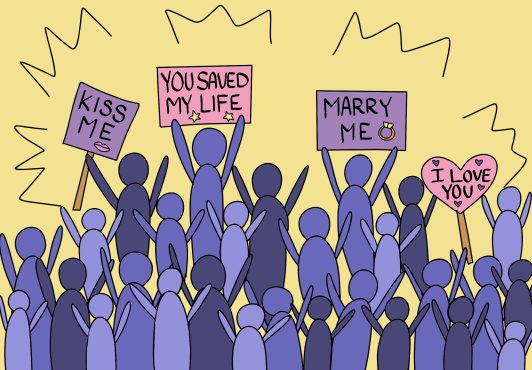
Illustration by Sona Eidnani.
After weeks of endless chatter and persuasion, I sat down to watch the recent hit Netflix film, KPop Demon Hunters (KPDH). I had no prior knowledge of K-Pop, but the movie’s 12-song soundtrack had been on repeat at my work, and the songs that once annoyed me became so catchy that I added a few to my playlist.
I was hesitant at first, but once I started watching, I couldn’t look away for the entire hour and a half.
This summer, KPDH, directed by Maggie Kang and Chris Appelhans, became Netflix’s most-watched movie, reaching more than 33 million views in two weeks. It follows the (fictional), world-renowned K-Pop trio HUNTR/X, whose secret side hustle is demon hunting.
The all-female trio, Rumi, Zoey, and Mira, split their time between performing for fans and protecting their souls from the persistent threat of the supernatural. When the trio encounters their biggest nemesis, the Saja Boys — a charming boy band of undercover demons — they must work together to protect their fanbase from their irresistible grasp and re-establish the Honmoon (the world’s protective barrier that ensures demons stay in the demon realm).
The overall message of the film is to accept oneself by confronting the shameful parts of one’s identity, rather than hiding them. The main protagonist, Rumi, embodies this message in her struggle to accept her identity as a half-demon. In the film, demons are symbols of shame and internal human struggle, which are exploited by the demon king Gwi-Ma to gain power over souls.
Exploitation and control are recurring themes in KPDH, and directly reflect the overproduced world of K-Pop and pop culture in the real world through a satirical lens. This cultural commentary is displayed through the intense pressure placed on HUNTR/X throughout the film. These themes parallel the exploitation of K-Pop figures in the real world, and serve as an allegory for the consumerism and idolatry that powerful fandoms foster.
Through the candid portrayal of the main characters, viewers can see how taxing these roles can be. The juxtaposition of perfectly choreographed routines and chaotic demon fighting reflects both the struggle fans do not see, and their inability to humanize their idols.
In 2024, K-Pop star Karina from Aespa posted a handwritten apology on Instagram. Why? She was addressing her relationship with actor Lee Jae-Wook. After her announcement, fans went as far as driving a truck into her management agency. This incident is just a taste of the “false intimacy,” or parasocial relationships, that pervades much of K-Pop fandom.
Parasocial relationships like this are explored in KPDH, where HUNTR/X superfans romantically pairing Rumi and Jinu together. This abnormal behaviour perpetuates the idols’ orchestrated identities and their fear of backlash from their fans.
These incidents in both real life and KPDH expose the industry behind K-Pop groups. When it comes down to it, these idols are a product to consume, and are marketed relentlessly. Popular K-Pop groups like BLACKPINK and BTS are met with a constant demand for more content.
Similarly, with KPDH, the marketing for the film breeds obsessive fans who crave more content. Social media trends have spread like wildfire, with people filming makeup transformations, dance videos, and lip-syncing challenges inspired by the film. One of the most notable is the dance trend to the song “Soda Pop,” written by Kevin Woo, which is sung by the Saja Boys in the film. On TikTok, there are 1.2 million videos using the song “Soda Pop,” most of which feature users dancing to Lee Jung’s choreography, as seen in the film.
When it comes to the marketing of the film, KPDH is influenced by the “Hallyu wave” or Korean wave — the diffusion of Korean culture in the 1990s, when South Korea emerged as a global leader. This includes the increase in popularity of Korean cuisine, culture, makeup, music, cinema, and their impact on Western audiences.
KPDH is an important piece of cultural commentary, shedding light on how demanding the life of a K-Pop star can be. Through exaggerated displays of fan behaviour and internal conflict, viewers are invited to question whether or not their idolization is healthy or toxic.