

UVic’s proposed new housing project is laudable, but does it have to be such an eyesore?
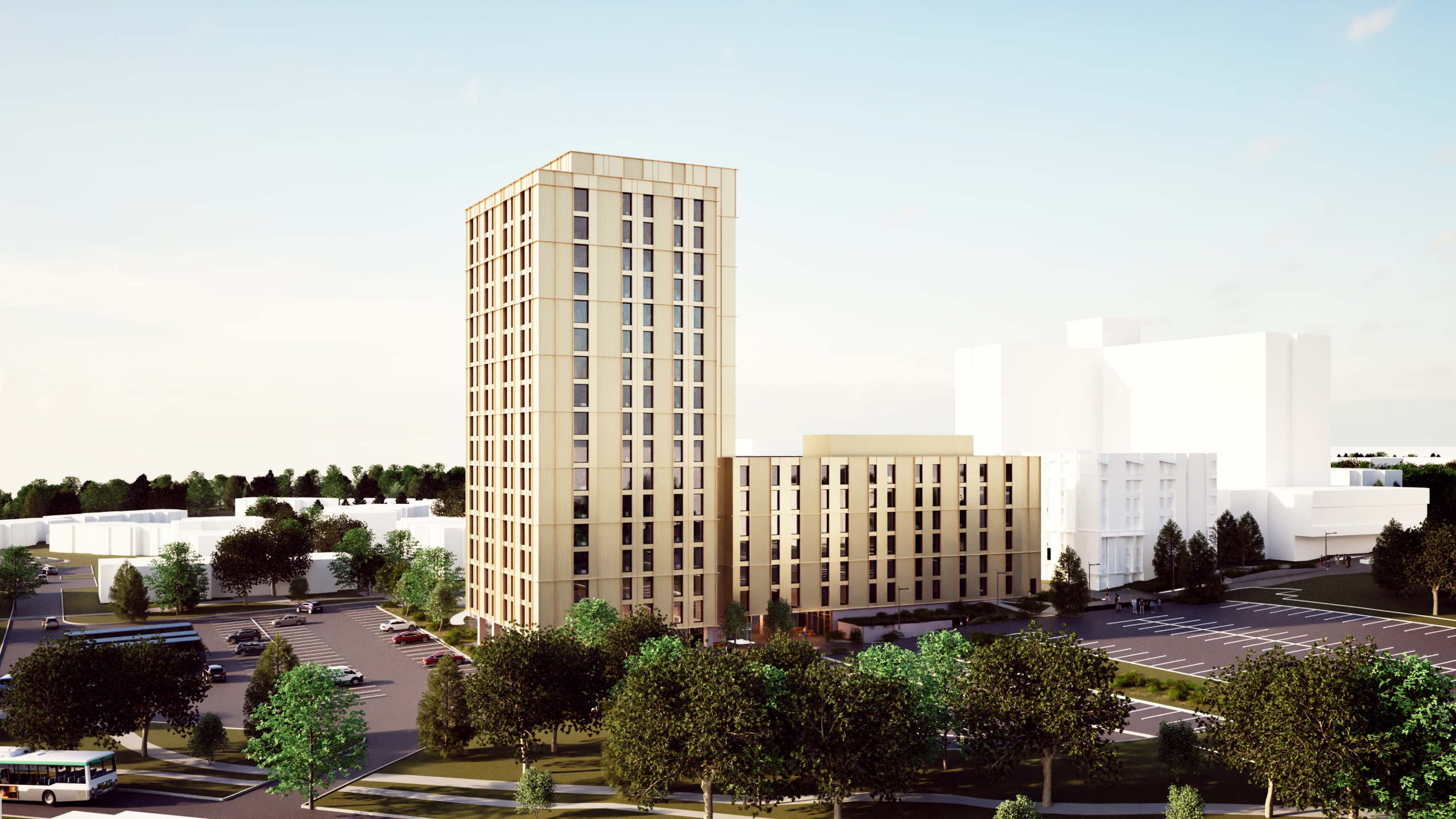
Image courtesy of the University of Victoria.
Earlier this month, UVic confirmed some pre-existing rumours when it announced that a new 510-bed student housing project is set to be built on Parking Lot 5 next to the existing Cheko’nien House and Sngequ House residences. The development will feature a 17-storey tower with four-bedroom units for upper-year students, alongside a seven-storey mid-rise connected to the tower that will provide graduate studios. Once complete in 2029, the project will raise UVic’s on-campus housing capacity to more than 3 500 beds.
These 3 500 beds are much needed, especially when the rental market in Victoria is and has been brutal for many years now, with a 2.6 percent vacancy rate and a half-decent one-bedroom apartment easily running into the $2 000 range. However, like the recently completed Cheko’nien House and Sngequ House, the new housing project’s design follows a similar brutalist architectural style, which has drawn mixed reactions from both students and residents –– two groups who rarely agree.
To UVic, the logic behind these buildings is pretty obvious — build something tall and dense using materials which are affordable, sustainable, and efficient. The university highlights the benefits of the material choices, fully electric systems, LEED Gold standards, and reduced emissions. The problem is, what looks efficient on paper, doesn’t always end up feeling welcoming in person, and what students and residents will see is gray paneling, plenty of concrete, and an architectural aesthetic which screams “prison chic.”
When asked about the new student housing, Saanich resident Megan Wilson said she supported more housing for students, but just couldn’t get past the looks. “I think there’s probably a need for [more student housing], but that picture kind of looks atrocious. That’s how I would really feel on my first instinct,” she said.
For Wilson, the problem lies with the University being content with putting students in something so stark.
Wilson wasn’t the only Saanich resident with concerns. Greg Higgs shared a similar sentiment, describing the building as blocky and out of place with the rest of UVic’s architecture. “It is very big … It’s a square block,” he said. “There’s nothing to it.… It doesn’t really fit in with what you’ve got at UVic.”
Not all reactions were negative, however. Fourth year UVic student Chris Morberg said that he supports any efforts to increase the supply of housing options, especially those built with students in mind. “I don’t mind [the design],” he said. I think UVic should be trying their best
to not make the buildings too high, but other than that it’s fine.… They could make it a little fancier maybe — a little nicer on the outside to look at.”
While nobody seems to be arguing against the existence of this new residence outright, especially when the rental market in Victoria is becoming increasingly dire, many are questioning the choices behind UVic’s architectural decisions in regard to housing.
The commitment to creating sustainable and affordable housing is objectively good in the midst of an ongoing housing crisis, but it shouldn’t come at the cost of creating buildings that are welcoming and warm, in an aesthetic sense. If UVic’s goal is to create a thriving social environment on campus while adding to the available housing supply, it should start with designing buildings that people want to live in.