

Health officials warn that these synthetic opioids are up to eight times stronger than fentanyl, and increasingly appearing in counterfeit pills
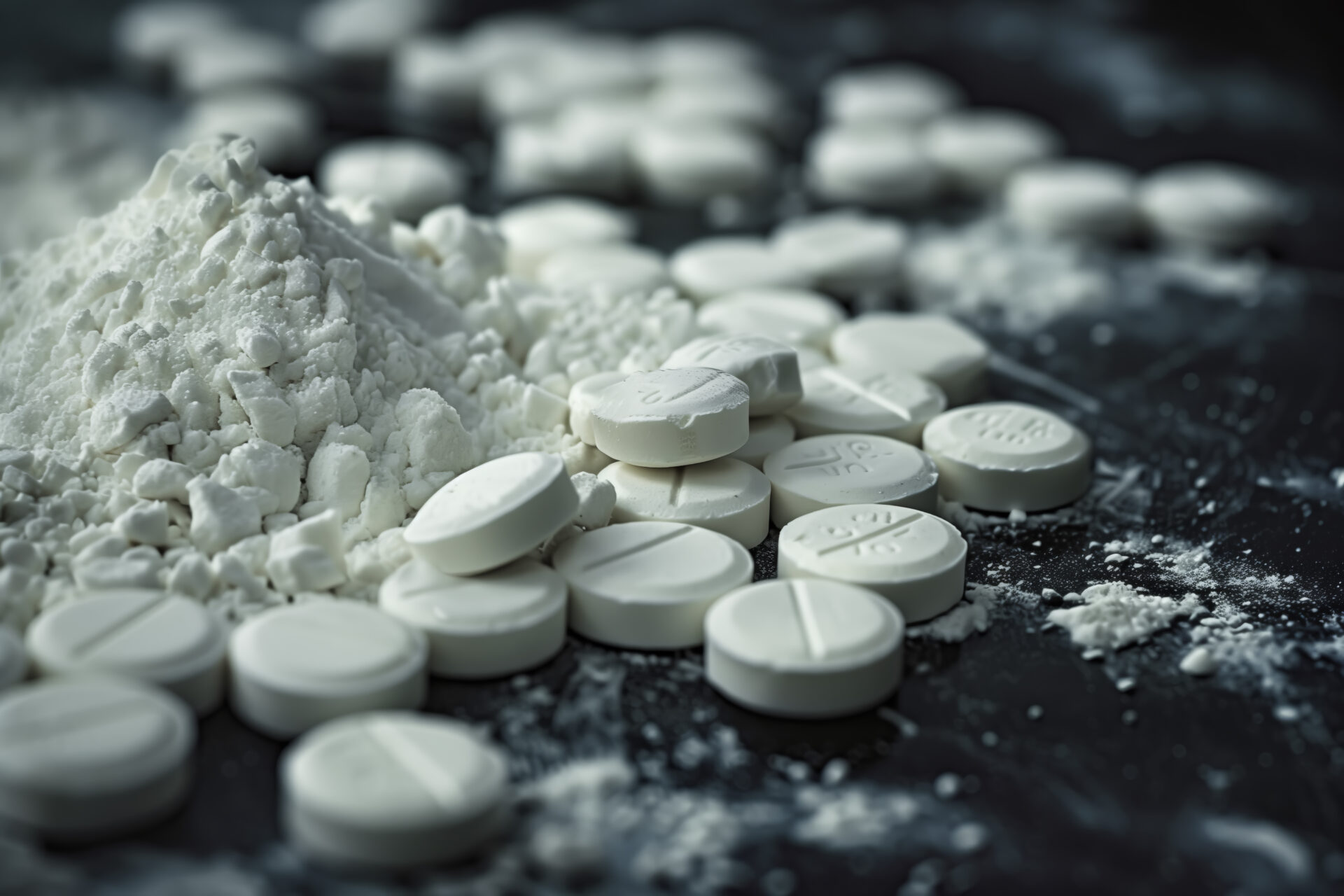
Photo via aegislabs.com.
A powerful synthetic opioid called nitazene has begun appearing in counterfeit prescription pills in Greater Victoria, raising alarms among health officials and harm-reduction experts. Some nitazene compounds are estimated to be five to eight times stronger than fentanyl, though experts say standard overdose interventions should remain effective.
Nitazenes were originally developed in the 1950s as a pain medication, but were never approved for human consumption or clinical use, leaving the drug dangerously under-researched.
Nitazenes were first detected in Canada’s unregulated drug supply in 2019, but local detection has increased substantially over the last six months. Pills sold as oxycodone, percocet, and hydromorphone have tested positive for nitazenes.
Substance Drug Checking, a free and confidential service in Victoria affiliated with UVic, has reported that zero per cent of tested samples contained nitazenes in December 2024, rising to 20 per cent in February and April, with an average of 16 per cent over the last six months.
Dr. Ryan Herriot, Victoria-based specialist in family and addictions medicine and co-founder of Doctors for Safer Drug Policy, explained that nitazenes have distinct chemical structures from other opioids like fentanyl or morphine. Because they’re chemically different, they’re not opioids. However, they target the same receptors in the brain and have the same effects, making them “essentially a type of opioid.”
He shared concerns about these compounds appearing in counterfeit pills that are made to look like pharmaceutical-grade opioids. Government intervention in medical decision-making has limited access to pharmaceutical-grade opioid tablets, Herriot said, which leads people to seek them out elsewhere.
“It’s not surprising that people are going to seek those tablets elsewhere,” he said. Herriot worries someone seeking a relatively low-potency opioid will end up with nitazenes instead. “It would actually worry me less if it was being sold as fentanyl,” he said, explaining that someone seeking fentanyl instead of pharmaceutical-grade opioids will likely have a higher tolerance, and would be expecting a more potent substance.
Substance Drug Checking first detected nitazenes in November 2021. The team uses multiple instruments to test for active ingredients, fillers, and unexpected substances. Because nitazenes often appear in low concentrations, infrared spectrometers and fentanyl test strips may not reliably detect them. Specialized nitazene test strips exist, but they are not as widely available as those used to detect fentanyl. Mass spectrometry, an analytical technique that allows scientists to identify unknown compounds, remains the most reliable method.
Herriot said overdose response protocol would remain the same with nitazenes, emphasizing that the most important thing is to ensure oxygen levels are not dropping. He also shared that naloxone should remain effective, but more doses may be necessary.
He also said that the rise of nitazenes reflects a larger problem with unregulated drugs. “As long as it’s unregulated, there’s going to continue to be volatility in it,” he said.
Herriot said that nearly half of people who regularly access the unregulated drug supply do not have an opioid addiction, and access the market recreationally only a few times a year, while the other half accesses the market due to addiction. He stressed the importance of regulation and expanding safer supply as interventions to make substances on the market safer for both groups.
He cited cannabis regulation as an example of how organized crime profits can be reduced while ensuring quality controls, labels, and monitoring remain in place.
As nitazenes become more prevalent in Greater Victoria, health officials and harm-reduction organizations emphasize caution. Testing substances, carrying naloxone, using safe consumption practices, and advocating for a regulated drug supply remain critical strategies to reduce risk.