

The letter demands a reduced $10 ticket for post-secondary students, similar to K-12 pricing
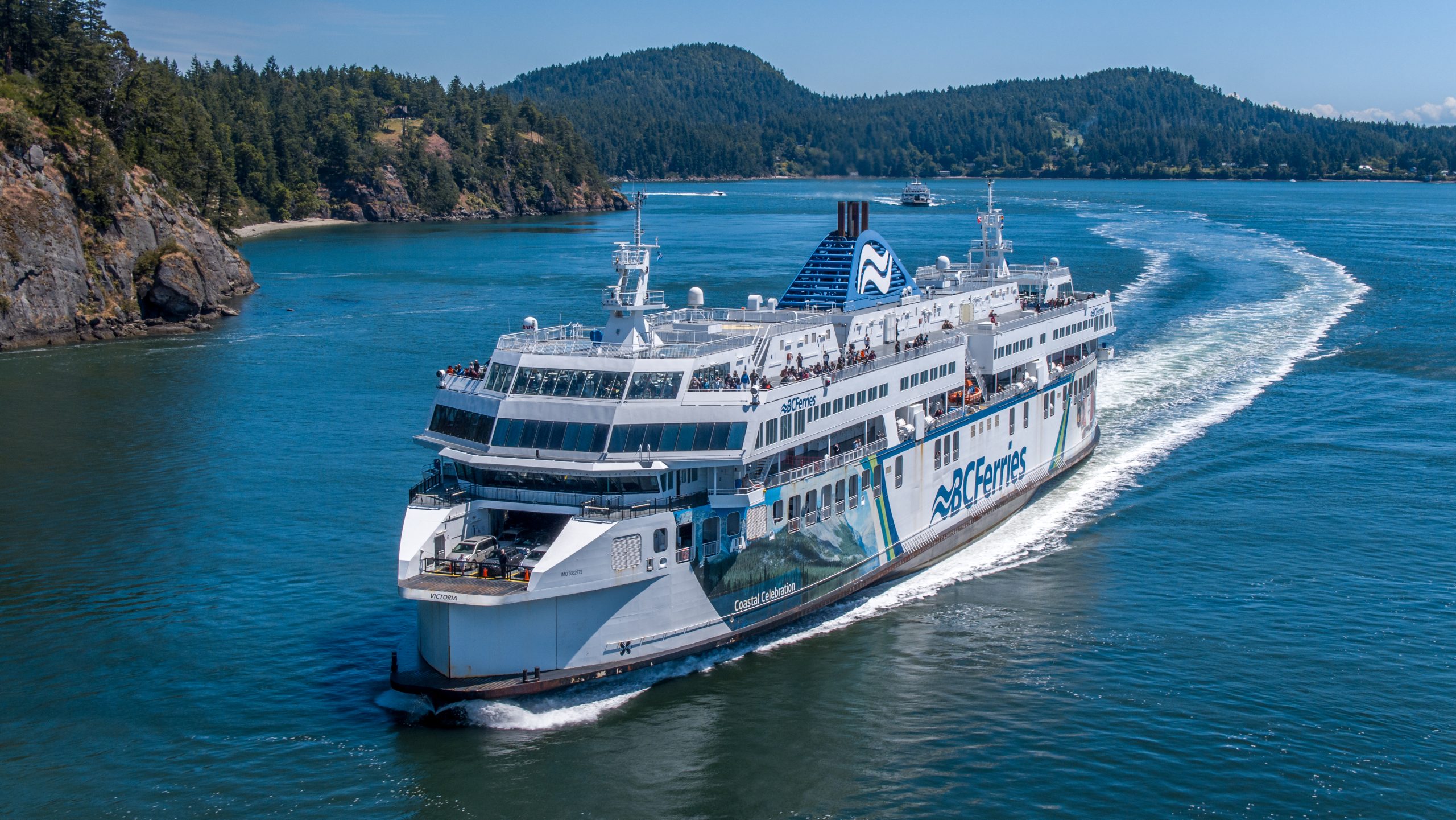
Photo via BC Ferries.
Student union representatives from several major B.C. universities, including UVic, published an open letter requesting a discounted walk-on fare by BC Ferries for all post-secondary students. The proposal aims to counter the rising cost of living and promote local travel within B.C.
The BC3 Coalition, which represents students from UVic, the University of British Columbia’s Vancouver and Okanagan (UBCV and UBCO) campuses, and Simon Fraser University (SFU), released the letter on Oct. 16, calling on the provincial government and BC Ferries to consider a one-year pilot program that would reduce walk-on ticket prices from $20 to a $10 flat rate for post-secondary students. The letter was approved unanimously at a coalition board meeting.
“I think we all want transit to be affordable within the community,” said Michael Caryk, UVSS Director of Campaigns and Community Relations and co-signatory of the open letter. “I see a key gap in BC Ferries not offering a reduced post-secondary rate.”
Because the walk-on rate is also the rate charged to passengers in a vehicle, the coalition believes targeting the walk-on rate would promote savings for all students who take the ferry.
Solomon Yi-Kieran, Vice-President of External Affairs at UBC’s student union, the Alma Mater Society (AMS), is another co-signatory of the open letter.
“My family is all originally from Gabriola [Island], so I’m very familiar with the BC Ferries,” Yi-Kieran said. “I know that in my first year, I had only a few hundred dollars in my bank account because my student loans weren’t coming in, and I was fortunate enough that my dad was like, ‘Yeah, I’ll front you the [$]20 for this ferry.’”
$20 may seem like a nominal fee for one-way travel; however, making multiple trips to visit family or conduct work-related business does impact students’ expenses and savings, Yi-Kieran said.
On select routes, B.C. students aged 18 and under can travel for free between their home and school, as well as to attend school-related events, given they provide documentation. Seniors receive free walk-on fares mid-week, excluding statutory holidays.
“It already exists for high school [and elementary] students, where they have a discounted rate,” said Caryk. “It makes a lot of sense to expand it to post-secondary students. This is one of the few public transit options that don’t have any discounts for post-secondary students.
“Especially with some students at UVic, we have students who are from the Gulf Islands, and staff as well. We have students who live on the mainland in Vancouver, the Fraser River Valley area, and the rest of B.C. They go home during the weekends, and this is a consistent cost that they have to [incur] to stay connected with their family.”
“BC Ferries recognizes the financial pressures many students face and appreciates their advocacy on this issue as the cost of living continues to rise. Our fares are regulated by the independent BC Ferries Commission under the Coastal Ferry Act, which establishes the framework for how fares and service levels are set,” BC Ferries said in a written statement.
“While BC Ferries receives partial funding from the Province under the Coastal Ferry Services Contract … the majority of system costs are covered directly by ferry users through fares,” the statement continues. “Any new fare[s]… would require direction and funding from the provincial government.”
BC Ferries also attributed Saver Fares as a lower cost option in their statement.
Saver Fares offer a reduced cost for walk-on and vehicle passengers beginning at $15 for select sailings. Vehicle fares begin at $49 for a car and driver for select sailings. Typically B.C. Ferries charge up to $105 for a single driver with a vehicle on a one-way trip.
Off-peak hours on ferry services, excluding northern routes, are described by the Coastal Ferry Services Contract as the period “post Labour Day weekend to the end of the school year.” On daily schedules, many Saver Fares prices are offered during the first sailings of the morning or the last at night.
“The thing about Saver Fares is they’re offered typically during non-peak hours,” said Caryk. “So some students who have work, class, or exam commitments that they can’t avoid, they can’t really take advantage of that. It doesn’t feel that fair to those students.”
“We want the reduced rate for any time students need to take the ferry,” said Caryk.
In November 2024, BC Ferries stated it would need to increase fares by 30 per cent by 2028 to keep up with expenses and demand. The cost to build new ferries has risen 40 per cent since 2020.
Yi-Kieran stated that the BC3 Coalition met with B.C. Premier David Eby before the open letter’s publication with a brief about the proposal, which received interest. The group has also been in touch with George Anderson, parliamentary secretary for transit, and MLA for the Nanaimo-Lantzville electoral district, who expressed similar interest.
“In 2019, the province moved quickly to reinstate services and savings cut by the previous government. That is why seniors travel free from Monday to Thursday, to make important medical appointments and visit family. The province also increased service on 10 ferry routes that were cut in 2014, restoring 2,700 round-trip sailings for people living in coastal communities,” the the Ministry of Transportation and Transit said in a written statement to the Martlet.
Additionally, the Province recently made a historic $500 million investment in BC Ferries to help keep fares low for every single passenger.
The Province and BC Ferries operates on four-year cycles called performance terms, where service levels and fare structures are adjusted as required. As work begins on the next performance term, starting April 1, 2028, consideration will be given to existing or revised programs that support affordability and accessibility across the coastal ferry system.”
Additional meetings have been requested with the CEO of BC Ferries, Nicolas Jimenez, as well as BC Ferries commissioner Eva Hage.
“I want to encourage anybody who’s reading this, if this is an important issue to you, to email your MLA and let them know that you care about this,” said Yi-Keran. “Send them a copy of the open letter as well. Make sure they see it. We want to make sure that it’s unmissable.”