

An investigation into the sustainability of UVic’s food and meat supply reveals low transparency levels about its supply chain
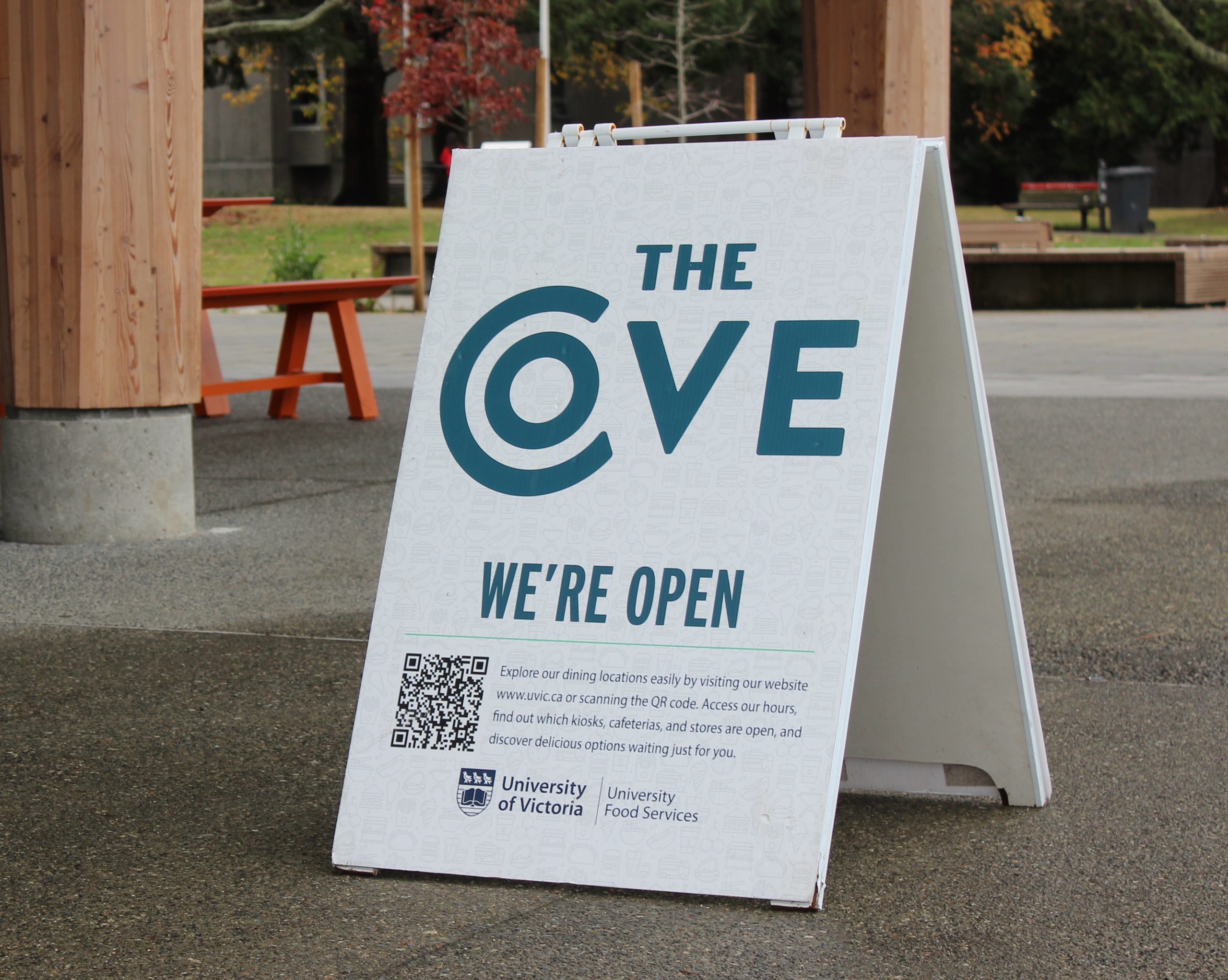
Photo by Sage Blackwell.
Food plays a big role in campus life. At UVic, students living in dormitory-style residences are required to have a meal plan, and many others also rely on campus food.
UVic Food Services advertises a commitment to sustainability, emphasizing efforts to reduce waste through composting, recycling, and reusable containers. But how sustainable is the food itself — especially its meat? Industrial meat production is the biggest driver of deforestation globally and it is a major contributor to greenhouse gas emissions. While UVic says it aims to offer more than 60 per cent plant-based options on campus, is the university also working to make its meat and other food offerings more sustainably and ethically sourced?
The Martlet asked UVic if it sources food from Cargill and JBS S.A. — two large multinational corporations that slaughter and process the vast majority of Canadian beef. These companies are known in Canada for contributing to a meat industry characterized by low wages and work that is dirty, difficult, and often dangerous.
Many of these meat plants rely on immigrant and temporary migrant workers through Canada’s Temporary Foreign Worker Program, which was described by a U.N. special rapporteur as a “breeding ground for contemporary forms of slavery.”
Mighty Earth also named Cargill “the worst company in the world,” citing its poor environmental and social practices, including the destruction of the world’s last remaining intact forests and prairies — impacts Mighty Earth calls “entirely avoidable.” The organization claims it would be possible to grow food and raise animals without the level of water use and climate pollution caused by Cargill.
The company has also been charged with violating Alberta’s environmental laws related to water. JBS, meanwhile, has been criticized by environmental groups for its record of corruption and environmental destruction.
In response to a request from the Martlet for a list of the university’s key food suppliers, Jim Forbes, Senior Director of Campus Engagement, cited the core principles used by UVic Food Services in sourcing food. Forbes also shared a link listing the companies the university purchases food from. However, most of the companies listed are suppliers of finished goods, such as Booster Juice, Fernwood Coffee Company, and Bento Sushi, rather than where the food itself is grown or produced.
The list includes some larger food suppliers like B&C Foods, Islands West Produce, and Gordon Food Service. Forbes did not directly say whether UVic sources food from Cargill or JBS, but they are not named on the suppliers list. However, it is unclear whether any of the university’s suppliers source products from Cargill or JBS for the university.
The Martlet also inquired about health considerations in UVic’s food supply, including whether UVic restricts or considers the use of growth-promotion drugs — like beta agonists, ractopamine or zilpaterol — in the livestock raised by suppliers. Canada has taken the position that these drugs are acceptable and safe, but their use remains contested internationally. The university did not respond directly to this question.
In the statement provided to the Martlet, the university referenced its supplier code of conduct, which applies to all suppliers who provide goods or services to UVic, along with their subcontractors. It establishes the minimum ethical, social, and environmental standards expected of suppliers, including the prevention of undue animal suffering and a requirement to act in an environmentally responsible manner.
The code of conduct outlines general guidelines for producers, such as treating waste responsibly and seeking out leading industry practices to conserve biodiversity. However, it does not set specific targets or elaborate on what these practices should entail.
Shokoofeh Manesh, a manager in sustainability advisory at PricewaterhouseCoopers and a member of the leadership team for the program How We Feed Ourselves, suggested that transparency is key to responsible sourcing. “The best practices for universities … are not only setting criteria for suppliers,” she said, “but rather understanding … where their supply comes from and doing stakeholder engagement.”
Manesh underscored the lack of transparency across the supply chain — the network of companies, people, activities, and resources involved in creating and delivering a product — as a major source of environmental and social risk. “Not understanding where the activities of the supply chain are happening doesn’t give visibility to organizations in terms of where their goods are being produced,” she said. This lack of visibility can lead to reduced resilience in the supply chain.
UVic stated that 46 per cent of its food expenditures in the past year were on food from British Columbia. However, since UVic’s supplier list primarily names companies it purchases finished food products from, rather than where ingredients are sourced, it remains unclear whether this number represents local producers and farmers.
Due to the complexities of producing food, Manesh said, “there’s not a lot of transparency in the supply chain about where food is originating from, what the labour conditions are … and what the impacts are to the environment.”
A product supposedly made in B.C., for example, may not have been produced here at every step of the supply chain, nor does it mean it was produced by a local company or farm. Due to food safety standards being designed for an international, industrial food system, small-scale and local farmers in B.C. have an extremely hard time competing, especially when it comes to meat production.
UVic noted that its spending on third-party verified sustainable or ethically produced food products between 2020 and 2023 sat around nine per cent, up from 4.9 per cent.
In a statement, Agriculture and Agri-Food Canada said there are “continued industry and government efforts to optimize the use and sustainability of natural resources” in the meat industry, and listed key regulations that oversee it, though none focused specifically on environmental concerns. For food safety in general, the department said, responsibility is shared among various levels of government, industry, and consumers.
Without stronger regulations — especially sustainability regulations — in place, responsible sourcing may fall to distributors of food, like UVic, and the companies they source from. With transparency issues built into the food supply chain, whether institutions like UVic are meeting that challenge is difficult to assess.