

A Climate Disaster Project feature series.
The stories in this series were shared as part of the Climate Disaster Project (CDP), an international collaboration of post-secondary and media partners coordinated through UVic’s writing department. Students in CDP classes learn trauma-informed techniques from interviewing and working with survivors of disasters from wildfires to floods to extreme heat. They then take that work in the community. And, this year, those students submitted testimonies that were published in The Guardian to coincide with COP30. These stories cover wildfires in Brazil’s wetlands, flooding in India, and glacier melt in the Peruvian Andes. But before the students embarked on that work, they interviewed each other, sharing their own experiences with climate change and what they think can be done about it. These are some of their stories.
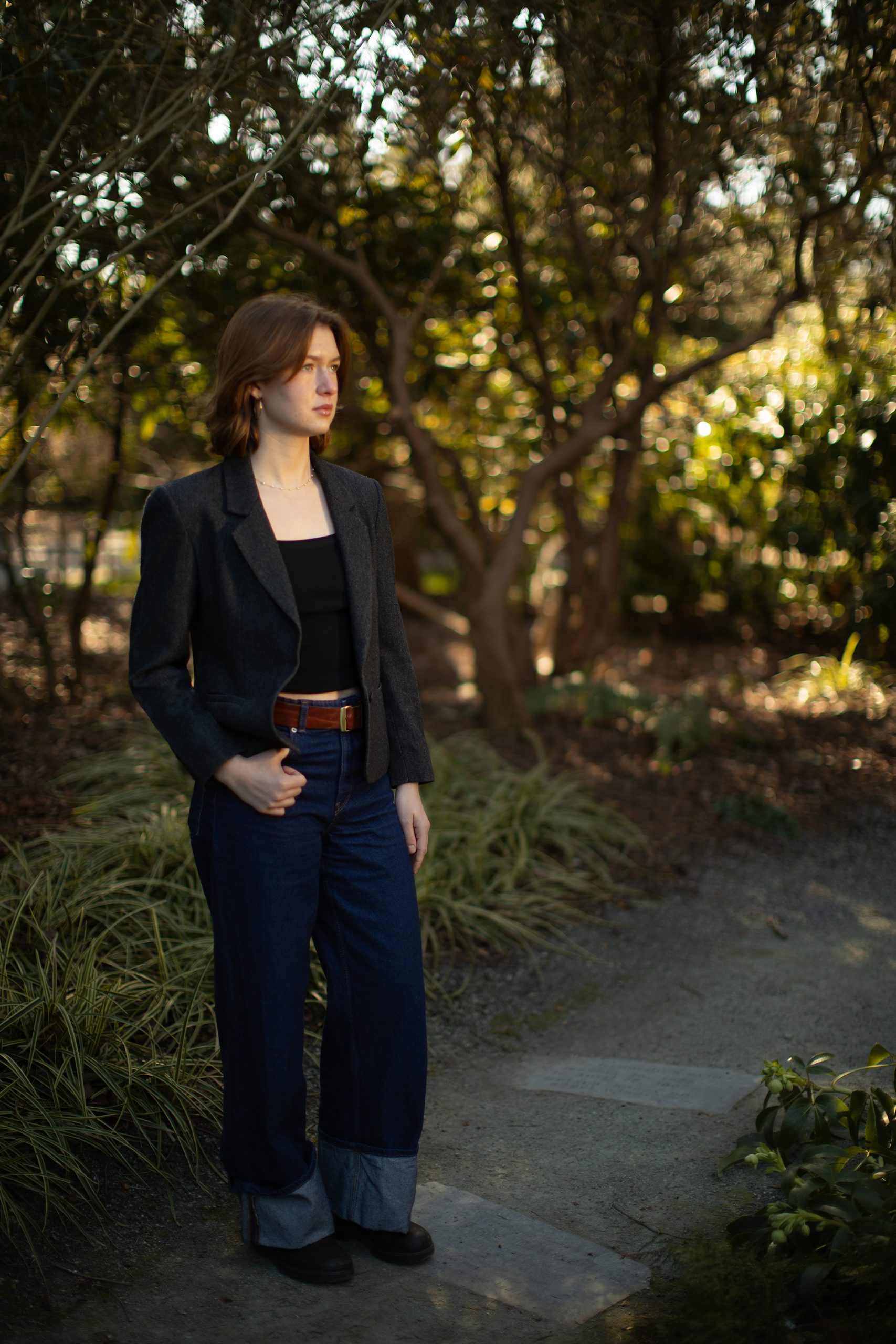
Sophie Kunka. Photo by Chad Hipolito.
Olympia, United States, Western North America heat wave, 2021
Sophie is a second-year student at the University of Victoria majoring in environmental studies and political science. She hopes to pursue a career in sustainable farming practices and alternative food systems specific to the Pacific Northwest. Sophie grew up in Port Angeles, Washington, United States. When she was seven years old, she moved away to a small cabin in the woods near Chimacum. It was her, her mom and dad with two cats, some chickens, and a dog on their five acres of property. As an only child, she spent a lot of time exploring the outdoors. Sophie would travel with her parents to Olympia to visit family friends every few months. In the summer of 2021, she participated in a competitive 2-person sailboat racing clinic during the Western North America heat wave, which made her realize how compassion is needed for athletes during extreme weather events.
In eighth grade, I decided to join the Port Townsend High School sailing team. I knew that my friends wanted to join, so we all joined together. It’s a cool sport because you have to pay attention to so many different tactical elements, like wind direction and currents.
I would have been 16, going to the U.S. Junior Women’s Clinic, hosted in Budd Inlet, three hours away from my hometown. I wanted to become a better sailor for my team. This was a good opportunity to improve my skills during the offseason. I was nervous because it was with really good sailors from the area and with Olympic-level coaches.
The first day driving down was sunny and very hot. Usually, in summer, we get a marine layer of fog that comes in the morning. That wasn’t happening. I remember checking the weather. There’s a heat advisory, saying it’s going to reach 100 degrees. We were like, “Oh, no way. That’s not going to happen. That never happens around here.” At that point, nobody realized it was an intense thing to worry about. We were more focused on the sailing.
Friday, it was drills, training, and the parents being cautious about sunscreen and making sure everyone was drinking water. We were aware of the heat because it was quite oppressive, but we didn’t realize it was dangerous.
We still had to wear masks, and it was getting really hot. It was sunscreeny, greasy, and gross. There were boats everywhere; we had to get ours rigged. It was just a maze. A ton of people, maybe 75, 100. As we were lining up to launch into the water, we were standing around on a break. I looked over at my friend, Fiona, and she was leaning up against a fence. Suddenly, she collapsed. She fainted from the heat. Everyone freaked out. Two of my friends went over, helped her up, walked her to a shady spot, and sat her down. Someone called her parents, and then we made sure she had water, electrolytes, and something to eat. We notified our coach. Afterward, I was worried if any of my other friends were going to collapse. I didn’t realize the heat could impact a person that much.
We launched the boats out of this area near a marina. Then, you sail out into the inlet. At one end of it, you can see the Washington State Capitol Building. On the water, we were wearing waterproof sailing gear. Also long pants and long sleeves to be protected from the sun. We had pinnies, the stretchy, vest-looking things that go over life jackets with our team name. It was sweaty and hot. There wasn’t a lot of wind. You’re just stuck, floating out on the water, and you just have to hunker down and hope that the wind comes to move you along.
Three people fainted on the first day. That seemed like a lot. It made us all turn against the coaches a bit. Because it’s an intensive clinic, a lot of coaches were pushing people hard, which is great, but under the abnormal conditions, that wasn’t necessary. We were like, “If they’re going to send us out on the water right after people are collapsing, obviously they don’t care that much.” It changed the attitude of the whole thing.
I wish they would cancel it because it was terrible conditions for sailing. It’s exhausting to be out in that kind of heat. Sailing is tedious because you’re moving really slowly and any little mistake can get you passed. It was taking a toll on everybody. My friends were all done. Everyone was unhappy, tired, and grumpy. Everyone wanted to go home.
The forecast was calling for it to cool down a little the next day. Not a tonne, but the coaches were like, “Yes, we’re going to keep going.” People had paid money to get there — they wanted to get out of it as much as possible. The coaches decided to move the start time earlier, 7:00 or 8:00 in the morning, to try to avoid some of the heat. I don’t feel that was helpful. Ending at 4:00 instead of 5:00, we were still in the part of the day with the most heat. It wasn’t a big difference.
Saturday, it was more drills. I remember people bringing bags of ice and water that we would put on our necks. All the coaches and the parents checking-in that everyone had a full water bottle. It was still quite hot and not a lot of wind.
The inlet, it’s often not the clearest water, but it was especially murky at that point. I have a distinct memory of the water being brown. Zia was steering the boat. We’d jump off the side between races and swim around to try to cool off. The water was so hot, it was startling. Back in the boat, you’d immediately be too hot. It was as if you hadn’t even gotten in the water because your clothes would dry so fast.
On Sunday, the last day, we had a regatta where we race each other. I remember being mentally and physically exhausted. We were trying to care for each other even though we were from different teams. Everyone was bringing each other electrolyte drinks. Someone would have a bag of ice and instead of keeping it for themselves, they would share it.
The day after, I went swimming with a couple of my friends. I remember seeing crabs, small fish, and shellfish all over the beach. The only smell I remember is the dead sea life that had washed up, just rotting.
The next day after the clinic ended, it was like 100 degrees out. Our car overheated and stopped working. My mom and I decided to stay in Olympia to wait for it to cool down. We were trying to stay cool as the heat wave was going down. The heatwave went down fairly quickly, we only waited a day. I was relieved it was over. I was more conscious of how hot weather could affect someone, just making sure to not over-exert yourself and stay hydrated. Especially when you’re out in the heat with not a lot you can do about it.
In the Pacific Northwest, we’re not accustomed to the heat. They should have postponed the clinic or shortened the days. A little more grace and kindness toward the participants would have made everyone feel at ease. It would have been a nicer, more productive environment. I know in the context of sporting events that’s not always feasible.
But, with climate change and more unpredictable weather patterns, it can be quite dangerous. In a sport like sailing, a lot of attention is already paid to the weather, but not necessarily a lot of care is used. With heat waves, because they are uncommon in the Pacific Northwest, more caution needs to be used to being safe in those situations.