

While economic strain initially triggered the demonstrations, the protests reflect years of systemic repression and citizens’ demands for freedom
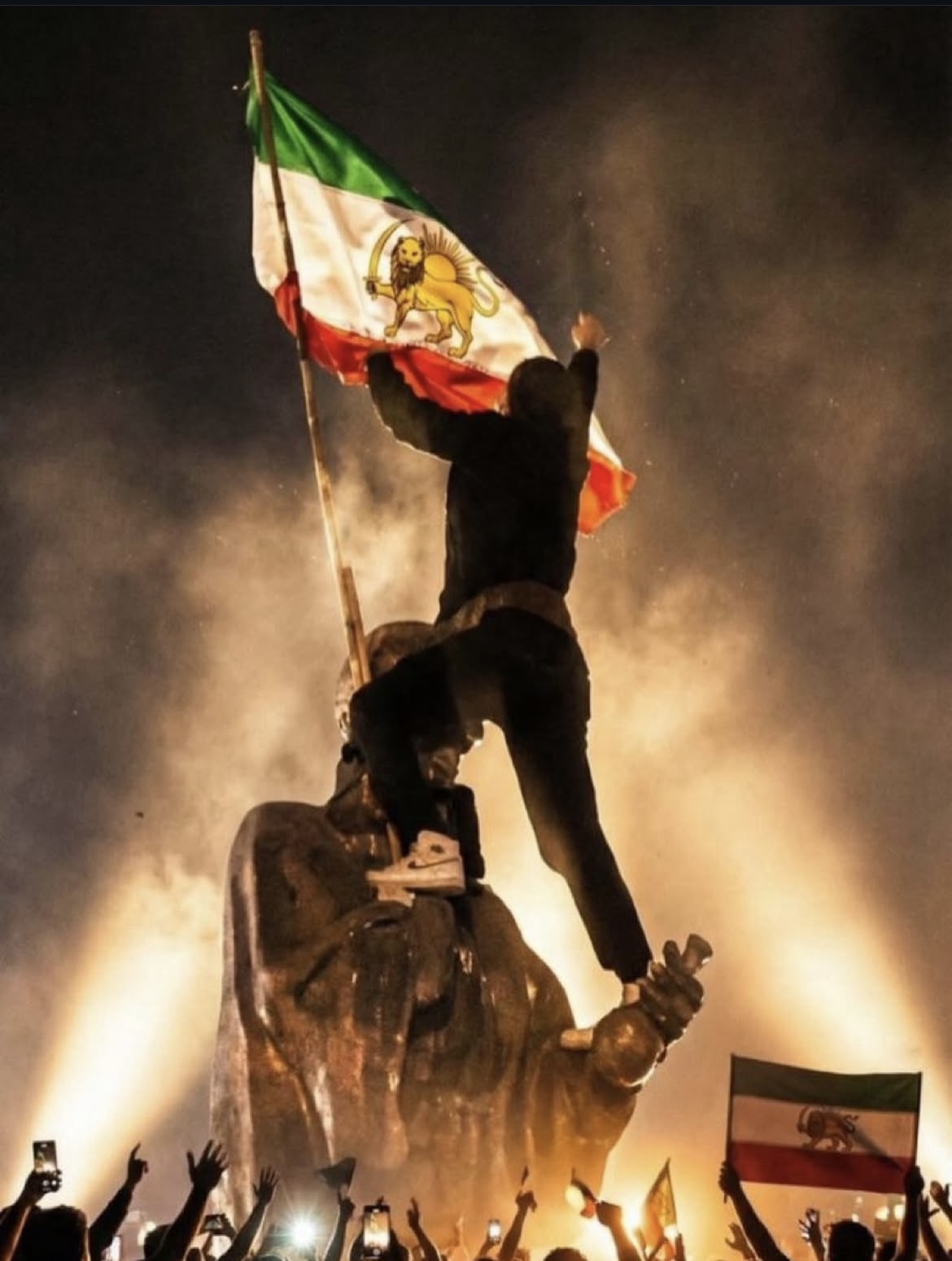
Photo via @gghamari on Instagram.
For weeks, Iranians across the country have taken to the streets, protesting worsening living conditions and decades of political repression, despite brutal crackdowns by state forces. What began as economic frustration has grown into renewed calls for regime change.
On Dec. 28, 2025, shopkeepers in Tehran’s Grand Bazaar started the protests by shuttering their shops in response to a 56 percent drop in the Iranian rial against the US dollar in just six months. The plummeting currency is driving inflation up, with food prices soaring by an average of 72 per cent compared with the previous year.
Such high inflation and skyrocketing prices put pressure on ordinary Iranians to omit essentials from their diet, such as meat and fruits, pushing much of the population ever closer to food insecurity.
While Iranians face extreme economic pressure, chronic shortages of electricity and water have intensified over the past several years, making living conditions increasingly difficult for many households. Despite these conditions, officials of the Islamic Republic of Iran — the Iranian government — have frequently attributed the crises to public behavior, rather than taking responsibility themselves. During periods of food scarcity, authorities have accused citizens of “excessive consumption”, urging people to eat less. According to Iran International, the Supreme Leader’s representative in Karaj blamed declining precipitation on women’s lack of adherence to mandatory hijab laws, a claim that is emblematic of the government’s refusal to acknowledge its own responsibility in mismanaging Iran’s water crisis.
These living hardships, however, are far from the only pressures facing Iranians. Basic human rights have long been restricted, and public frustration has continued to mount. Just 21 days before the shopkeepers began shuttering their stores, on Dec. 6, the body of Iranian rights lawyer Khosrow Alikord was found in his office.
Alikord had represented many political prisoners and civil rights activists, including Abolfazl Adinezadeh, a 17-year-old who was shot at close range during the nationwide anti-government protests in 2022. According to the family, Iran’s education ministry contacted his family, and instructed them to retrieve their son from the local police station. Upon arrival, they were informed that he had died. Adinezadeh’s father was reportedly warned at the station to “zip your mouth and do not talk to media.” According to the Human Rights Activists News Agency (HRANA), both his father and sister later faced legal repercussions and were accused of “propaganda against the regime,” with Alikord serving as their legal representative.
Vokala Press reported Alikord’s death as the result of cardiac arrest. However, Iran International reported that fellow lawyers disputed this account, stating that it was a blow to his head that caused his death. The US-based civil-society organization Tavaana reported similar claims, citing a witness who said blood was flowing from his mouth when he was found. Another source cited by the group said his skull appeared fractured.
Alikord’s death, which many view as suspicious, intensified public anger and became a rallying point for broader frustration over political repression. Large crowds attended his memorial service, where attendees reportedly chanted slogans including ‘death to the dictator’ and references to Reza Shah.
Reza Pahlavi, the exiled crown prince of Iran, has long expressed support for political freedoms in Iran. From exile, he has advocated for democratic reform and free elections, and in 2013 helped launch the National Council of Iran for Free Elections as part of broader efforts to build opposition coalitions. Many of their initiatives, however, have faced internal divisions.
During the current wave of protests, some of the most frequently reposted slogans include “this is the final battle; Pahlavi will return,” “long live the king,” and “Reza Shah, bless your soul,” a reference to Pahlavi’s grandfather. Many protesters also carry the Lion and the Sun flag —the flag of the Pahlavi dynasty.
In public statements, Pahlavi has repeatedly said he does not seek a return to “absolute monarchy” or hereditary rule. However, he has called for a peaceful political transition through a national referendum while emphasizing support for a secular democratic system.
For many protesters, these statements have become a source of hope amid continued repression, explicitly calling for Pahlavi to play a role in a future political transition.
As always, the people of Iran took to the streets, peacefully protesting without weapons. The Islamic Revolutionary Guard Corps (IRGC) has a long history of violently suppressing protests. During the current demonstrations, reports indicate that security forces used heavy machine guns and executed many protestors.
According to Independent, plainclothes security and members of the IRGC, armed with military-grade weapons, have entered medical facilities to detain injured protesters. Medical sources have said the injured do not return to treatment wards.
Further images have surfaced, showing deceased protesters with medical equipment, including urinary catheters, still attached. According to medical professionals, procedures such as catheterization — a procedure where a thin tube is inserted into the body to drain the bladder — requires time, and are generally performed only when a patient shows signs of survival. In chaotic emergency conditions, such procedures are unlikely, raising concerns that medical treatment was interrupted or deliberately stopped.
Yet, even in death, Iranian protesters are denied peace. Families have reported that the authorities have refused to release the bodies of deceased protesters unless relatives pay a so-called “bullet fee” –a charge imposed for ammunition used to kill protesters. The BBC reported that one family in Rasht was asked to pay $5 000 USD, while a family in Tehran was told they must pay $7 000 USD. This sum is prohibitively high in a country where a construction worker typically earns less than $100 USD per month.
Iran International reported that more than 36 500 civilians have been killed, in what is being described as Iran’s deadliest crackdown in history. Iranians who show up to protest are aware of the risks of taking to the streets, yet continue to demonstrate their courage, despite the danger. Their persistence highlights widespread demands for freedom. The world needs to hear their voice and listen.