
Job action resumed on Oct. 5 and it impacts over 16 000 riders a day
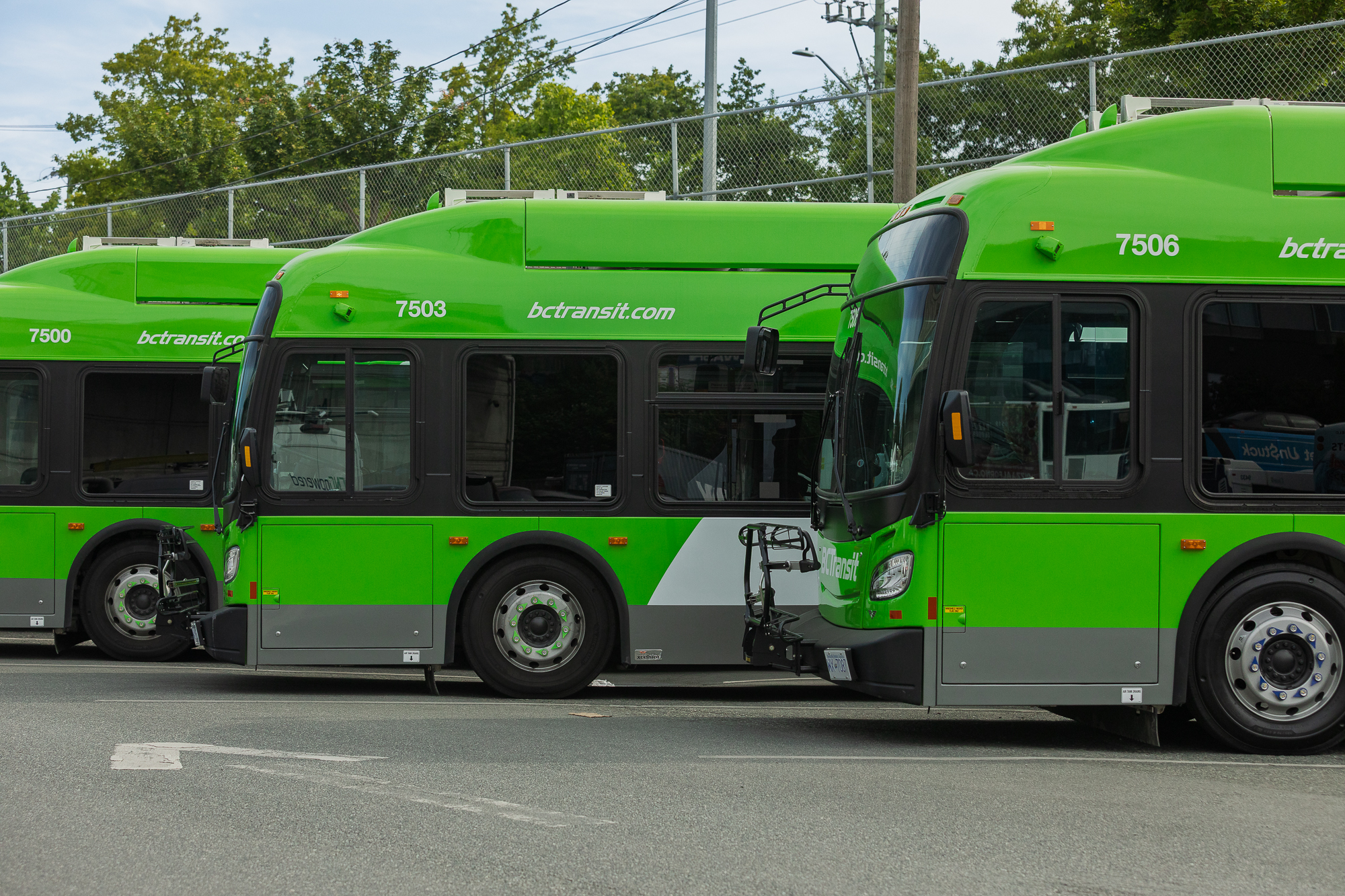
Photo via BC Transit.
The Victoria Regional Transit System is currently being affected by an overtime ban which started on Monday, Oct. 5.
The ban is the result of a lack of agreement after mediation between BC Transit and Unifor Local 333-BC — the union representing Victoria Regional Transit System’s drivers and mechanics. BC Transit has warned riders to expect delays and bus cancellations due to the strike.
More than 1 100 buses arrive and leave the UVic bus loop each day, with over 16 000 riders.
As a governing body, the sole system that BC Transit runs is the Victoria Regional Transit System. All other transit systems in BC are subcontracted. As such, the Victoria Regional Transit System is currently the only one that has been affected by the overtime ban.
“We know that this does have a negative impact on some, but it’s a lot better, we felt, than a complete service withdrawal,” said Gavin Davies, the National Representative for Unifor Local 333-BC.
Davies also said that any labour disputes result in inconveniences felt by the ridership. “We appreciate the students not taking their frustrations out on the transit operators who are really not at fault,” he said. “What they’re trying to do is show that the system is broken and that it needs to be fixed.”
Davies said the union appreciates the support from the university student unions during this time. “We always appreciate the support that we get from the public, but especially from the student union groups,” he said.
“They understand that workers, like students, have to stand up and push back.”
Victoria Mayor Marianne Alto said in an interview with the Martlet that she is supportive of the collective bargaining between the union and BC Transit.
“I think that the drivers have every right to do exactly what they’re doing,” she said.
Alto said that collective bargaining is important, and when it needs to happen, “it’s important for us to realize, as a society, that if we’re going to protect that right, there are going to be times like this one where there is an impact on service delivery.”
But she also understands that this is upsetting for students who are passed by a bus, or if they are late due to transit. “We do know that public transit is a critical service for all communities, but particularly in a densely urban community like Victoria,” she said.
Jessie Rousseau-Hanson, a Camosun student, part of the student society, and the student representative on the Victoria Regional Transit Commission (VRTC), said in an interview with the Martlet that the student population is a large stakeholder of BC Transit, especially through the UPass contract.
Rousseau-Hanson has been the student representative since the summer, and has attended two VRTC meetings, representing students at UVic, Camosun, and Royal Roads. He said that he supports having a fair deal for workers.
He also said that it is important to have everyone back at the table to make decisions that will ensure that students, staff, faculty, and the rest of the community can be on buses.
“When we have any form of strain for job action … it directly affects a large population of students,” he said.
Rousseau-Hanson said that well before the strike, BC Transit already had a lack of buses and a lack of funding, leading to a number of buses passing by stops and full buses. The job action is making the issues more apparent, he said, but it’s “an issue that’s been happening well before.”
“It’s important that we’re able to have well-funded public transit, so that it can benefit our entire community and keep us towards the direction we want to be in terms of a sustainable commuting practice,” he said. “The last thing we’d want is to have students be so frustrated [by] how unreliable transit is that they feel like they need to completely give up and stop taking the bus.”
To those students who are currently frustrated by the strike, Rousseau-Hanson said to provide feedback via posters that are put up around the UVic campus, so he can bring issues right to the VRTC, or to submit them to BC Transit directly online via their website.
“The best way to put pressure is to just really voice [students] experience.”