
UVic alumnus and former UVic professor Theo Dombrowski has written a guide to family walks and hikes on southern Vancouver Island
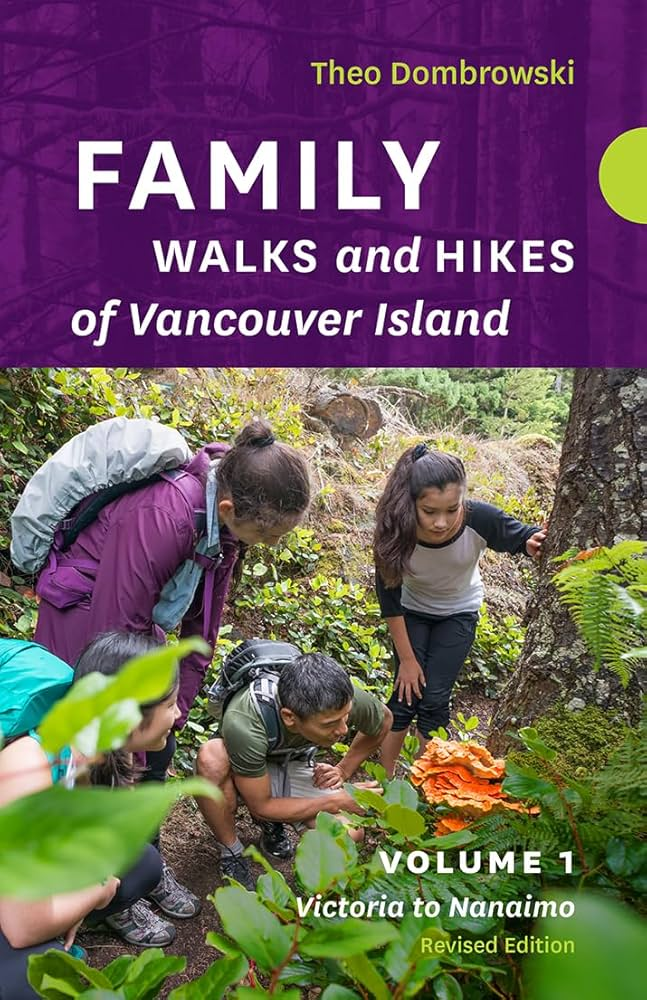
Photo courtesy of Theo Dombrowski.
For those with ‘getting outdoors’ on their summer bucket list, a hiking guide book can make a huge difference: look no further than the revised edition of Family Walks and Hikes of Vancouver Island, Volume 1: Victoria to Nanaimo, recently released by UVic alumnus and former UVic professor Theo Dombrowski.
Dombrowski has inspired many people to get outdoors through both his paintings and books. The guidebook includes walks and hikes for all ages and levels of ability, including those who depend on wheels for mobility.
The Martlet spoke with Dombrowski over email about the revised edition of his book, his favourite hikes, and advice for young hikers.
This interview has been edited for clarity and concision.
Is there a hike that is your personal favourite from this volume, and if so, what characteristics makes it your favourite?
Picking a favourite hike is, of course, like picking a favourite offspring! After a little hesitation, I would probably select Avatar Grove near Port Renfrew. With its ancient, gnarled cedars and hemlocks it is certainly the most distinctive and, of course, contains the most irreplaceable trees. Though without the feature most prized by children — namely water in the form of a stream or lake — its suspended wooden staircases and viewing platforms give it a secondary “jungle gym” appeal!
What is your biggest piece of advice to university-aged hikers who may be new to Vancouver Island?
Don’t be fazed by weather! Especially since university students are on the Island during the coolest and wettest months. With proper preparation and clothing, virtually any weather (except storms that can make forests dangerous) can provide uplifting and refreshing boosts. It’s a thoroughly well-established fact that a full-on nature immersion can boost not just emotional health, but also the ability to concentrate on studies.
Does this guide incorporate any trail etiquette information such as ‘leave-no-trace’ tips or wildlife safety recommendations?
It’s hard to imagine how any UVic student who has ever been in a park should need to be told not to dump litter or pick flowers! However, the introduction has a section called “Animals, Big and Small,” giving advice not just on the larger critters with pointy teeth, but also smaller ones — including, of course, bees and wasps.
Is there any information about the territories that the various hikes take place on? Or cultural protocols about visiting those areas? Additionally, does the book note native or invasive plants to keep in mind on the trails?
Of course, it is imperative that all UVic students be informed that a visit to any spot … is likely to be taking place on … unceded traditional territories. The trails in [this book] largely avoid any areas of special sensitivity, but in some of my other books … cultural protocols are highly relevant (as, for example, on Quadra Island).
Tips on native plants abound, for example, when I recommend the best season to spot wildflowers. In the entry for Mill Hill, for example, I include a photo of “shooting stars” and point out that April is the best month to spot them.
Family Walks and Hikes of Vancouver Island includes guidance on a number of hikes, including Millstone Falls, Westwood Lake, Colliery Dam Park, Nanaimo River, Yellow Point Park, Chemainus Lake, Mount Tzouhalem, Spectacle Lake Provincial Park, Niagara Falls and Goldstream Trestle Bridge, Tod Inlet, Mount Work, Beaver Lake, Mount Douglas, Devonian Park, Avatar Grove, and Lizard Lake.
Family Walks and Hikes of Vancouver Island, Volume 1: Victoria to Nanaimo is part of a two-volume set, the second of which focuses on the area between northern Nanaimo and Strathcona Park. It is published by Rocky Mountain Books