
A B.C. Supreme Court case challenges whether publicly funded, faith-based hospitals can deny services such as medical assistance in dying on religious ground
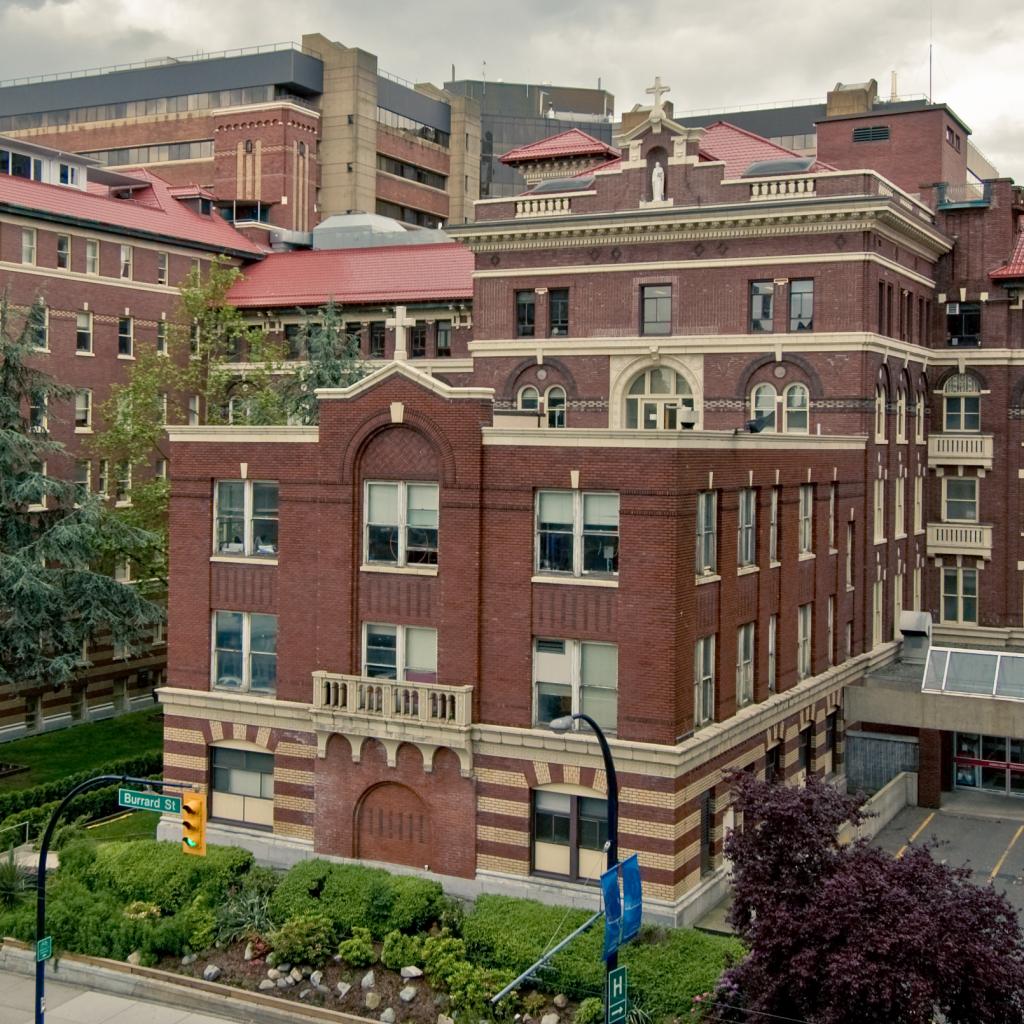
Photo via the Canadian Lawyer.
A four-week case began on Monday, Jan. 19 in the B.C. Supreme Court, challenging the right of publicly-funded hospitals to practice faith-based care.
The case began in April 2023, when 34-year-old Sam O’Neill was diagnosed at St. Paul’s Hospital in Vancouver with Stage 4 cervical cancer that had reached her bones and lungs.
O’Neill was approved for medical assistance in dying (MAID), but the procedure could not be carried out at St. Paul’s, because it is run by Providence Health Care — a Catholic organization that runs 18 health care facilities across Vancouver.
To receive MAID, O’Neill had to be transferred to another facility, but to move her, they had to fully sedate her, and she did not regain consciousness before the procedure. Her loved ones say that the transfer caused unnecessary and unbearable agony in the last hours of her life.
The plaintiffs include Gaye and Jim O’Neill — the parents of Sam O’Neill; Dying With Dignity Canada — a national human-rights charity committed to improving the quality of dying and protecting end-of-life rights; and Dr. Jyothi Jayaraman — a MAID provider and palliative care physician, who worked for Providence until 2023.
Currently in B.C., hospitals are allowed to refuse legal services including MAID, abortion, and contraceptives, based on the religious beliefs of the hospital’s management.
The BC Humanist Association — a non-profit organization that advocates for secularism and human rights — is one of the intervenors in this case, meaning they will be bringing both legal and philosophical arguments at the end of the case.
Ian Bushfield, BC Humanist’s Executive Director, said in an interview that their argument will center around the province’s duty of religious neutrality, and that the province is violating the Charter of Rights and Freedoms by giving religious exemptions for essential services.
A major component of this case is the public funding that St. Paul’s Hospital receives. In 2019, the provincial government announced that it would allocate $1 billion in funding for the new St. Paul’s hospital — a facility that cost $2.18 billion overall — which is set to open this year.
Bushfield said that, besides the funding for the new facility, the majority of St. Paul’s funding also comes from the government.
“I do think that the funding should come with an obligation to uphold people’s Charter rights and provide the full suite of care that is available everywhere,” he said.
He told the Martlet he believes that the public “should be able to expect that public funds don’t go to promote any one religion over others.”
The province has addressed similar issues in other cases, such as in the Comox Valley in 2017, when four hospice beds, and two new ones, were moved from St. Joseph’s General Hospital, a Catholic-run facility, to a different location, after more than 80 doctors signed a letter requesting that the new hospice beds be kept away from St. Joseph’s. They said that MAID should be available to hospice patients in the valley without having to be transferred.
In this case, Bushfield said, “It’s just a refusal to touch Providence and St Paul’s.”
In an interview with the Martlet, Dr. Kathryn Chan — a UVic professor in the Faculty of Law, who specializes in law and religion — highlighted section 2(a) of the Charter, that asserts “freedom of conscience and religion,” but also section 1, which asserts that rights and freedoms guaranteed by the Charter are “subject only to such reasonable limits prescribed by law as can be demonstrably justified in a free and democratic society.”
She explained that “there are different parties with religious freedom at stake,” in this case, and that the plaintiffs will likely be arguing that this practice of faith-based care violated the religious or conscientious freedom of doctors who would otherwise provide MAID, but are not allowed to do so at these facilities.
Providence took over the operation of two hospices where Dr. Jayaraman worked in 2023, and as an attending physician, she would have to sign off on transfers and attest that a patient was in proper condition to be moved.
She resigned in February 2023, and in an affidavit, she wrote that “authorizing the move was something I could not be involved with as a matter of principle.”
Jayaraman has provided MAID to 44 people who had to be moved from faith-based facilities since 2016, and described some of these incidents in court documents as “very distressing,” as patients were in pain or heavily sedated.
The trial is expected to continue in the coming weeks, with arguments from the plaintiffs, the province, and intervenors to be heard. A decision from the B.C. Supreme Court will have broader implications for how publicly funded, faith-based health care institutions continue to operate in the province.