

Skipping registration of a public marathon carries real risks for organizers
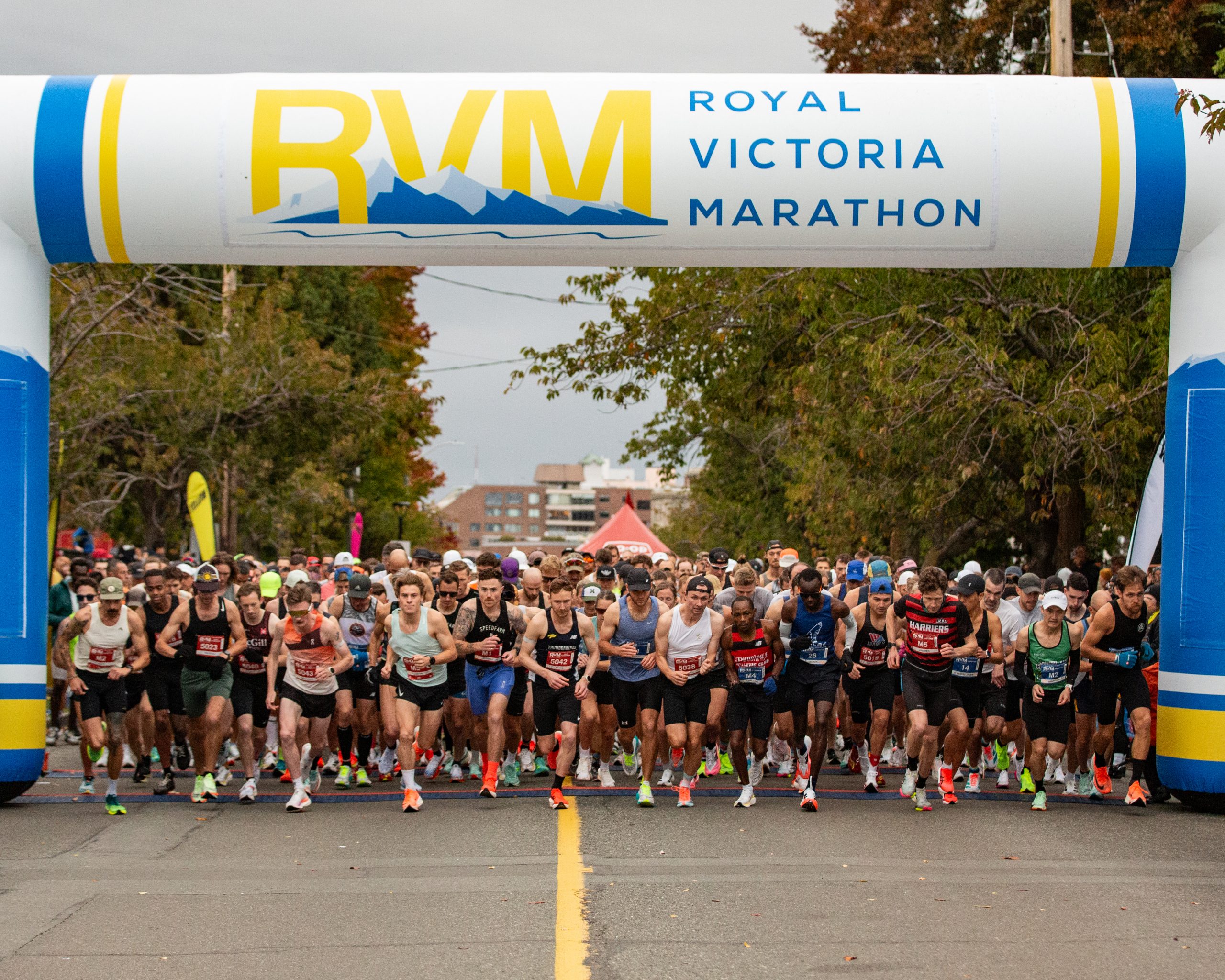
Photo by Billie Design Co.
Each year in Victoria, the city’s largest road running event, the Royal Victoria Marathon (RVM), attracts thousands of competitive and recreational runners. This year marked the 45th anniversary of the race and saw more than 15 500 participants in each of the race divisions (5k, 8k, half-marathon, full marathon), setting a record for attendance. I look forward to the race each year, and completed my first full distance marathon in 2023. I cannot stress enough that it was the hardest physical test I’ve ever attempted.
This year, I looked forward to running the half-marathon, but the event was sold out months before race day. While visiting my family, I mentioned this to my father, who’s always eager to hear what amateur races I’m eyeing. When I brought up the full registration, he remarked, “Why don’t you just bandit it?”
“Banditing” is the practice of joining a public race without registering in advance. People may have various reasons for doing so — perhaps they missed the registration window, or have financial restrictions. Many “bandits” follow basic courtesies to avoid taking away from the experience of registered runners, such as not using aid stations which supply electrolyte liquids and energy gels, and not cutting off or obstructing others.
But there are reasons why banditing is considered not only selfish, but also dangerous. Before the race, each runner provides registration information with their medical history and emergency contacts in case they need medical assistance during the race. This ensures that first responders have access to vital information if something goes wrong.
Another important consideration when it comes to banditing is that it may skew results. Most competition-level races have chips installed in paper bibs, allowing race directors to track exact times and participation numbers at checkpoints. These chips register at the finish line, tallying the full data of a runner’s performance in overall standings. But in smaller community races, like the ones I’ve previously run, race times and standings are entered manually. A racer crossing the finish line without a bib or registration information can be confusing and downright infuriating for the organizers, many of whom volunteer for the events.
Many runners feel especially negatively towards bandits, because the act is possibly stealing a spot from someone else who genuinely wants to enter the race. There is, however, the caveat that nearly every organized race will have participants drop out because of injury in the weeks leading up to the race. At the eleventh hour of the race weekend, I reached out to a friend about a possible lead on someone who had a spare registration space, because they became injured and could not race. But alas, their bib was already given to someone else. While it is uncommon for most races, the RVM does allow bib transfer at a small fee.
So, on a cold overcast Sunday morning, I did bandit the half-marathon race. I say this recognizing that my choice was brazen, and it could have had serious consequences if I injured myself, or caused a disruption to the participants behind me. The appeal of running, for those of us who are so sadistic enough to say we enjoy it, is in saying yes to the goal itself and the journey it takes to reach it.
To give you a sense of the race’s scale — imagine the biggest party you’ve ever been to. I’ve been to a party or two before, but one with over 15 000 people and thousands more on the sidelines, cheering their friends and family members on with homemade signs, really doesn’t get old. Not once was I questioned by other runners or race organizers about where my race bib was, probably in no short part because it’s such a large scale race — most people were probably focused on the bigger picture, not focused on calling out every individual bandit.
Having run the RVM half-marathon before, I knew the first half was all about conserving my energy. By kilometre 18, my knees and hips were giving out; what was once fluid movement had become fraught with a dull ache that would not let up. As I came along the stretch of Dallas Road we had crossed earlier, I could hear a spectator clapping from the sidelines.
“That’s it, guys. Take it one kilometre at a time. That’s courage.” Of all the handmade signs, cowbells, and cheering from spectators, that line stuck with me the most. It does take courage to show up, for each other and especially for ourselves — even for those of us who didn’t register.
If you also have the urge to jump in on a major race event, please do so considerately, and with your safety in mind. Keep personal identification with you, or even invest in a medical history card or wristband to carry with you. Keep personal identification with you, or even invest in a medical history card or wristband to carry with you. Consider stepping out of the race early so as not to disrupt the finish line organizers, and definitely, definitely don’t accept a medal if it’s offered to you.
It’s this aspect of banditting — being completely certain that you will not take home a medal — that perhaps encapsulates the real spirit of what it means to run a race. Showing up and never quitting is what’s most important, even more so than an official finish time.