
Supporting actor and author of ‘The Disaster Artist’, Greg Sestero, will be a guest speaker at both screenings
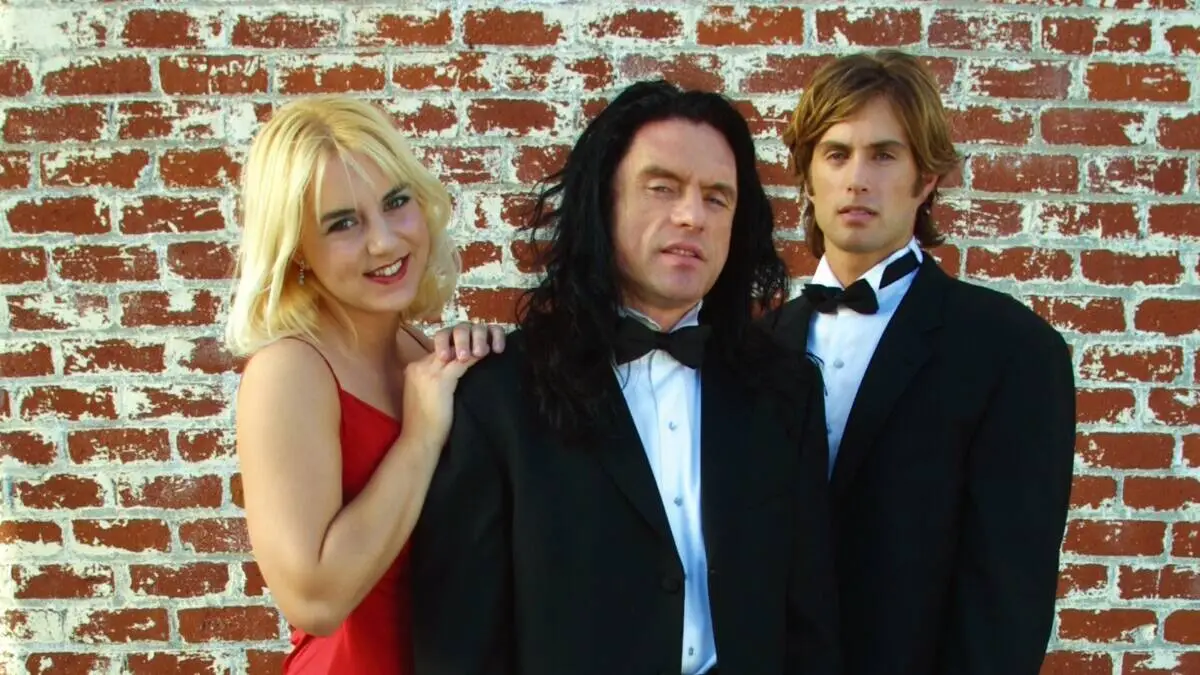
Photo via cinecenta.com.
The “Citizen Kane” of camp cinema, The Room, is returning to Cinecenta for two feature screenings later this month, featuring actor and author Greg Sestero as a guest speaker.
The Room is widely considered a cult classic film and a prime example of camp cinema. Created and developed by Tommy Wiseau, who wrote, directed, produced, marketed, and funded the film, as well as starred in the lead role, playing Johnny, a successful banker.
The film is a melodrama, following Johnny as his fiancée Lisa (Juliette Danielle) inexplicably becomes bored of him and decides to cheat on him with his best friend, Mark (Sestero).
“Camp” is a term used to describe aesthetic or stylistic choices, usually in film, that are so dramatic, over-the-top, or poorly executed they become ironically enjoyable. It can be thought of as an appreciation of bad taste and a subversion of high art being the only “good” art. As author and culture critic Susan Sontag wrote at length about camp in her essay, Notes on Camp, “In naïve, or pure, Camp, the essential element is seriousness, a seriousness that fails. Of course, not all seriousness that fails can be redeemed as Camp. Only that which has the proper mixture of the exaggerated, the fantastic, the passionate, and the naïve.”
The film stands as a wildly subversive case of independent filmmaking, originally released in 2003 to reviews panning the film en masse, with critics citing its incoherent plot and bizarre, off-kilter dialogue.
“People always say it’s as if an alien came from outer space and watched soap operas here on Earth for a week, and then went back to its planet and made a movie based on human interaction, it would be The Room,” said Sestero. “I think it’s just one of those movies that you can’t duplicate.… It’s indescribable in so many ways.”
As it stands, the film remains at 24 per cent approval on the film rating website Rotten Tomatoes, but remains an underground success, resulting in annual screenings in many major cities, including at UVic’s Cinecenta.
“There’s some things that are so blatantly transgressive that it’s shocking,” said Bryan Skinner, program coordinator at Cinecenta. “It just makes you laugh. A film like [The Room], you couldn’t plan to do that and not make it feel manipulative. Whereas this is a perfect storm of, in a way, naivety, which has created a very enduring classic.”
Audiences are known to dress up in character costumes, sing during scenes, as well as hurl plastic spoons and toy footballs around the theatre.
“This is a film very much in the sense of the Rocky Horror Picture Show,” said Skinner. “People will be shouting stuff out, it’s very interactive. If you’re not used to that, it can be a little discombobulating.”
“But if you come expecting to just have a good time and let it happen, you are going to have an absolutely unique cinema experience.”
Actor and author Greg Sestero will be in attendance for both screenings to answer questions and share behind-the-scenes stories.
Sestero’s memoir of his involvement with the production, The Disaster Artist: My Life Inside The Room, the Greatest Bad Movie Ever Made, received praise from critics on its release, in stark contrast to the original film’s reception. The book was eventually adapted into a 2017 film of the same name, directed by and starring James Franco.
There are many storied incongruous details about the production of the film, such as who exactly Wiseau is, where he came from before arriving in San Francisco, where Sestero met him at an acting class, and how he gathered funds for the film — which is reported to have cost as much as $6 million, a ludicrous sum for an indie film in 2002.
“It’s all quite mysterious how [Wiseau] was able to do it with the budget he had,” said Skinner, who describes the film as an example of auteur filmmaking — where the individual style and complete control of the filmmaker over all elements of production give a film its personal and unique identity.
“It is one of those projects where somebody’s able to do it and not have anyone say no to ideas.”
“Tommy was excited about the movie and I was there to help him make the film,” said Sestero. “I know he had a clear vision for it. I was just trying to figure it out.”
“I think that’s what’s so remarkable about creativity is we have no idea what kind of life the project’s going to have. I didn’t expect people to really see it … The Room really found an audience and really succeeded in a way that I think is inspiring for all kinds of creatives, and refreshing, because it was made with a singular vision.”
“I think The Room is absolutely unique and original. It was made independently in 2002, a very unique time in filmmaking,” said Sestero.
“It was shot on 35 millimetre and also shot on HD at the same time. The two formats were going in different directions and changing. When you watch the movie it has sort of a very timeless feel to it.”
Of course, there are always uninitiated movie goers who aren’t in on the joke.
“You can always kind of tell [who hasn’t seen it]. They’re observing and taking it in and the people they’re with [who have] are really passionate,” said Sestero. “I always tell them that I want to hear their review after … and they all come out with a big smile on their face and say ‘Yep, I definitely see cinema in a different way now.’”
Screenings will happen on Jan. 16 and 17 at 7 p.m., with doors opening at 6 p.m.
“I’m really stoked to meet our audience and hopefully [some] people that are seeing it for the first time,” said Sestero. “I’m very grateful to everyone [at Cinecenta] putting it on. If you get a chance to come out and see the film it’ll be a great way to start 2026.”