
As UVic’s final exams drag into the late days of December, many students struggle to balance academic responsibilities with the added holiday pressures

Illustration by Sage Blackwell.
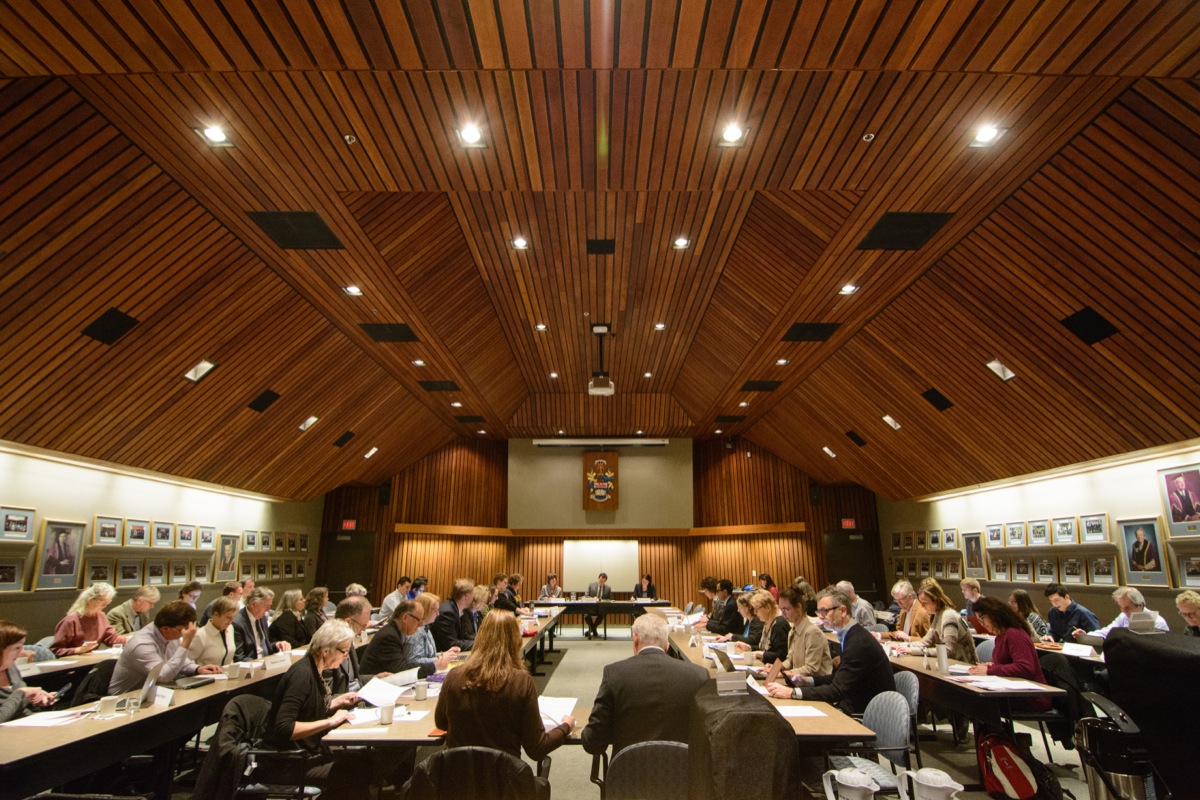
This year, UVic’s final exams run until Dec. 20, just five days before Christmas, with some exams scheduled from 7 to 10 p.m., and on weekends. For many students, however, that timing poses challenges beyond studying, affecting travel plans, work schedules, and holiday preparations.
These exam dates push into the late days of December, when winter weather makes travelling at night increasingly difficult. For students commuting to the university, whether by car, bike, or bus, transportation can be a real issue, adding another layer of stress to an already high-pressure exam season and impacting our ability to function at our best during finals.
For many students, late-night exams can put a dent in our performance, and may impact more than just our study routine. “I prefer to have exams be done in the first half of the day,” said fourth-year geography student Tobyn Burton. “If you have to work early the next morning, it’s not ideal to be getting home at 11 p.m. after writing an exam.”
Some students, however, have nothing against late-night exams, admitting that they function better later in the day or that timing doesn’t affect their performance. “I’m not going to bed before 10 p.m. most nights anyway,” said second-year sociology student Tate O’Brien. “If I study, it doesn’t matter what time the exam is at.”
Many UVic students also need jobs to get by, and stress can increase due to missed shifts, especially during the winter season, as travelling home for the holidays may require taking time off. Paired with the added costs of travel and potentially buying gifts for friends and family members, the holiday season becomes the perfect storm of stress for students.
This brings up another concern: UVic’s final exams creep close to Christmas, with the final day of exams typically falling from Dec. 20 to 23. Travelling home this close to the holidays creates an added burden for students, especially those who have a long way to get home. Hanukkah also falls during the exam period this year, leaving students who celebrate and do not live in Victoria year-round forced to spend some, or all, of it away from their families.
“Travelling is more chaotic around that time … [and it] causes more financial stress,” said second-year history major Miika Lagat. “Having, at a minimum, to pay a few hundred dollars [for a flight],” Lagat said.“For example, this year, I’m having to travel with a 13-hour layover [to avoid] paying extra.”
This forces us to choose between paying higher travel costs, or losing valuable time with our families just to save a couple of dollars.
What makes holiday planning even more difficult is that the exam schedule comes out halfway through the semester, limiting students’ time to plan ahead. “I have events and other things important outside of UVic that can’t be adjusted,” said Burton. “Not knowing if those [events] … will be possible for me to attend is definitely an inconvenience.”
According to UVic’s website, the university administers roughly 650 final exams each term, scheduled in three time slots per day over a three week period. Exams at UVic are scheduled centrally by the university’s Office of the Registrar and Enrolment Management (OREM). “Even if students and instructors feel that the results are not the best, they have so much to deal with,” said Emmanuelle Guenette, a sessional instructor in Slavic Studies, about OREM. “They really do the best with what they have to ensure there are no time conflicts for each student.”
Instructors at UVic can have some input on exam scheduling, but the sheer volume of exams, and the lengthy process involved, can discourage instructors from trying to schedule them themselves. “An instructor can choose a date, but then they need to provide a memo signed by the chair and approved by the dean,” said Guenette. “In principle, [we have] not much say. You need to have a reason that is approved at the department level and at the faculty level.”
Instructors having more say in exam scheduling, however, might only create additional problems. Giving instructors more control over exam dates rather than relying on a centralized office increases the risk of scheduling conflicts, Guenette said, because they aren’t aware of each of their students’ other exam dates.
While many of us may wish for changes to exam scheduling, options are limited. Reducing the length of the exam period would increase the number of exams per day, and would almost certainly continue to include weekends and late-night exams. Taking exams off weekends and late nights, however, would extend the exam schedule even further into December.
A realistic change to UVic’s exam system could be shorter exams. “No more three-hour exams,” said O’Brien. “Especially if people have back-to-back three-hour exams, I feel like that could be detrimental to their performance on one [exam] or the other.”
This could be a solution that, in the big picture, might solve the other scheduling issues. Making exams shorter could make time for more exams per day, which could then end the exam term earlier, or reduce the necessity of having exams on weekends and evenings.
Ultimately, many feel the current final exam schedule poses obstacles for UVic students. The question is, whether the university sees it as essential to create a schedule that caters better to the students’ needs, or continue using the current system.