
Victoria boasts an impressive number of craft markets, but behind the scenes, vendors say they aren’t always a picnic. But they keep crafting anyway
Tables line the walls of a crowded community centre, each one boasting a carefully curated display of handcrafted goods. Behind the tables sit fresh-faced vendors who carefully watch passersby. Some artists keep working at their craft, beading or twisting wire into earrings, and others offer smiles and polite chatter, hoping to entice patrons to stop by.
A chorus of questions about pricing and process floats over the scene. Fairy lights hang low and cast handmade trinkets in a warm glow. A fairytale Christmas atmosphere is taking place — a delight for all those who prioritize shopping local, and enjoy the quirks of a handcrafted candle.
Craft and artisan markets are in no shortage in Victoria — especially during the holiday season, when every other lamppost on Government Street is decorated with a flyer for one market or another. Ranging from one-day events to three-day bazaars, the holiday market season here is one of the busiest for shoppers and vendors alike.
However, the vendors on the other side of the tables, if they are anything like printmaker Rachel Diment or herbalist Maegan Johnston, have a lot to think about — worries about whether or not yesterday’s late night cram yielded enough product to last through today, if there will be a pause long enough to run and get food, or if they will break even after all is said and done.
Markets in Victoria are upheld by a vibrant love for all things local, but are not without cost, both physical and mental, for vendors. Yet, despite the drain, the market scene remains alive.
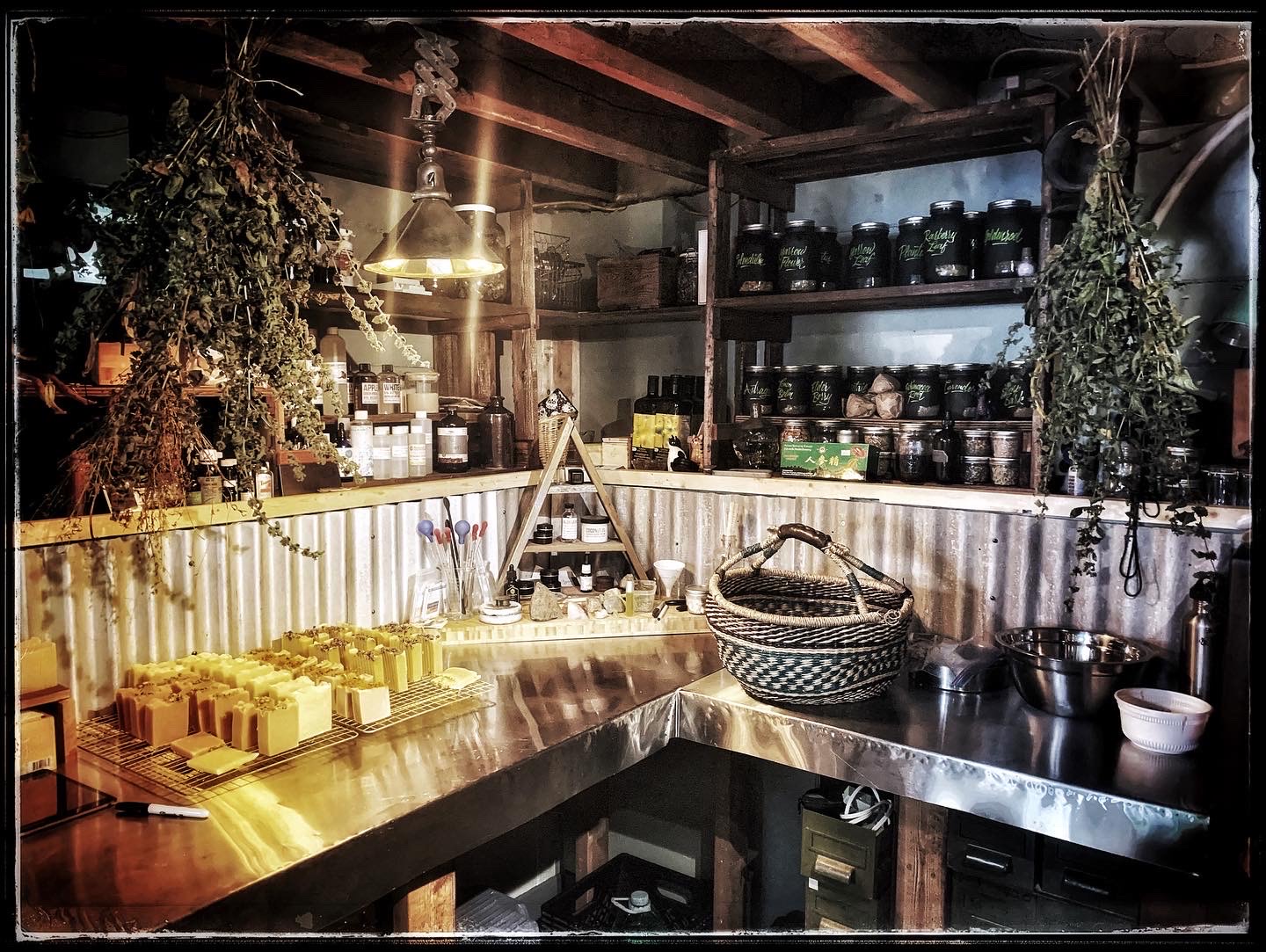
Photo by Maegan Johnston.
Setting up
Goods inside the markets can range anywhere from $3 to over $300, depending on the craft, and have entrance fees ranging from zero to $16. On the other side of the table, the vendors have paid anywhere from $50–500 for their table, with some markets’ (multi-day and high profile ones) fees climbing as high as $2 000, and others charging no table fee at all.
But getting to the market is only half the story. Spending hours behind folding tables in school gyms, community centres, or city squares was not always these artists’ intention.
Maegan Johnston has always had a connection to plants. Her Lithuanian family lineage of healers continues with her business, Babushka Botanics, which she started up as an ode to the women in her family.
The idea had been in the works for years, but didn’t hit the ground until 2022. Johnston has worked as an herbalist for the past 15 years, and began by selling herbal skincare products to coworkers and friends, marketing by word of mouth, with a particular focus on treating ailments such as eczema. The side hustle shifted into markets, eventually snowballing into Johnston vending at six markets a month.
This tumble from a side hobby into, essentially, a full-time job is not unique to Johnston.
Rachel Diment, another local artist and the owner of Dime a Dozen, also somewhat accidentally found herself in the market scene. After picking up a knitting and crochet hobby with the goal of making herself a shrug, she wound up with so many odds and ends, and needed a place for them to go. And thus, her journey began.
Two years later, Diment has participated in over 40 markets, doing as many as 35 in one year. And although her business has shifted to mostly printmaking and illustrating instead of fibre crafts, the love she has for markets and the community she has found there remains strong.
“I’m so grateful for what I’m able to do, and that I can connect with people in this way. I am a working artist. I feel so honoured,” said Diment. “I think that feeling carries me through the chaos.”
Although arts and farmers markets all took a hit during COVID-19, they are once again on the up-and-up, and are seeing a considerable amount of interest from youth as both patrons and vendors.
According to a report published in Sept. 2023, the Canadian art and craft market “is expected to reach a market size of more than USD 1.4 Billion by 2029,” a prediction driven by a growing appreciation for “local craftsmanship” and consumers who increasingly seek “unique, handmade items that reflect their cultural heritage.”
LampPost Victoria, a local organization started up by two UVic alumni, seeking to help create community through attendance and participation in local events — arts, social, and otherwise —, is a champion of the local market scene. Co-founder Jared Leary said that there are always a considerable number of markets cropping up on their events newsletter, especially in the summer, and that it’s common for organizers to reach out to them for help with additional promotion.
Leary, an occasional market attendee himself, said, “Unfortunately, I don’t have time to make it to even five per cent of all the markets going on around town.” He also said that markets are a common gathering place for the LampPost cohorts — groups of 8–12 people, who are matched up through LampPost based on shared interests, and who attend and plan events with one another to become friends. “Often … an event will be done, and people want to keep that momentum going. Almost always, they are like, ‘why don’t we head to a market?’”
While the markets can be a quick afternoon trip for patrons, they often require hours to months of preparation from the vendor’s side. Andrea D’Angelo, the creator of pottery co-working space Kōbō collective, told the Martlet that prep for one market can take up to three months. For potters, the process is long — from throwing, to firing, to glazing — and creating that handmade touch sought by many market-goers is a careful process.
“Pottery is quite a personal thing, especially when it comes to a mug, or something someone is going to reach for every day,” said D’Angelo. “Everyone’s hands are a little bit different, and all the mugs are a little bit different.”
Artists working in other mediums may keep working right until the night before they have to set up their table.
Diment puts every spare hour she has into preparing for the upcoming markets. Recently, she was selling at the annual Winter Bazaar on Nov. 29, 30, and Dec. 1 and worked for nearly two straight weeks to prepare her prints.
“I had been warned by other vendors [that the Winter Bazaar] would be crazy, so basically, make as much as you physically can,” and so she did. Preparing for a three day market like the Bazaar becomes the sole focus for artists like Diment, especially as she, like many others, uses her home as her studio space.
“The main hurdle in my life is that my home is my studio, [which] is also a studio apartment.”
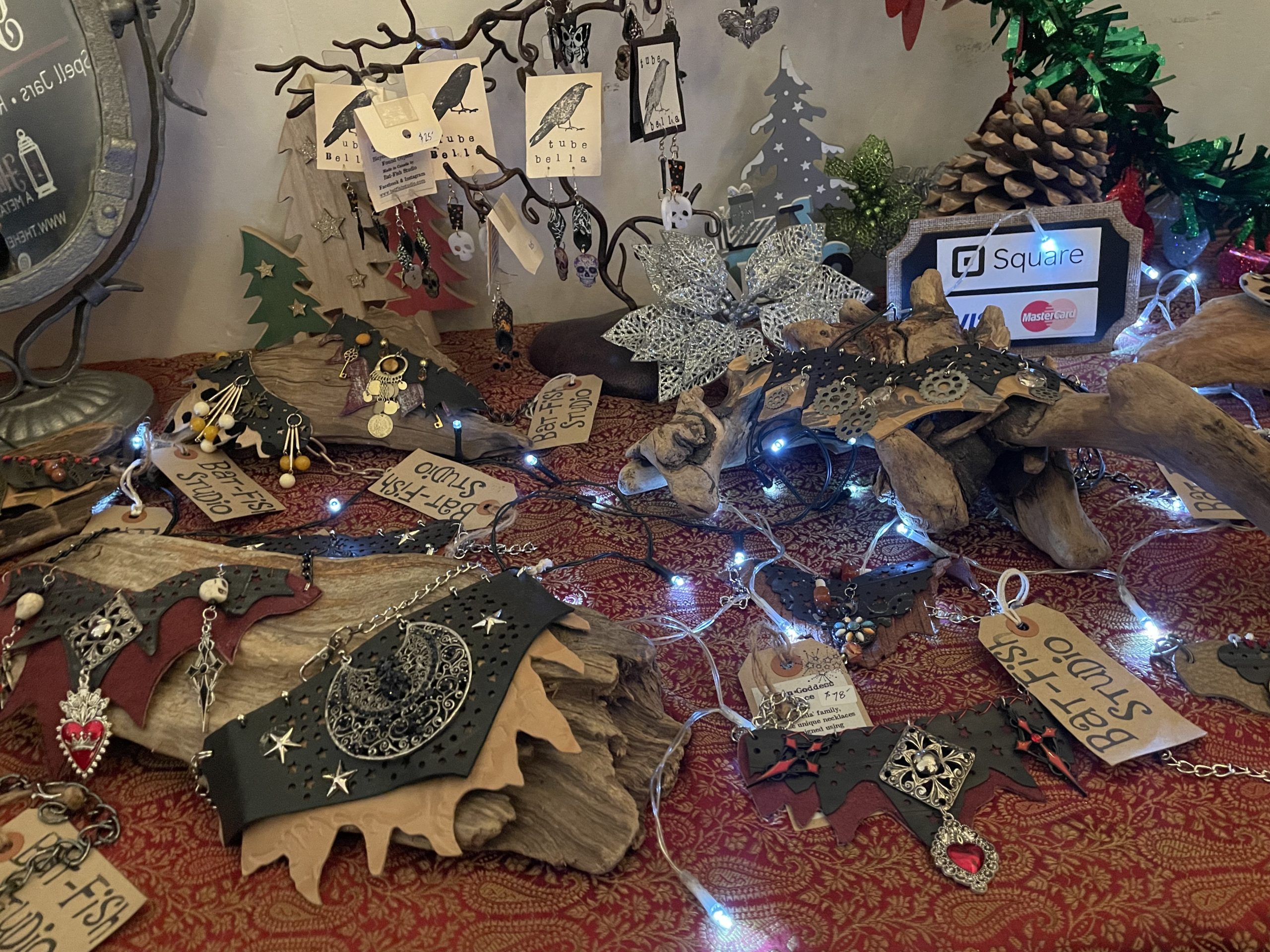
Photo by Eden Conti.
The money market
A vendor supporting themself solely on markets is rare — and not necessarily wanted, either. Many artists still have to work jobs on top of their creative practice, whether they are writing for the Canadian Cancer Society or working in the forestry industry. For some, markets are just a hobby and a fun way to connect with the community, but for others, their day job is a way to fund their craft.
Diment is cautiously dreaming of being a full-time artist, but until that becomes financially feasible, she works on a flower farm to help pay the bills. “I really appreciate that on the days I do work [at the farm], it doesn’t allow me to overwork or stress or think about art,” she said.
The structure and community of the day job helps Diment find some balance, and even inspiration for some of her prints.
The seasonal work blends well with the market vendor lifestyle, one that Johnston has found to be a working balance.
From April to July, she goes out into the bush to conduct forest surveys, and harvests herbs for her products along the way to use for the summer market season, largely in August. After that, it’s back to the bush for more field work until the holiday season rolls around and markets take over. Johnston takes a brief pause from it all in the winter, until the spring markets creep up in March, and the cycle begins again.
“It’s a lot, but you’ve got to hustle to pay the bills, right?” said Johnston. “I can’t sit still doing just one thing, either. I get really bored with it.”
Preparing for and getting to the market is just the first hurdle. Once the goods are laid out, the pressure is on.
The goal for most vendors working a multi-day market, or even a single-day one, is to break even as fast as possible. For some, this could happen with only a handful of purchases, but others might end up in the negatives due to the cost of the materials and the time spent on preparation and selling.
If a vendor doesn’t sell at a market, they will usually call it a wash, and move on to markets that are more likely to bring in patrons who will buy their goods. Some advocate for trying every market a few times, as odd factors such as weather or another event that day can influence turnout; others, however, will be more selective and move on quickly.
Finding the niche markets that will attract interested patrons can be a struggle for vendors. To avoid a day in the negatives, some vendors drift to themed markets that align with their particular niche.
For example, on Dec. 6, Johnston hosted a Krampus market at the Fernwood Community Centre, which championed many vendors who would not always cater to a broader market audience. Artists at Krampus included blacksmiths from Sooke, potters from Nanaimo, and local tattoo artists doing ink on site.
Hosting a Krampus market was something Johnston always wanted to do. “Just to give people another type of option,” she said. “[For] people like me wanting to go to a different, unique kind of market.”
Johnston hopes to make the Krampus market an annual affair, and hopefully grow it into more than a market, eventually including live music or even burlesque performance.
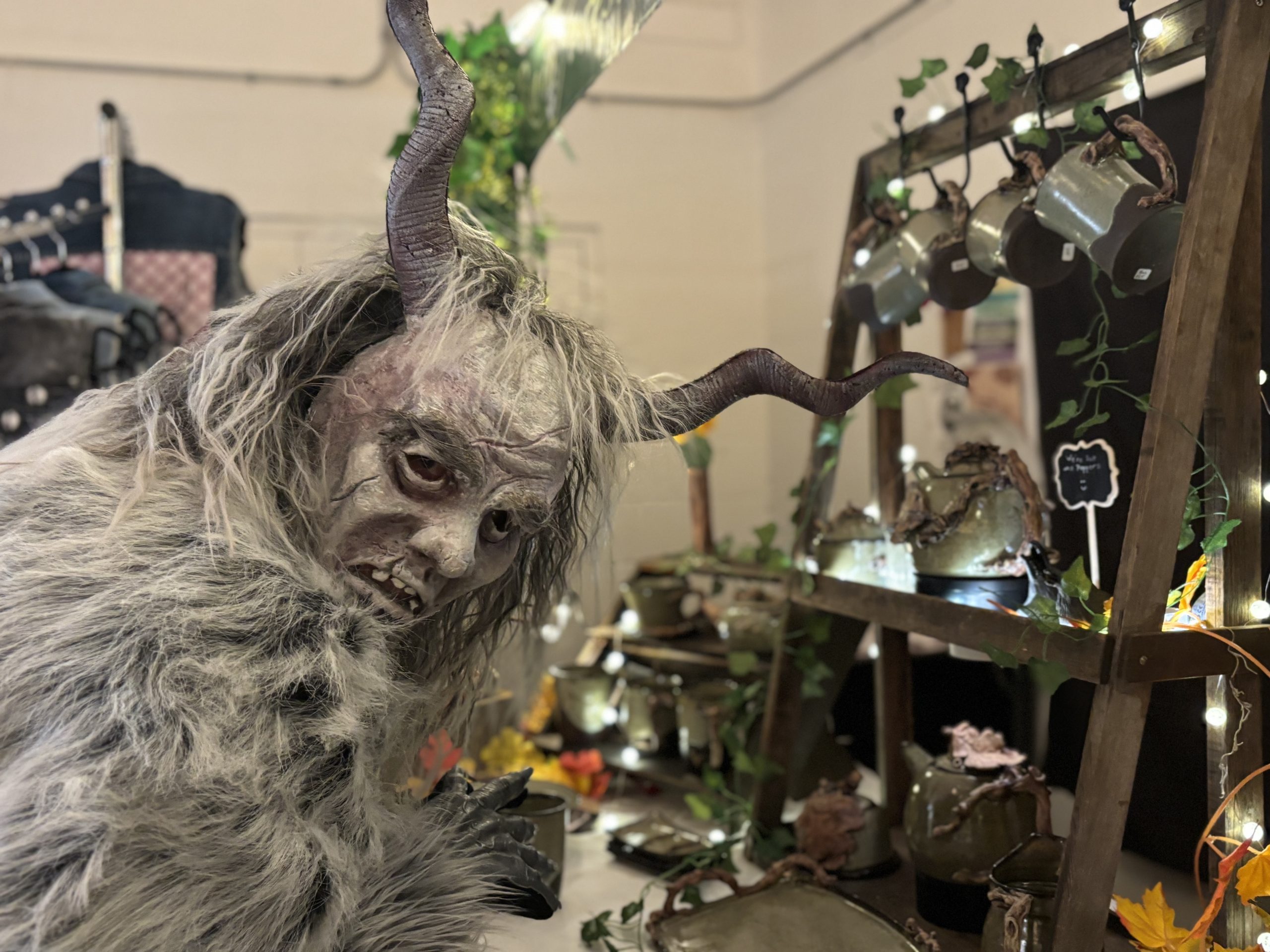
Photo by Maegan Johnston.
Markets on the move
Unsurprisingly, during the COVID-19 pandemic, markets around town were forced to shutter for at least a few years — if not indefinitely. But artists were still crafting.
To continue to foster the market community, and those who were trying to live off their passions, year-round spaces such as the Market Collective emerged. In October 2020, the Market Collective opened its door for the holiday season. The original goal of the collective was to offer a space for all the vendors that were missing out on the traditional holiday market season, but the response was overwhelmingly supportive, so they decided to stay.
“We did it to support local and handmade,” said Market Collective co-creator Katrina Dwulit. “It increases the micro-economy locally [and] when we support artists, we are infusing the community with more culture.”
Over five years later, the Market Collective now has two other locations, and has supported over 400 local artists. With a background in farmers’ markets and a familiarity with reinventing herself, Dwulit hopes to move the collective in the direction of wholesale, when they can afford it. Until then, the main goal is to continue supporting local artists. “Any opportunity we give them to live within their passion pulls them out of working that 9–5 they mostly hate,” said Dwulit.
The Market Collective is just one of a slew of stores — Colage Creative Locals Market, Makers, Good Vibe Space, and Cream Life and Style, among others — which follow the same model: essentially, a year-round market, vending local artists.
However, Dwulit said, the rise of other, similar shops doesn’t feel like competition — almost the opposite. “The more the merrier,” she said. “Until everyone’s supporting local [and] handmade, it is not too many, with the caveat [that we] all remain unique, and have our own offerings.”
Colage Creative Locals Market opened their doors in October 2024, with the vision of a permanent space for craftspeople, and a goal of alleviating some of the work that can come with a market. Co-owner William Parkhurst grew up going to holiday markets, so he was introduced to this world early on.
“You realize that populated in your own city are hundreds of garage studios, metal working studios, people who are knitters … these markets bring them out of the woodwork and put them centre stage,” said Parkhurst. “It’s amazing, it’s beautiful to see it all together.… Colage is just this chance to keep that going year-round.”
While revenue models and artist payout percentages vary between stores, they all share the same commitment to and love for local. The Market Collective offers their artists 55 per cent of the sales made. Although it’s not as much as they want to give, they also have to keep the business side of things running.
Other similar stores, such as Makers, ask vendors to rent out the shelf space to help pay for the storefront. In exchange, one hundred per cent of sales are given back to the vendors.
Alternative models include Cream Collective’s structure, where artists work one or two days in the store itself in exchange for the store selling their goods. Despite the trade-offs, artists often find that it’s worth it.
Diment, a member of the Cream Collective since April, adores being a part of the shop, for both her business and the community she’s found.
“I have been able to do the markets I want to do this year, rather than having to,” said Diment.
“[Being a part of Cream has] taken [so much] pressure off of markets in my life.”
Johnston, whose products are currently in a number of stores including the Market Collective, said the same. “It’s really rewarding when you get a wholesale order, and it’s like a thousand dollars. You’re like, ‘wow these people really like my stuff and want it in the store.’”
However, not all vendors are interested in the wholesale or storefront market scene, and opt to sell their goods year-round through their own online platforms.
D’Angelo prefers this model, as it keeps the personality of her brand going, and complements her schedule. While she was spending all her spare hours creating the Kōbō collective, the prospect of working wholesale, even with a local shop, was just not feasible.
“With pottery, it takes so long to make a mug … the materials are really expensive, it doesn’t always make sense for me personally, but it is a really wonderful way to share your work with the world and support other small businesses.”
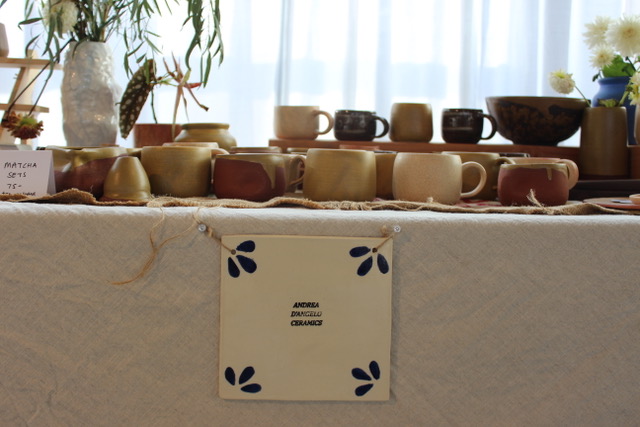
Photo by Andrea D’Angelo.
Under the table
There are only so many “how’s it going todays,” and patrons picking up your handcrafted artwork, only to set it down and walk away, that one can sit through in a day. The constant small talk and vulnerability of sharing their artwork takes its toll on vendors.
“I wouldn’t say [it’s] necessarily draining,” Diment said, “but generally after a market I have to collapse.”
The social drain is one of the downsides for Johnston as well. “Markets take a lot out of you socially. After a market, especially a multi-day market, you’re done,” she said. “You’re on the couch for at least a day, the next day, resting.”
D’Angelo said the hours spent sitting behind the table are usually an “emotional rollercoaster.” The strain of the day can compound for potters, whose work is physically heavy, and they have to move it all and set up and tear down by themselves.
Some markets, such as the Bilston Farms Yuletide holiday market, offer a break for vendors where they can. Born out of lingering COVID-19 practices, Bilston offers to staff the market with members of their own team, allowing artists to sell at other markets on the same day.
Although, the strain can come before the tables are even set — something Diment learned the hard way. The repetitive motion, and labour demand of her fibre crafts, left her with physical pains so intense she knew she couldn’t keep it up. Since then, she has shifted to mostly printmaking, and only indulges in fibre crafts occasionally. “When I was knitting or crocheting, if [I was] at a social event, I was doing that. Because I had to be making stuff and because it was a slower process, any of the ‘free time’ I had was going towards that,” she said.
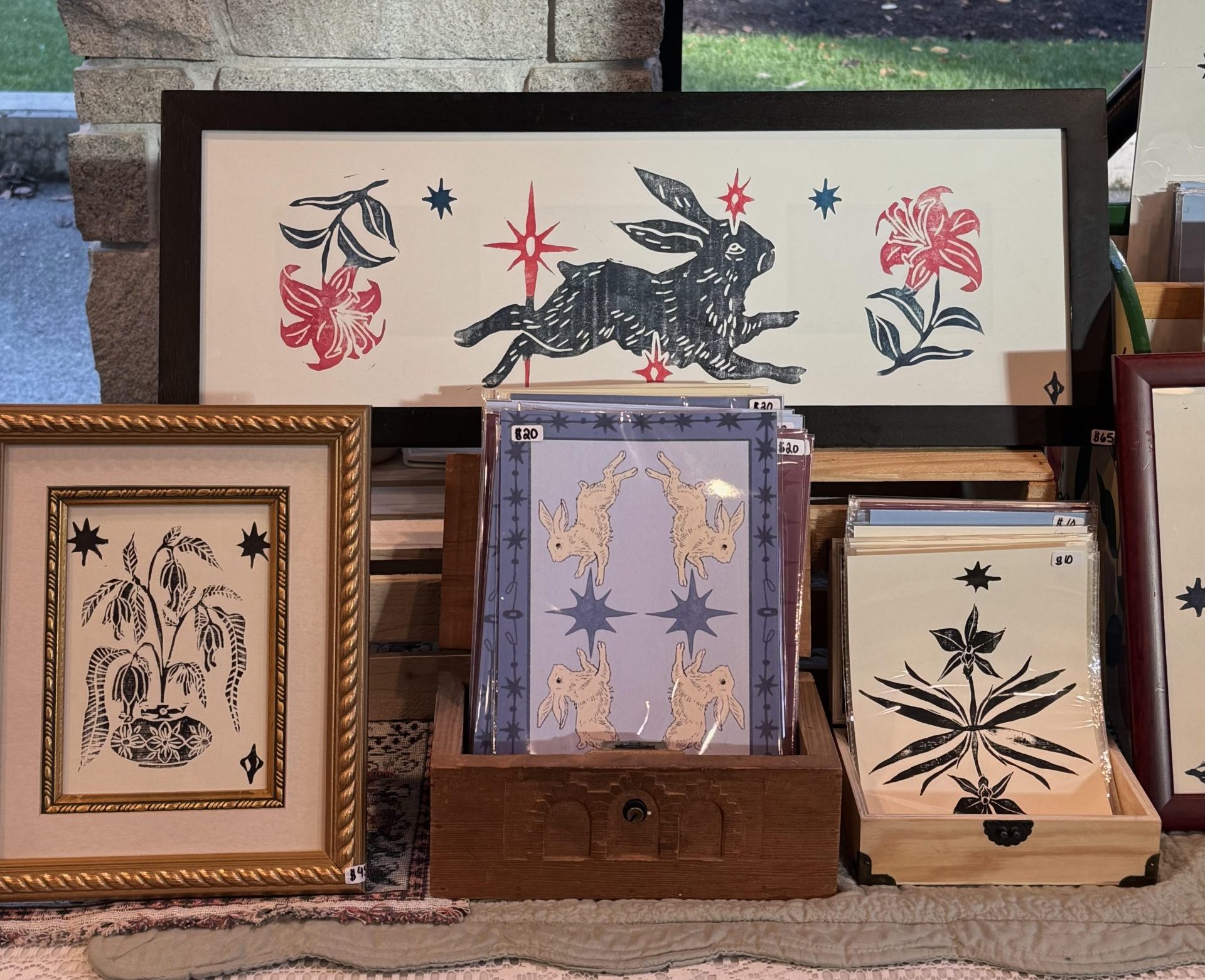
Photo by Rachel Diment.
Market magic
Despite the physical and emotional strain that an individual market, or the season as a whole, brings for the artists, no one can stay away for too long.
“There’s this contagious creative energy,” said D’Angelo, who often leaves a day at a market feeling inspired and energized. “You kind of just get really jazzed on what everyone else is making, and it excites you.”
Johnston has found the value of markets to come through the connections she’s made with other vendors, and the embrace of a community that seeks to uplift one another. She said it’s common for vendors to trade goods with one another, as well as share insights on what markets are worthwhile. “It’s not about the money, it’s about friendship,” she said.
Andrew Penn, of Bilston Farms, has also noticed the opportunity for a new shopping experience that markets can offer. “The consumer drive is so much around us now otherwise,” he said. “[The market] maybe feels more distant from that.”
Once all of the bustle of a day has died down, and only unclaimed goods remain on the tables, it’s time to head home. With a jaw sore from forcing a smile all day and an aching back, Diment carefully packs away prints, calendars, and whatever clothes weren’t sold that day.
The impending post-market crash still isn’t enough to squash the literal love of her craft. Even deep in the haze of the holiday market season, she still says, “Long live markets in Victoria.”