
Formula 1 is racing towards net zero, indicating that sustainability and success can share the same track
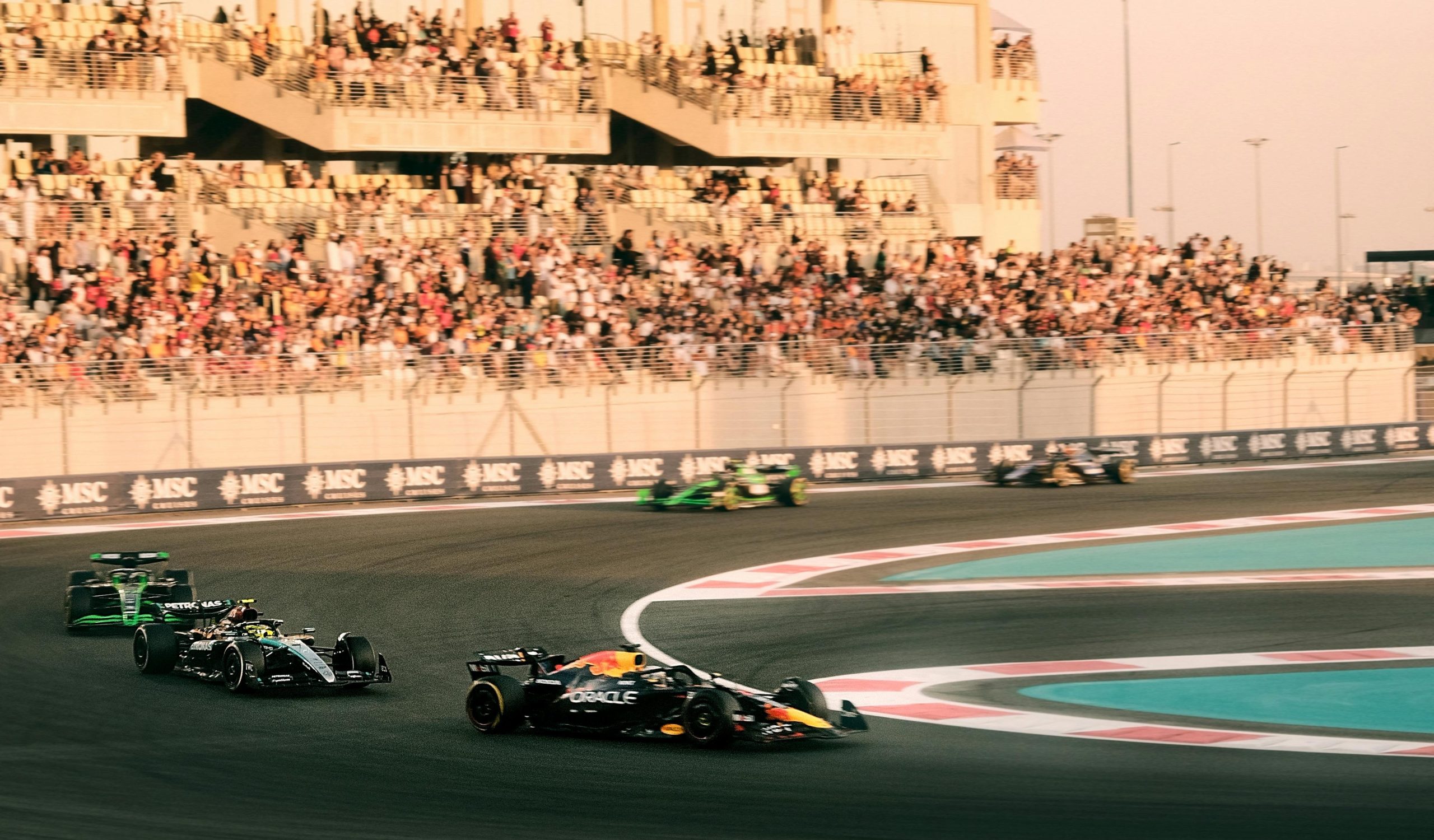
Photo by Mauricio K. via Pexels.
The five lights count down to go. Engines roar and tires tear across the tarmac, as 20 drivers launch into a high-speed pursuit of perfection and victory. Each corner holds the capacity for collision, and every long straight presents potential for a race-changing overtake. At 300 km/h, anything can change in an instant, as Max Verstappen, driver for Red Bull Racing, proved with his stunning 17th-to-first victory in the 2024 Brazil grand prix.
This is Formula 1: a global enterprise established in 1950 that has captivated more than 827 million fans worldwide. Each race is a glamorous event, featuring an iconic location, celebrity attendees, and luxury brand endorsements — all contributing to F1’s show of style and speed.
But behind this spectacle lies the persistent issue of sustainability. This extravagant global enterprise produces about 256 000 tonnes of carbon dioxide each season; after all, grandeur isn’t cheap. Temporary track infrastructure, team travel, and freight transportation all add to the sport’s massive carbon footprint.
F1 must balance the tension between luxury events and environmental responsibility. With grands prix drawing up to 500 000 attendees, and a season schedule that depends on constant global travel, F1 is undeniably environmentally draining. Nevertheless, this organization still strives to reduce their carbon output with green initiatives. F1 is racing towards sustainability, aiming for net zero, and at this rate, they may just win.
Of course, F1 is hardly the only sport facing sustainability challenges. The MotoGP, Association of Tennis Professionals tours, and FIFA World Cup are just a few examples of major sporting events that produce significant carbon emissions due to temporary infrastructure, spectator emissions, and extensive travelling. However, F1 stands apart because of the complex logistics of transporting cars and teams, the city-wide takeovers grand prix can bring, and the fact that motorsport inherently produces large volumes of emissions.
F1 has created a new race for itself: the race to reach net zero by 2030. This ambitious target means that F1 will have to offset all emissions produced by operations. By the end of 2024, F1 announced it had cut carbon emissions by a significant 26 per cent compared with 2018 levels. This has been achieved by implementing renewable energy sources in factories and facilities, requiring Forest Stewardship Council-approved tires for all cars, and using partially sustainable fuel, with plans to shift to 100 per cent sustainable fuel in 2026. Sustainable fuels, such as the Aramco fuel used in F2 and F3, are made from more sustainable sources, such as agricultural or forestry waste. This carbon neutral fuel is designed to work in any vehicle without it needing alteration.
Yet, despite F1’s proud promotion of these sustainability strategies, they only address a fraction of the enterprise’s overall issue. F1 cars contribute less than one per cent of total enterprise emissions, but these racecar-related initiatives are heavily publicized. 78 per cent of F1’s carbon emissions, however, stem from transport logistics and team travel. By focusing on racecar initiatives, F1 risks its environmental efforts appearing superficial.
However, although racecars may dominate the spotlight, F1 is not ignoring the environmental impact of their transport and travel, either — and is actively combating these emissions. F1 says their travel emissions have reduced 25 per cent since 2018, thanks to the introduction of remote broadcast operations and more team personnel working remotely during race weekends.
Another strategy F1 has implemented to reduce travel-associated carbon emissions has been to improve the geographic flow of races, to reduce long-distance travel. By arranging races into regional segments, such as Asia Pacific and Europe, F1 has minimized transatlantic travel. Some teams, including McLaren and Haas, have also cut emissions by choosing sea freight over air for transporting equipment and cars. F1 has also invested heavily in Sustainable Aviation Fuel (SAF), a technology that can cut carbon emissions up to 80 per cent compared with conventional fuel. While these initiatives display a commitment beyond superficial gestures on F1’s part, a stronger spotlight on their travel-related actions could encourage other enterprises to follow suit.
The F1 enterprise is centered around innovation, and this attitude extends to its sustainability approach. Rather than simply restricting energy use in their facilities, F1 implemented renewable energy sources. Instead of reducing the variety of global race locations, they restructured the race schedule to reduce travel and invested in SAF.
These initiatives indicate that solving environmental challenges doesn’t require slowing down. F1 growth has continued to accelerate, with race attendances now at 6.5 million per season. As global viewership increases, F1 continues working to minimize its carbon footprint, showing that sustainability and success can share the same track.
Another exciting aspect of F1’s sustainability initiatives is their potential for a wider impact. As with many advancements developed through F1, sustainable fuel technologies could be utilized in standard road vehicles. F1’s investment in SAF also creates global benefits, allowing this technology to expand — according to the International Civil Aviation Organization (ICAO), SAF has been used for over 360 000 commercial flights.
F1’s approach to sustainability may not be perfect, but its innovation-driven strategy offers valuable lessons for other sports on achieving sustainability through creative and tangible initiatives. Overall, this enterprise prioritizes innovation over restraint, and as a result, this sport continues to advance both its popularity and sustainability.
Although the checkered flag of NetZero is still far ahead, F1’s innovative progress shows great promise of them crossing the finish line victoriously. F1 has not only paved the way toward their own sustainability, but has also set a track for others to follow.