
Why so many women are obsessed with Shane Hollander and Ilya Rozanov relationship
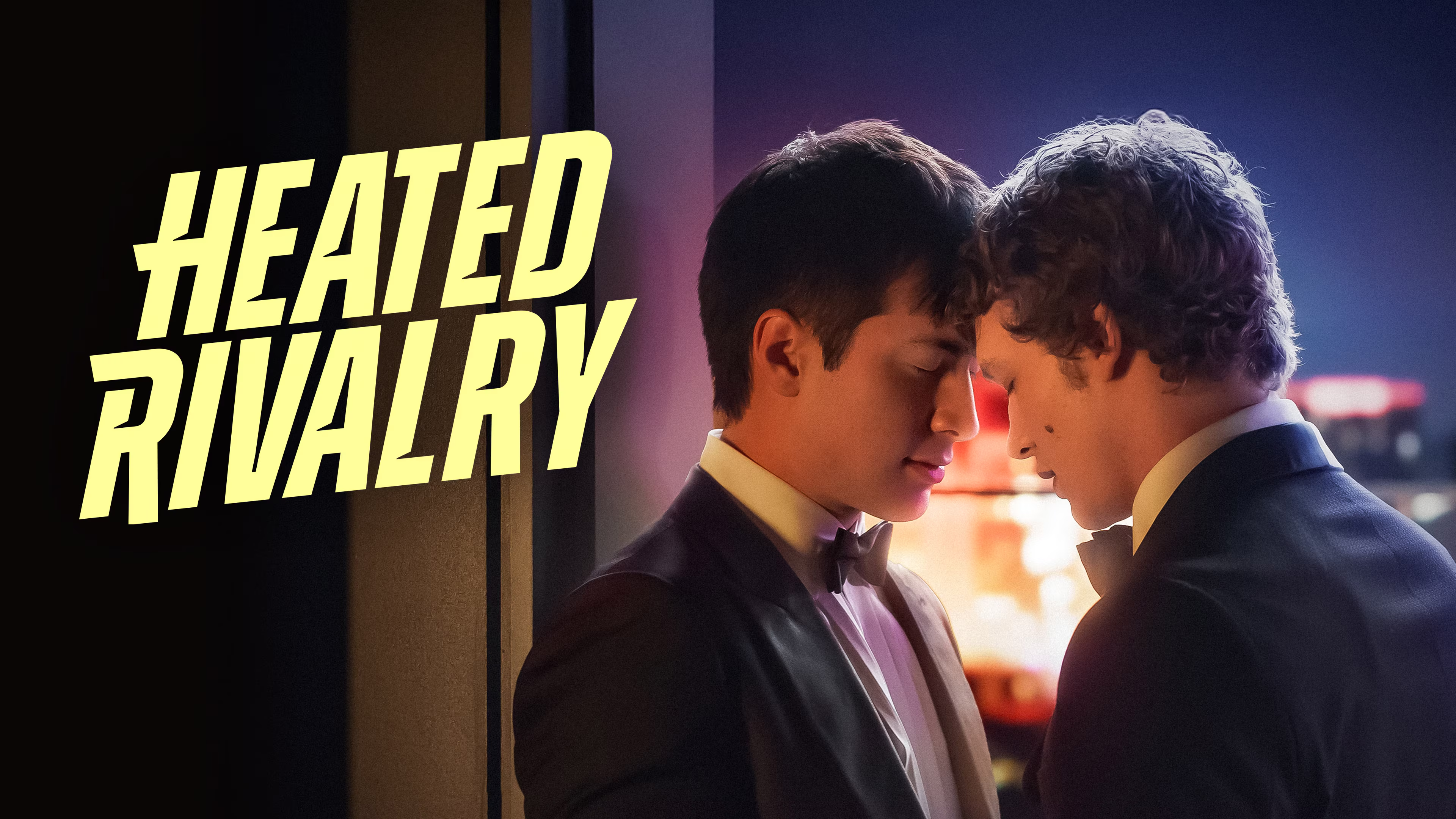
Photo via HBO Max.
On Nov. 28, 2025, Crave released the first two episodes of Heated Rivalry, a steamy show about two closeted all-star hockey rivals, Shane Hollander and Ilya Rozanov. The show gained significant attention online because of its one-of-a-kind, refreshing portrayal of masculinity.
Despite Heated Rivalry being about two gay men, it’s women who have created the most buzz about the show. The discussion is hot and heavy when it comes to Hollander and Rozanov’s chemistry, and not just because of their sexual intimacy. What’s most compelling to me and my friends about their dynamic is the desire these men have for each other. Rosanov provides subtle reassurance for Hollander when he’s anxious or uncomfortable through physical contact and delicate glances. Hollander attentively listens to Rosanov’s as he rants to him in Russian about his struggles. Despite being so different, they find ways to show up for each other, no matter how challenging they may be.
In a time where there is social pressure for men to display rigid masculinity, Heated Rivalry redefines what it means to be masculine. The way these two men challenge heterosexuality as a masculine norm is even more noteworthy, considering they are involved in one of the most male-dominated sports: hockey. Homophobia is a systemic issue in hockey culture, and is deeply interlaced with hypermasculinity. Whether it comes from using violence to assert dominance, or the casual use of slurs to put other players down, toxic masculinity is deeply rooted in hockey culture.
So, here’s where Hollander and Rosanov’s relationship contradicts those preconceived notions about what masculinity is, particularly in relation to the sport. Rather than being violent and rough with each other, both men display a sort of safe masculinity, where they are gentle with each other, and don’t allow their softness to subtract from their power. Their relationship is one of equality, where no one is the object and no one is the audience — except for the sex scenes, when they purposefully and consensually objectify each other. It’s almost impossible to not feel envious of their relationship.
Their relationship is heartfelt and beautiful, and both men are able to be vulnerable and masculine at the same time — they are able to be both strong on the ice, and then be comforting to each other after games. Together, they experience mutual desire on an even playing field, as they are both deeply closeted gay men, and players in the same league. Their yearning and longing for each other without objectification is something you often don’t see in heterosexual relationships, both in media and the broader world.
This unique representation of relationships and male vulnerability is intriguing to many women viewers, because being seen through the “male gaze” — a term coined in the seventies by British film critic Laura Mulvey, to describe how cinematic conventions reinforce patriarchal fantasies via the “act of looking” from a male perspective — means being objectified. Queer love, however, especially in a relationship between two people of the same gender as seen in Heated Rivalry shows it’s possible for gender roles not to interfere. While heterosexual women desire to be treated as equal in relationships, for many men, it’s hard to step away from stereotypical masculinity, because it’s so ingrained in society.
Compared to queer relationships, the heterosexual relationships I have been a part of felt more performative. When I was in a relationship with a man, I felt the need to seek external validation from those around me. Because heterosexual relationships are more socially acceptable, I felt more pressure to act a certain, more feminine way. With men, I felt like I had to be smaller, quieter, and more compliant. I shrank myself in order to take up less space and make room for him, who, for some reason in my head, I saw as presiding. When I’ve dated women, I’ve felt the opposite of pressure. We were equals, and I never felt like I had to make myself smaller or be more feminine.
Hollander and Rosanov’s relationship is uncharted territory, and they don’t have anything to compare their connection to, so they are able to navigate it without previous biases. Although it takes them some time to build trust with each other, they are equal pillars of support.
While Heated Rivalry has enjoyed widespread popularity and acclaim, when it comes to women’s obsessions with the show in particular I believe it’s because they hope for a relationship like Hollander and Rosanov’s one day, closeted secrecy aspect notwithstanding. Seeing a nontraditional exploration of masculinity on a popular show feels like a breath of fresh air. Women wish to be treated equally, and be a part of a relationship that’s on an even playing field, like Hollander and Rozanov’s.
Misogyny, whether internalized or externalized, will innately play a role in relationships under a patriarchal society, no matter how progressive you are. For all the women out there watching Heated Rivalry, and longing for a relationship like Hollander and Rosanov’s,don’t give up hope just yet. Heated Rivalry does what all great art should: not just entertain us, but show us how to live and be better. Hollander and Rosanov’s relationship provides an example of both healthy masculinity and healthy relationships for us to aspire to.