
The award winning author on the response to ‘Fire Weather,’ the captivity of the Canadian government to oil and gas, and advice for young journalists
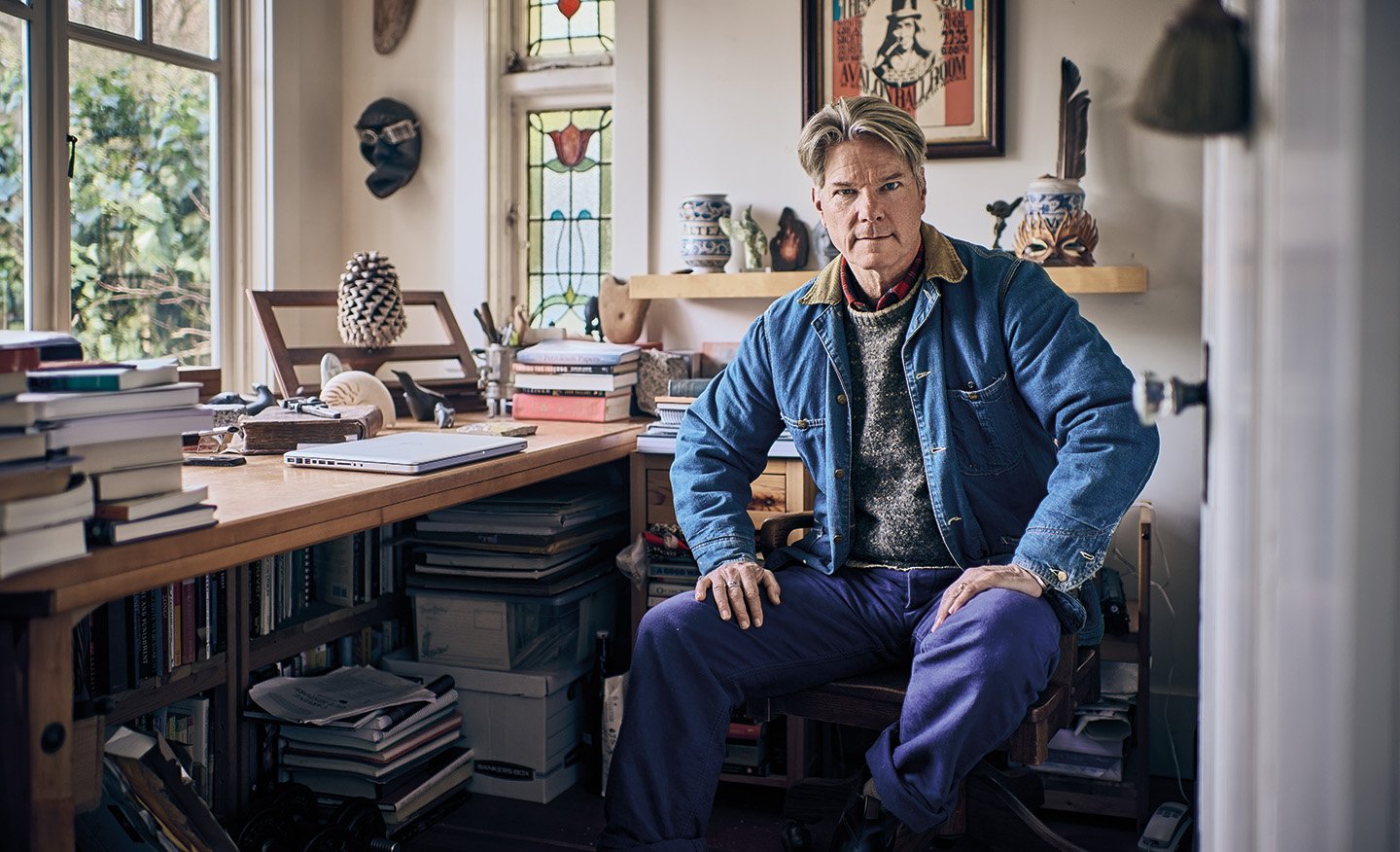
Photo via https://www.bailliegifford.com/.
John Vaillant is an American-Canadian journalist and author based out of Vancouver, B.C. He’s written for The New Yorker, The Globe and Mail, The New York Times, and Outside Magazine, among others. His non-fiction writing covers topics such as Siberian Tigers in far-eastern Russia, the rare golden spruce of Haida Gwaii, and, most recently, the 2016 Fort McMurray Wildfires. He has also published one novel, The Jaguar’s Children.
The Martlet reached Vaillant over the phone to discuss his career in journalism, the challenges and surprises that come from reporting stories on location, and the response to his most recent work, Fire Weather: The Making of a Beast.
This interview has been edited for clarity and concision.
Can you tell me about how you started getting into writing and journalism professionally?
I had a very unorthodox pathway. I think most people like me would have written for their university paper and then started working with some city paper.
I was raised and educated in the United States. Other friends who pursued journalism got an internship at Harper’s or the Atlantic and opened mail, and then eventually worked their way into it. I didn’t do that. I hitchhiked to and worked up in Alaska off and on for a couple of years, and then had many other jobs for about 12 years. So I kind of studiously avoided writing, which I was always interested in, always secretly aspired to, but didn’t quite have the whatever it is you need.
When I was 35, I started immediately, actually, writing for magazines. I took trips into the Canadian Arctic and various other places and wrote stories about eccentric things and weird contests, like pumpkin cannon building and throwing contests, and those went really well. I got an agent off of that.
By the time I was ready to write, I was mature enough. I got a piece in The New Yorker, and then the second piece was The Golden Spruce. This was all sort of within a year. 9-11 happened in the middle of that. I delivered The Golden Spruce article, and just everything in The New Yorker turned to 9-11 coverage for a whole year. That piece just got bumped and bumped and bumped, week after week, month after month. I was, needless to say, kind of anxious about that.
It finally ran in 2002, and then there was a huge flurry of editors, of folks who wanted to say, “We’d like you to expand this into a book.” That’s how it began. I wasn’t in journalism very long — I was in it for two years, I didn’t do that many articles, and then the next three years I was working on The Golden Spruce, and then touring. I got into The Tiger quite shortly after that.
I was curious about publishing with The New Yorker. I understand the pitch process takes about a year. Is that accurate?
The main thing is you need an agent. I don’t know anybody who’s gotten in over the transom. I grew up with The New Yorker. Everyone in my family read it, and my grandfather had every single copy bound back to 1925. I grew up in Massachusetts — you know, intellectual, literary — and that’s what we read, that was our culture. From the moment I could get my chin over the top of the coffee table, there was a New Yorker there. The covers are colourful, like children’s illustrations often. You’re just always going to notice them. It totally formed my aesthetic as much as anything has. And so to get to write for that, that was the mountain to climb.
But, I remember asking a guy once, I was probably 19, and he gave a presentation that I went to, and I said, ”So, how do you get in with The New Yorker?” And he was all mysterious and sort of coy about it: “Well if you have to ask, you can’t afford it,” was the vibe. I remember thinking, then: “First of all, fuck you. And second of all, if I ever get into that magazine, which seemed impossible at that time, I am never going to be mysterious about it.”
How you get into The New Yorker is, besides really understanding what they like to publish and understanding the voice they want, you need an agent, bottom line. There’s no mystery to that, and you need an agent who has access to an editor there, obviously.
They’re looking for new people, generally, and now they have the online one, so there are really twice as many ways to write for The New Yorker as there were in the “print only” days. You get paid much, much less for online stuff, but you can still say, “I write for The New Yorker,” and you actually might even get more connections because it’s digital.
Each article that I did for them pretty much took a year. That’s a terrible business model, and it’s also stressful. The editorial process is really rigorous. They fact-check the daylights out of you, which is great. The Golden Spruce actually came pretty easily, for some reason. But the first one I did, we went through 10 rounds of edits.
There were non fiction writers [in the 1980’s] doing crazy adventures around the world that people like me revered and idolized, and they were a little loosey goosey with the facts. That’s where writing for The New Yorker, or National Geographic, or The Atlantic, you simply can’t do that. So that was my kind of cultural training, at the very beginning. You cannot lie, you cannot pad, you cannot make little convenient changes, because you’ll be found out and fired, and you’ll destroy your career. It’s great training. Instead of trying to boost the story to make it a little better, a little more amazing, you just have to find a story that is simply that amazing on its own merits. The Tiger is that, The Golden Spruce is that, Fire Weather is that. They just are. They’re just amazing stories. It has nothing to do with me. It has to do with the nature of what happened in those events, and who was involved. Our job is to identify the story and just tease out those mind-blowing bits, and string them together in a way that’s coherent. It’s complicated and not complicated at the same time.
In a class I attended this semester, we were discussing your book Fire Weather. Honestly, a lot of the young journalists were overwhelmed by it, by the amount of information that’s in it, and sorting through that. What are your processes as a researcher?
Fire Weather is a different animal than The Tiger or The Golden Spruce. It’s really four books in one. I remember my dear sister, who is younger than me, smarter than me, when I sent her an early draft, she said, “You have to make it into one book.”
That was sort of the toughest editorial advice I got, and also obvious. You would say the same thing if somebody sent you something that looked like four books, you’d say, “Somehow you’ve got to braid this together.” It’s still intense to hear it from someone you love and respect. So I endeavoured to do that.
I would still say, and own, that it’s still a Frankenstein. There’s the arm of Canadian extraction history attached to the torso of fire behaviour, with a neck of Fort McMurray subculture, and then another leg of climate science. Somehow it fits together.
I feel that way about Fire Weather, in a way that I don’t about The Tiger or The Golden Spruce, where those are pretty clear, continuous arcs, with lots of centipede-like digressions coming off them, but there’s a main body going through it. In Fire Weather, it’s a little bit different, so I can see why people would be overwhelmed. I was, too. That’s why it took me seven years instead of three years. It was overwhelming.
There was a huge amount of information, incredibly steep learning curves, and then cracking the narrative puzzle. It took three editors in two countries over seven years to slowly get it into shape. There were times when I had no contact with my agent or an editor for two years. There’d be huge gaps, when I’d just be in there going quietly insane, trying to put this thing together. It was super hard. It gave me gray hair and took up my 50s, basically. Thank God, it was well received. There are lots of climate and “fire” books that have their two weeks, then disappear.
As I speak to you now, I just got back from Bozeman, Montana. Right before that, I was in Peru, and before that, I was somewhere else. I’m going to Ottawa next week, and I’ve been doing this since May 2023, all because of Fire Weather. People all over the world have connected to it. Politicians have, and insurance agents have, and fire chiefs have. That crazy range of things in there offered many different people points of entry, and ways to resonate with it. As a writer, you can imagine, that’s the dream. I don’t just want people who work at Stand and Greenpeace to connect to Fire Weather, as much as I revere those organizations. I would be thrilled if they said, ‘’Everybody should read this.’’ But it’s really cool when a right-wing politician says, “Wow, this is really amazing.”
This guy, a Reaganite Republican who helped open up the Gulf of Mexico to deep-sea drilling back in the 80s, he didn’t have to read it, but I met him, and he said, “I read your book, and it’s really good, and I presented it to my wife’s book club.” That is not who people like us expect to connect with. That was incredible.
Let the facts speak for themselves. Let the insane details blow people’s minds in a non-partisan way. It was really hard, because I’m really appalled by the tar sands. I’m appalled by the captivity of the Canadian government to the petroleum industry. It’s disgusting, and it could kill us. It’s lethal.
So, what do you do with those justified, intense feelings? That’s what you try to do as a journalist, show people what is happening in a way that they simply can’t ignore, and that’s in language that is not so cliché, or not so predictable, that they can immediately say, “Oh, you’re using that word. I know where you are on this subject, so I’m going to tune out. I’ve heard all that before.”
If the images are powerful enough, and the language is particular enough, instead of standard “liberal-ese” or partisan language, then you can almost trick people to keep going. It’s not really a trick; it’s just that you don’t send up the signal. Anyone who reads my book knows where I stand on this.
Being unbiased on a particular topic or issue, I’ve noticed, is a challenge for many young journalists.
Especially in the “woke” era. I think you can be “woke” on both sides. It really has hampered the discourse.
What I have to say, and that has really borne fruit, is that by recognizing my biases as a mature person who has done therapy and understands where some of my baggage is, I can say, “Okay, John, you’re going to leave this and this behind, and you’re going to go in there as open and neutral as you can, and you’re there to learn. It’s not about you, it’s not about proving your point. It’s about learning what their reality is.”
And that, I’m quite sure, is the main reason this book has done so well, because of the people in Fort McMurray. Once you get to know them, it’s easy to have enormous compassion for them. How could you not, given what they went through, given what they thought they were doing, and then what actually happened? I don’t think many of them had big climate revelations. But their voices have a kind of authority that is kind of unimpeachable, and it also short-circuits people’s attempt to say, “Oh, this writer is just some other liberal, oil hater, socialist, commie.”
When an oil worker is describing their experience, it isn’t about the writer. It’s about a person’s experience working in Fort McMurray and going to work thinking it was a normal day, and then realizing, “Oh my god, this is not a normal day. In fact, the world as I know it is ending right now, and I don’t know what my kids are”
I really think that’s a huge reason why I’m still travelling. It’s really gratifying to have surprising people resonate with it, and people that I normally would never have any reason to talk to or occasion to engage with, saying, “Hey, I want to talk to you about this.” That’s the writer’s dream, I think, unless you’re just into reinforcing your partisanship.
You went to Fort McMurray not knowing anyone. You described arriving in the downtown strip with your notebook and a tape recorder. Once you started talking to people, did community members reach out to you, or approach you?
No. Nobody said, “Man, I really need to talk to somebody. Someone’s got to know what really happened here.” Then there was no whistleblower, anything. Yeah, everybody up there is committed to the petroleum industry. They’re faithful, and the money talks. That’s where their livelihood is, and they’re never going to make that much money anywhere else. Most of them are mortgaged to the hilt, so they better not screw up. Everything depends on them keeping that job, so they’re captive, too. Most of us are. Anybody who owes money to the bank is in a kind of indentured servitude.
But what was very beautiful and gracious was that people were willing to talk to me. I told him where I was from, and that I’m writing a book. It’s really a personal thing. It’s how you come off as a person, and that’s where it really comes down to relationships. The way you speak to people, the vibe you’re giving off, your quality of attention. Good attention is a really rare, precious thing, and you’re giving that as a journalist. Obviously, you’re getting something in return, but you’re also sharing this experience with someone who’s willing to open up. And then, as they take your measure and see your responses; “Oh, wow, this guy really gets it,” then you’ll get more, like, “Well, let’s go here, I’ll show you the burnt house foundation. That’s where my kids’ bedroom was. This is what I felt when I first saw…”
That’s incredibly intense. It’s a deep, deep honour. You’re being honoured by this person’s trust, and you’re obligated morally to honour that trust through your writing process, and portray them with the dignity they deserve.
I think one of the strengths of the book is that you see who these people are, their frankness, their emotional presence, the fact that they had to make extraordinarily difficult decisions very, very quickly, with no preparation and no warning. It’s the worst. Those are the situations that are almost guaranteed to screw up. And somehow they didn’t; pretty much everybody made more or less the right decision under unspeakable pressure. That’s amazing and beautiful, what amazing people they are.
But that said … they have PTSD and trauma. They don’t know where they’re going to live, yet. They’re wrestling with their insurance company. Their job may not be secure. Everything that they’ve worked for is gone. To have someone like me, or you, come up and say, “Hey, I’m from UVic, and I’m doing this piece, tell me about this terrible day.” A two word response to that would have been totally justified. Amazingly, nobody said that to me, but I would have been sympathetic if they did. It’s like, “Okay, I get it, I am not your insurance agent. I have nothing meaningful to offer you, right? And you have more important things to do.” So it was kind of extraordinary that nobody did that.
I want to hear from you about your engagement with younger journalists, student journalists. Have they come up to you in your press tours or talked about your books with you?
Not as much as I would like. A lot of people like me would be a professor or something, teaching writing. I’m not really in that zone…. I’ve been given an enormous amount of direction, and so I also have a kind of ethical, moral, and professional obligation to help those coming up. It’s an incredibly important job, and maybe it hasn’t been this important in a long time.
I wouldn’t say it was ever really easy to do, but it’s definitely harder to do now, and it’s always been hard to make a living at it in Canada.
Even when I was starting, there were a lot more opportunities in the 90s, but it was still, “Whoa, you wrote for that magazine?! How did you do that?” It was hard then, but there are ways to do it, and not everybody gets to, and also — I got some big checks from The New Yorker — but until I was 40, I lived on very little money. It was that simple. And I really didn’t care. I was making, I don’t know, 15 or 20 grand a year in the 90s — that was obviously more than it is now, but it still wasn’t very much. I had friends who went into banking, or were in medical school. They were making real money, and I wasn’t.
I also just didn’t care. I really was more interested in writing. I wanted freedom…. It’s nice to be lightweight and flexible, and not tied to anything. Because the story is probably not going to be where you are. You’re going to have to go to it. The lighter your load is, the more flexible you are, then you can just go there and be where the story is.
It’s kind of like being a wildlife photographer. You just have to go out in the field, and that’s the main thing too. It’s so easy to simulate things just by watching things on YouTube, and now ChatGPT, it’s absolutely scary. But there’s still no substitute for being on the ground, because you’re just going to see stuff, smell stuff, have encounters, see juxtapositions that you just can’t see two dimensionally, or virtually. You just have to be there physically, and all sorts of opportunities that you could never envision will occur. I think that a lot of the things that have made my books interesting to me, and I hope surprising to readers, have been those details that I stumbled across, or were revealed to me because I was there.
I was interested to get your insight or advice for younger writers and journalists. As you said, “travel light, get on the ground.” Do you have any other advice?
How I did it, because I was freelance, I didn’t have the clout or the money that a New York Times journalist would have, or somebody with an assignment for Outside Magazine would have. We all wanted to write for Outside Magazine, which was in its golden age in the 90s. I didn’t have those assignments yet.
The other thing is, you’ve got to go further out. The Golden Spruce was further out. Believe me, if that had happened in the Olympic Peninsula in Washington State, it would have been on the cover of Outside Magazine in 1997. Instead, it sat for three years, and I think there are a lot of Canadian journalists justifiably kicking themselves for watching that one go by and not realizing what it was. I didn’t even live in Canada when it happened, so I completely missed it. Then I ran into it by accident when I was in Haida Gwaii on a paddling trip for Outside, ironically, my first one for them, my only one. I heard anecdotally about the golden spruce, and I was sort of curious about it. I had no idea what the significance of it was, and then I started kind of scratching away at it. I thought, “Wow, this is pretty weird.” And then it just got weirder and weirder. Three years’ worth of Canadian journalists and American journalists had missed it. That was my breakthrough.
That’s the gold that I found — by going outside the sphere of the normal story gathering net. Go further and go deeper, and go into the weird spots that you’ve never heard of, and you haven’t heard anybody else talking about. There’s probably something there. But that takes time and some inspiration. You have to learn to know it when you see it, and that’s just experience. If it’s agitating you and you can’t stop thinking about it, that probably means you’re on to something. For The Golden Spruce, the basics of that story were so bizarre and, frankly, confusing, I thought, ”there’s a mystery here. There are several mysteries here.” People like reading about that.
Again, there’s some luck in there, but there’s also the willingness to go further out and see, because there’s so much cool stuff happening on the margins. That’s such a dynamic zone, if you think of it as the intertidal zone. There’s so much life and energy, and transition and transformation and cross-pollination happening in that tiny little band. And I think when you get out to those margins, outside the city or outside a particular biome where it bumps up against another one, either culturally or biologically, there’s going to be energy there.
Fort McMurray is another perfect example. You have this urban aberration in the middle of one of the most flammable ecosystems on Earth, namely the boreal forest, and that’s going to be dynamic. When a fire comes through, it’s going to be intense, then you’re going to see a real collision of ambitions and ideas of what normal is supposed to be. I just think that’s fascinating.
Some good advice I got from another journalism instructor was to watch out for the moments where the hair on your neck stands up.
There you go. I mean, it’s an intuitive thing. The other thing I would advise is to be open to every source. If you have a dream, if you have a hallucination, if you see a strange word scrawled on the wall, take note of it. It might fit in somehow. It might trigger something.
So it’s not just in the newspaper, it’s not just in the scholarly journal, it’s not just in the interview. There’s all this peripheral stuff. It might be a turn in the weather. It might be birds. I really try to remind myself to stay as open as I can to inspiration, and not to discount any information because it doesn’t fall into a particularly established source. The world is full of beauty, and mystery, and strange juxtapositions, and there’s really great information and inspiration to be found there.
I’m curious about what you’re doing these days. As you said, you’re back from some speaking opportunities. Perhaps there is another book in the works?
I never know what the next one is. I’ve been doing Fire Weather for 10 years, and I’m sort of ready to stop, but on the other hand, it’s about climate. It’s the most pressing issue on Earth. Everything else we worry about happens beneath the umbrella of climate.
As long as people want to talk about it, I’ll keep going. I can’t really think of anything more important to do. Talking to people, like you, frankly, I’m glad we’re chatting right now. I really hope it’s helpful. I’m open to another story, but have no idea what that might be. And that’s always how it’s been. I’ve had four stories that really totally captivated me and changed me, and really challenged me profoundly. And I don’t want to write a book just for the sake of writing a book. So it’s going to have to be pretty amazing. Whatever comes next, and that’s not guaranteed. No one owes me that, so we’ll see.