
Experts and advocates say the province’s decriminalization pilot lacked the social supports needed to succeed.
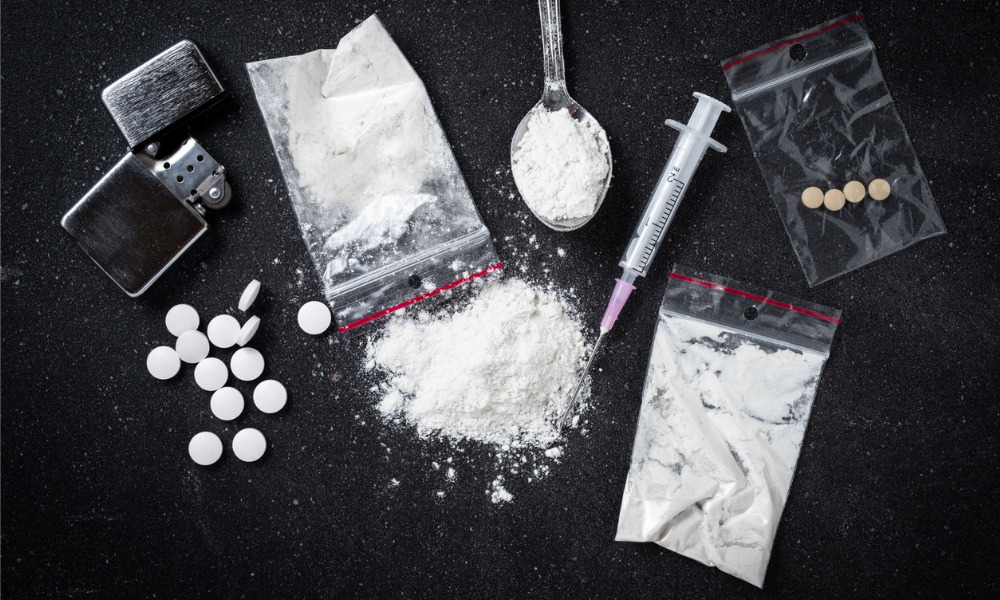
Photo via the Canadian Lawyer.
B.C. Minister of Health, Josie Osborne, released a statement on Jan. 14 confirming that the Ministry of Health will not be asking the federal government to renew the drug decriminalization pilot program, which will come to an end on Jan. 31, 2026.
The program, put into effect on Jan. 31, 2023, was a three-year long exemption to the Controlled Drugs and Substances Act (CDSA) granted to the province by Health Canada, which allowed adults in B.C. to legally possess up to 2.5 grams cumulative of certain controlled substances for personal use in private residences, places unhoused individuals legally seek shelter, and various other locations.
It was launched with the intention of making it easier for people struggling with substance use to reach out for help without fear of being criminalized or stigmatized, but Osborne said “it has not delivered the results [they] hoped for.”
Jessi Hamilton and Hannah Thiessen, two members of HARD law — a student club based out of UVic’s law school that advocates for harm reduction and decriminalization — told the Martlet that the pilot fell short in many ways, with Hamilton describing it as “set up to fail.”
They said that 2.5 grams is well below what someone entrenched in substance use would realistically possess. Additionally, they said there were no public education efforts, nor any expansion of social services such as housing and mental health care, accompanying the pilot.
In a statement released on Jan. 27, UVic said that their policies around drug use are “not changing,” noting last year’s changes to the non-academic misconduct policy, which removing use and possession of substances as instances of non-academic misconduct. The university also drew attention to the federal Good Samaritan Drug Overdose Act, which provides certain legal protections to individuals seeking emergency help during an overdose, and noted a number of harm reduction and support resources offered by the university and in the broader Victoria community.
Though the pilot is not being renewed, it will not affect the protections offered by the Good Samaritan Drug Overdose Act. The university’s statement added that exemptions remain in place at drug checking and supervised consumption sites, which are exempted under section 56.1 of the CDSA.
Dr. Jaime Arredondo, the Canada Research Chair in Substance Use and Health Policy Research, said that for decriminalization to be successful, more social support needs to accompany it. Among other things, he said that the lack of housing and affordability crisis both need to be addressed, as well as hiring more social workers, providing safe supply, and an immediate process for those seeking help.
While Arredondo recognizes that the goal of the decriminalization pilot was to view substance use as a health issue, rather than a criminal one, he said “we didn’t have enough time to see the full effects of [it] being implemented.”
He said that evidence-based policy should be isolated from political agendas, and localized solutions should be explored in more depth, because certain policy solutions might work better than others in a particular location.
While public safety concerns are completely valid, Hamilton and Thiessen said, they pointed to a lack of safe supply as the main root of these issues, explaining that the unregulated, toxic drug supply is the only supply of these drugs available to most people.
In May 2024, Health Canada announced an amendment to the exemption that had been requested by the province, prohibiting possession of illicit drugs in public spaces. Exemptions remained for private residences, designated healthcare clinics, overdose prevention and drug checking sites, and locations where individuals were lawfully sheltering.
On Jan. 15, 2026, Chief Constable of the Vancouver Police Department, Steve Rai, released a statement saying that decriminalization, being unsupported by sufficient investments in prevention, drug education, access to treatment, or support for appropriate enforcement, created unintended harm for the Vancouver community.
Thiessen also shared her concern with a possible increase in drug overdoses following the end of the pilot. She explained that increased arrests for low-level drug possession will result in many substance users being released back into the community with lower drug tolerances, which they may not account for when dosing.
Drug decriminalization has been implemented in many countries, with the effectiveness varying greatly depending on the approach. Advocates point to Portugal as an example of successful decriminalization.
In 2001, Portugal decriminalized the low-level possession and consumption of all illicit drugs. Alongside this, they significantly expanded treatment and harm reduction services.
After over a decade, according to a report from the Drug Policy Alliance, there was no major increase in substance use. The report also states that Portugal has seen lower rates of problematic and adolescent substance use, reduced drug-induced deaths, and a marked increase in the number of people receiving treatment.
The Portuguese model can be taken as evidence to many that decriminalization can be successful, but shows that it must not come alone. With no single drug policy solution available to address the toxic drug overdose crisis, experts say many factors are needed together to bring success.
Arredondo said that “drug decriminalization is a necessary, but not sufficient condition to improve the lives of people who use drugs.”
Editor’s note: A physical version of this article appeared without UVic’s statement because it was sent to print prior to the statement’s release.