
The Martlet talks with analysts, scholars, leadership candidates about the future of the NDP
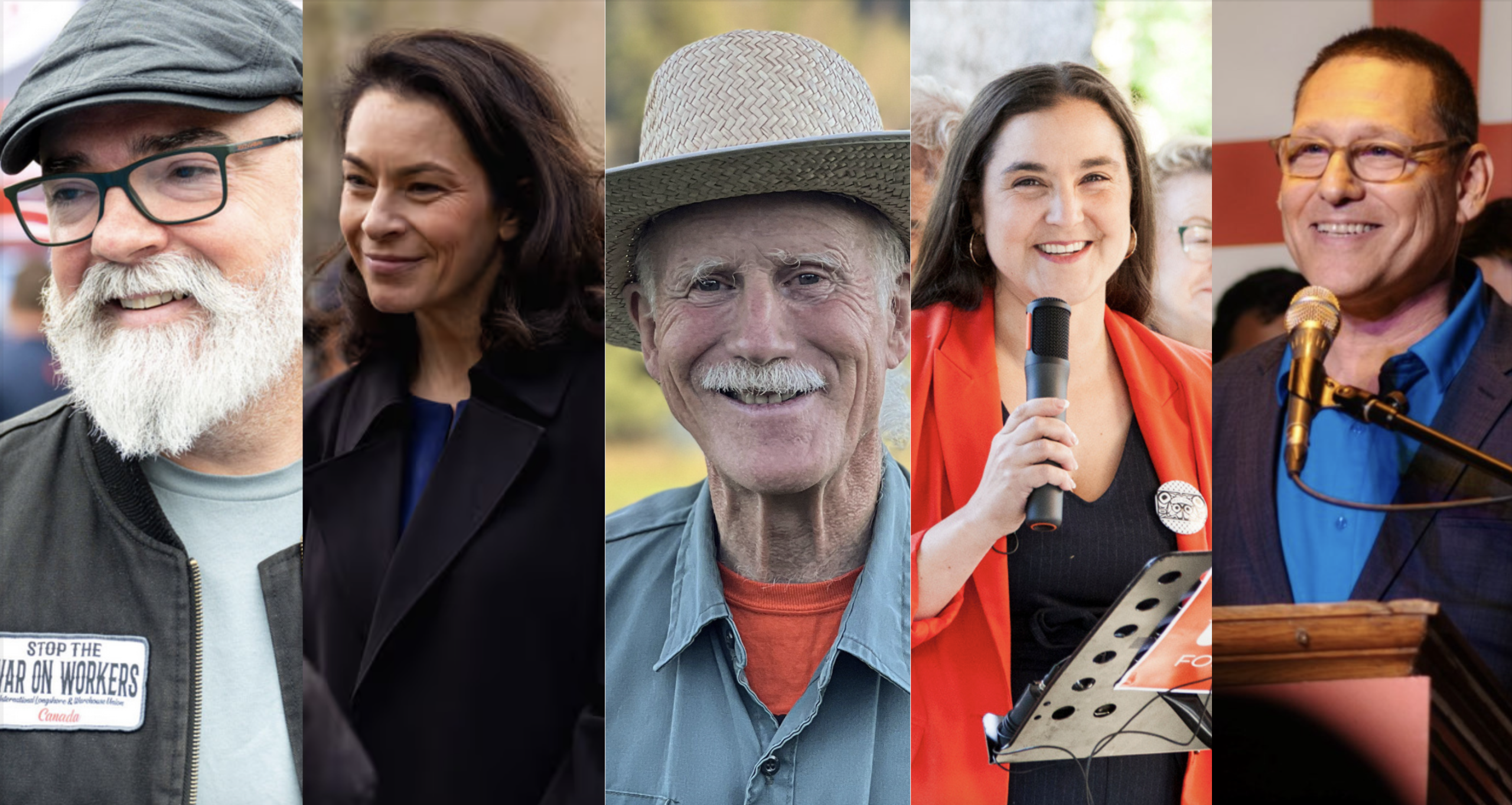
Photo via robashton.ca, Photo via heathermcpherson.ca., Photo by Ben Hustis, Photo via tanille.ca, Photo via torontotoday.ca.
In the 2025 Canadian federal election, the New Democratic Party (NDP) secured only seven seats in parliament — the worst electoral performance in their history. The Liberal Party of Canada (LPC), meanwhile, secured a minority government with 169 seats — described by many as a historic comeback, as the Conservative Party of Canada (CPC) held a 25-point lead over the Liberal’s prior to former Prime Minister Justin Trudeau’s resignation.
Many critics, as well as other news outlets, have described the NDP’s performance as a “collapse.” Charlie Angus, a former NDP member of parliament (MP), told GlobalNews it was a “catastrophic loss” and that “it’d be dangerous to tell ourselves that we were simply the victims of strategic voting.”
A report published by the NDP following the election found multiple points of failure. Despite resulting in progressive policy wins like Pharmacare and dental care — providing Canadians with coverage for birth control and diabetes medications, and a range of oral health procedures, respectively — the report said the Confidence and Supply Agreement (CASA) with the LPC made the NDP come across as “weak.” The same report described their poor election results as “devastating” and a “historic setback for the New Democratic Party of Canada.”
According to the Angus Reid Institute, only 13 per cent of Canadians said they would “definitely” consider the NDP in the future.
Following his loss in his own riding, Burnaby, former party leader Jagmeet Singh stepped down. Now, the party stands at a crossroads with five potential candidates looking to be the next leader — Tanille Johnston, Tony McQuail, Heather McPherson, Rob Ashton, and Avi Lewis.
The leadership race has largely been received negatively by the media. Prym Goodacre — a policy and communications advisor who worked on BC Greens leader Emily Lowan’s campaign — told the Martlet the race had been described as a “hug box.” An opinion piece in the Hill Times said the party could be “sleepwalking to irrelevance,” while, an article published by CBC said the race “could be turning into a snoozer,” and that the civility of the race could be causing the party to drift “further into irrelevance.”
But, in a leadership race, do the candidates really need to be in conflict with each other?
On Jan. 5, 2026, the Toronto Star reported that Ashton accused Lewis of “dividing the party” and “undermining provincial NDP governments.” Lewis reportedly brushed off the accusations. Despite criticisms of the race being overly civil, Ashton’s criticisms of Lewis “dividing the NDP” were largely received negatively.
Leadership races, first and foremost, aren’t federal elections. You aren’t seeing representatives of diametrically opposed parties take stage to duke it out in electoral boxing. They are, instead, a race to determine who’s best for the party. All the candidates are running to occupy the same space, in this case, in progressive politics. As a result, they’re less likely to be as combative with each other in the same way they would be against a Liberal or Conservative opponent.
Dr. Penny Bryden — a history professor at the UVic, who has studied internal party power dynamics — told the Martlet that a boring leadership race is not indicative of the party’s future. “They’re probably all kind of snoozy … an unexpected person may win, and the NDP may bound back. I don’t think that Jack Layton’s selection was either fore-ordained or particularly exciting, and yet, it worked,” she said.
In 1993, the NDP suffered a similar collapse, securing only nine seats. The party eventually recovered and achieved official opposition status in 2011 with 103 seats under Layton — their best ever electoral performance.
Dr. Justin Leifso — a professor of Canadian politics at UVic — shared Bryden’s sentiment. “[The] most important thing is figuring out who they are and what they want to be, and then coming up with a strategy for how to reach [that] … I don’t think that it matters much if there’s a ton of media on them. I also don’t think that they’re drifting into irrelevance.”
Perhaps traditional ‘attack style’ politics are affecting people’s perception of the race. Or perhaps people are simply overlooking the benefit of a leadership race — to reflect on the party’s mistakes, and solidify their identity going forward.
Former NDP leadership candidate Nathan Cullen told CBC that the candidates are in “violent agreement” with each other. It’s true. The candidates agree on many things. Lewis, McQuail, and Johnston are all running on achieving proportional representation via a citizens assembly. During the Jan. 10 leadership debate, McPherson could be seen nodding in agreement with Johnston’s ideas to improve public transit in rural communities, and McPherson later took a moment to acknowledge Johnston’s idea. The list goes on.
So, you might be asking yourself, why should I care about the race? Why should I care about five candidates with almost the same ideals, and many of the same ideas? Although they are similar, each candidate brings something unique to the table, offering something the party and each other could learn from.
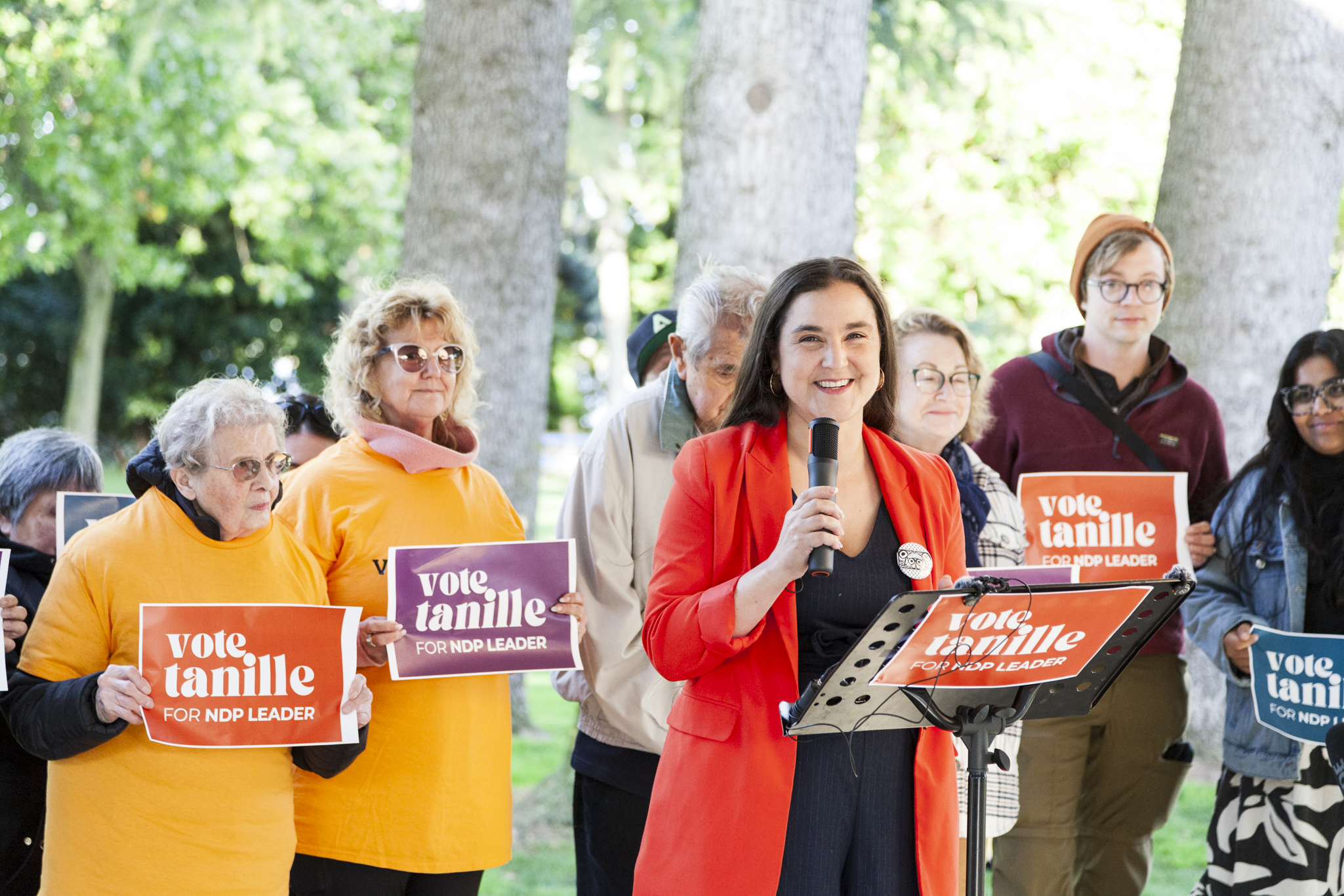
Photo courtesy of Angela Liu.
Tanille Johnston
“She’s very tapped in with youth in a way that a lot of the other candidates can’t really speak to,” Goodacre said.
Considered an “underdog,” Johnston is the youngest candidate in the campaign. Johnston is a UVic alumna, a proud Liǧʷiłdax̌ʷ woman from the WeWaiKai First Nation, social worker, and was the NDP candidate for North Island-Powell River in the 2025 election. She has also served on the UVSS and UVic Senate, among others.
She is running on free post-secondary education, eliminating student loans, guaranteed living income (or UBI), a living wage, electoral reform, lowering the voting age to 16, and funding all ages civic education programs.
“Students right now are graduating into impossible rent, crushing tuition, and jobs that don’t pay,” Johnston said in the second NDP leadership debate on Jan. 10. “I want a Canada where students can choose to study based on [their] passion, and not capitalism.”
In an interview with the Martlet, Johnston talked about wanting to switch the party to an “everyday organizing” style, engaging with communities and building up the party’s base in a consistent, prolonged effort, rather than just during elections.
“We have this tendency to get through an election and then take far too long of a time out, we lose the momentum, “ Johnston said.
Johnston also told the Martlet she wants to reduce financial barriers for entering the NDP and improve party transparency, including getting rid of the party’s membership fee and making party meetings more accessible.
“If Canada’s going to become a better place, it’s going to be the NDP that does it,” Johnston said. “We need to be a legitimate left option for folks… [and] move away from the center.”
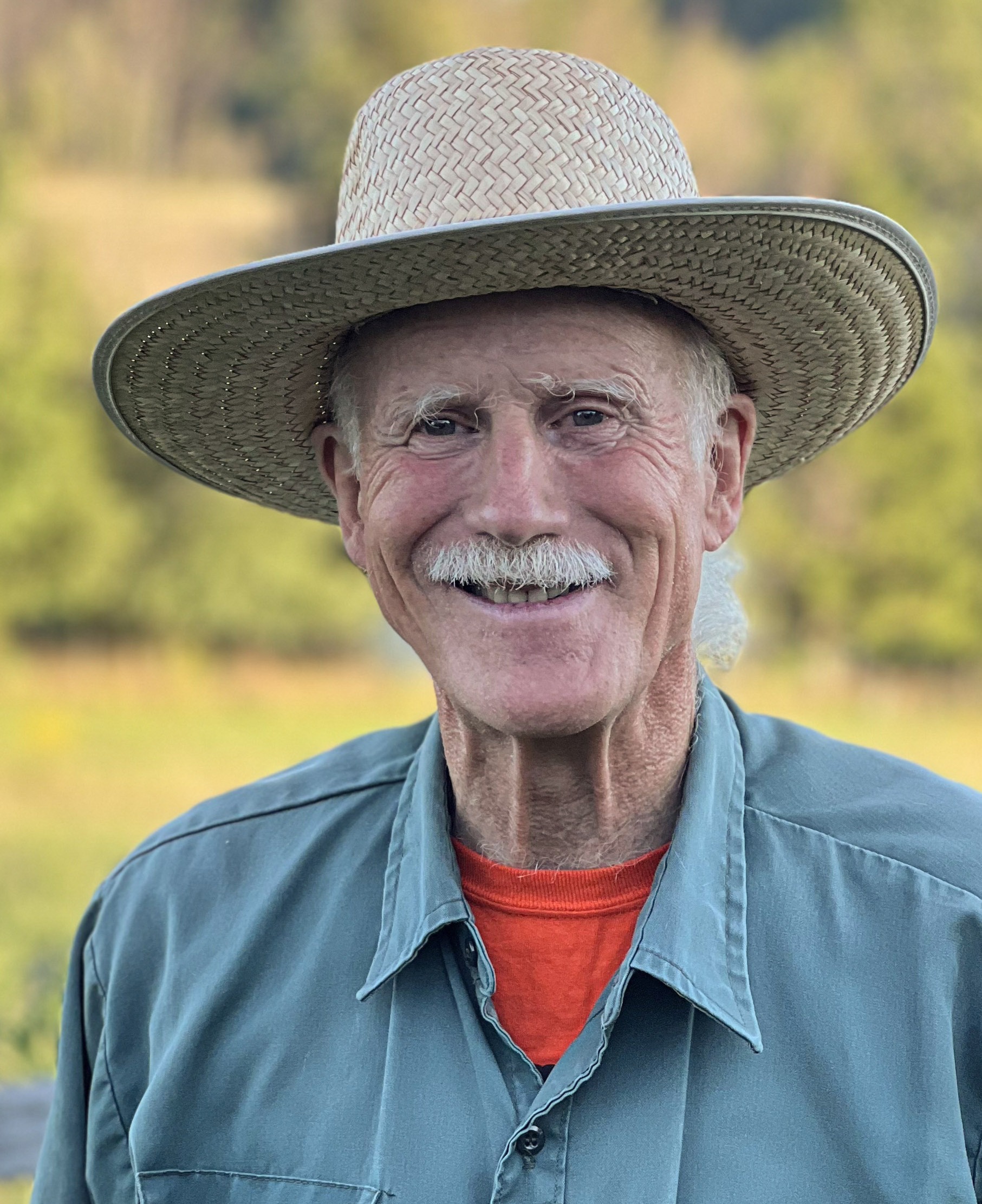
Photo by Ben Hustis.
Tony McQuail
“Tony’s perspective in the race is really good, because it does bring about those conversations that are not necessarily being had by the NDP brass,” Goodacre said.
Another “underdog” in the race, McQuail is an organic farmer, originally from Pennsylvania, but he became a Canadian citizen in 1977. He has a degree in Environmental Studies from the University of Waterloo, and has run a cumulative seven times as an NDP candidate in Ontario, both provincially and federally.
He is pushing for a level of party co-operation that no other candidate brings to the table. CTV reported that McQuail wanted to merge the NDP with the Green party. However, McQuail told the Martlet he said this mostly as a joke. McQuail, who calls himself a “green-progressive,” said he wants to collaborate more with the country’s other progressive parties, like the Bloc Québécois and the Greens.
“We don’t have time to merge parties,” McQuail said. “The problem is, our first-past-the-post system doesn’t reward coalitions unless you do it before [an] election… [Let’s] work with our riding associations to decide who’s going to be their candidate on behalf of the Green party and the NDP.”
In 2025, the Green Party of Canada publicly supported this idea as well. “Canadians deserve more than just a handful of selfless candidates stepping aside at the last minute to avoid vote splitting,” said Elizabeth May. “They deserve party leaders with the courage to … bring us closer to the fair and proportional democracy that Canadians overwhelmingly support.”
A similar strategy was used in France’s 2024 election. The New Popular Front (NFP) — an alliance of left-leaning parties — formed before the election to block the far-right National Rally from winning a snap election. The NFP successfully won the snap election, although they did not have enough MPs for a majority.
In the 2025 Canadian federal election, some seats went to the Conservatives that could have been flipped, were it not for vote splitting between the NDP and Greens, including Nanaimo-Ladysmith and Kitchener Centre.
McQuail’s platform includes his “four R’s”: representation, regeneration, redistribution, and redesign. He believes in changing wealth taxes in Canada, and establishing UBI (redistribution), a “redesign” of the economy to “better fit within the carrying capacity of our planet,” pushing past achieving sustainability and instead pushing for “regenerative” farming to restore lost ecosystems. As for representation, McQuail also believes in electoral reform.
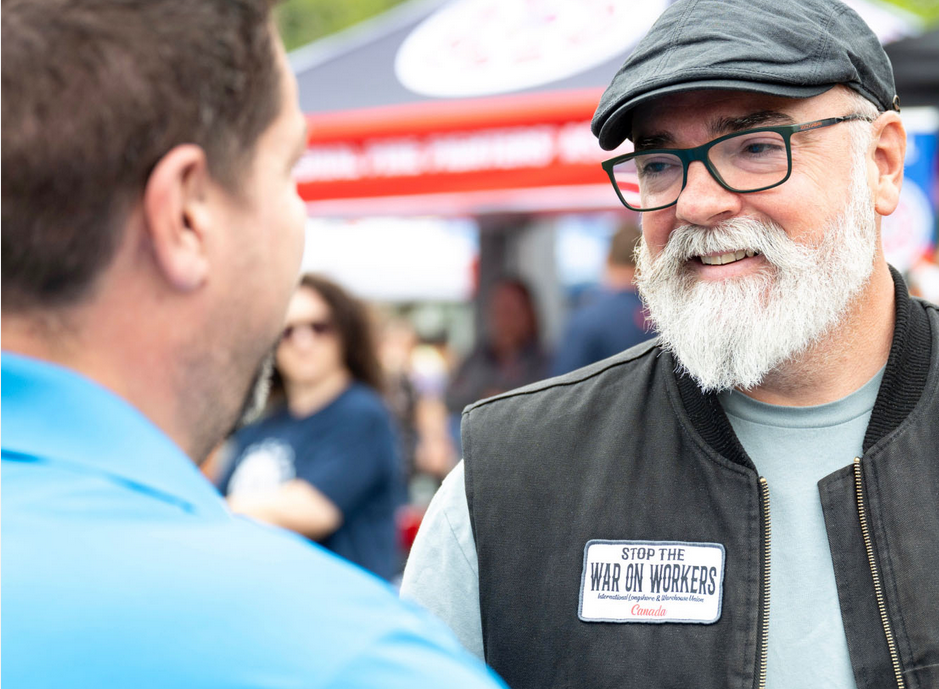
Photo via robashton.ca.
Rob Ashton
“Rob never forgets working people and their families. That’s why I trust him,” said Darlene Rotchford, MLA for Esquimalt-Colwood, in an Instagram endorsement released on Jan. 11.
As a union worker of over 30 years and president of the International Longshore Workers Union (ILWU) of Canada, Ashton’s ability to bring in union support is already being seen. On Dec. 2, 2025, the United Steelworkers (USW) union endorsed Ashton as leader. Likewise, the Prince Albert Labour Council and the Service Employees’ International Union (SEIU) Local 2 have both endorsed Ashton. On Jan. 19, 2025, the Canadian Union of Public Employees (CUPE) Saskatchewan endorsed Ashton as well.
“We’ve seen for years the Liberal Party politic-ing left, but ruling right at the end of the day, and ruling for bankers and corporations. And the Conservatives, they pretend they’re a working class party, but they’ve never done anything for workers in the generations that they’ve been around,” Ashton said in an interview with the Martlet.
“That’s not what [my NDP] will do. This party will run this country like it should be run. For the workers of this country.”
In the leadership debate, Ashton talked about the need to take climate action, while also stressing the importance of bringing workers in industries such as coal with them, and not leaving them without a job.
Ashton’s platform includes tripling the number of public, non-profit, and co-op homes, cracking down on corporate landlords, improving ease of access to joining unions, and replacing the temporary foreign workers program with “a fair system” that “gives migrant workers real power.”

Photo via heathermcpherson.ca
Heather McPherson
“The threat to our nation is unprecedented. We need to step up and recognize the global threat against Canada, against our sovereignty, against democracy. I want to see a leader who’s in the house the morning after the leadership race,” Charlie Angus, former MP, said in an endorsement posted by McPherson on Jan. 13.
McPherson is the only candidate with a seat in parliament, and brings with her six years of parliamentary experience, and almost 20 years of advocating for human rights. In her time at the NDP, she’s been credited for turning Edmonton-Strathcona into a safe NDP seat in an otherwise very blue province.
Still, some people associate McPherson with the NDP’s past leadership, with outlets such as CBC reporting on her as an “establishment” candidate. Similarly, Goodacre told the Martlet that the “mark of the previous NDP” may be hard to shake.
“I grew up in Alberta. I was the daughter of a truck driver. My mom was a teacher … I don’t come from politics. I’m not from a political dynasty … I’m from a working class Canadian family,” McPherson said in an interview with the Martlet. “That’s who Canadians should know I am.”
“Mark Carney has shown us that he’s going to govern from the right. We’ve got a very far-right Conservative Party under Pierre Poilievre. This is the rise of fascism,” she said. “There’s a reason that the Conservatives feel comfortable crossing the floor to join the Liberals right now. They’re basically the same party … I know how to beat conservatives. I’ve got a history of doing it.”
McPherson is running on “rebuilding from the ground up,” and wants to strengthen the party’s Electoral District Associations (EDAs) and regional networks. McPherson also advocates for turning housing into a human right, rather than an investment.
McPherson’s housing plan includes building 1.2 million new non-market, co-op, and below-market rental units by 2035. The plan states that these projects will be managed by local authorities and workers, keeping jobs within the community. McPherson also wants to introduce a “National Renters’ Bill of Rights” to cap annual rent increases, guarantee fair leases, and stop unfair evictions.
McPherson told the Martlet that more platform details are coming. “Our youth job strategy involves making sure that post-secondary education is free. But further than that, expanding it to include trades, apprenticeships, [and] colleges.”
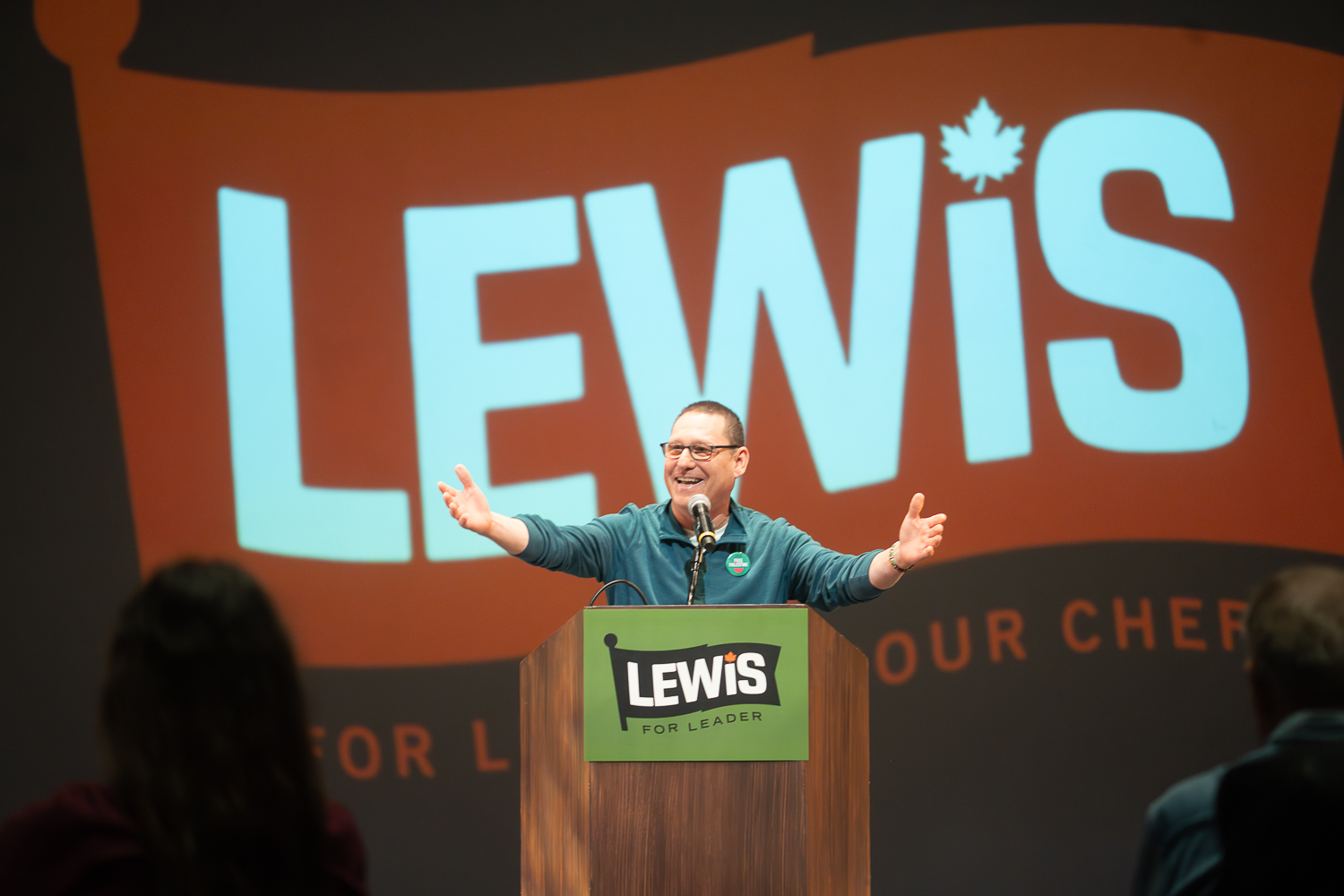
Photo by Christy Dean.
Avi Lewis
“Avi Lewis understands what this moment demands. His life’s work reflects a deep commitment to social justice, ending poverty, and confronting the climate emergency,” David Suzuki, the renowned Canadian author, broadcaster, and climate advocate, said in an endorsement posted by Lewis’ campaign on Jan. 13.
Suzuki previously endorsed Emily Lowan during her campaign to lead the BC Greens.
Goodacre told the Martlet that Lewis’ messaging has been very successful, citing popular policies such as public grocery stores, a public home building policy, and expanding railways across the country.
“He has always been media savvy,” Leifso added, citing Lewis’ experience working in the media and having a TV show. Lewis is a veteran journalist and activist, known for his his extensive media career, including hosting CBC’s “CounterSpin” and “On The Map,” and co-creating Al Jazeera’s “Fault Lines.”
In an interview with the Martlet, Lewis talked about messaging under his leadership.
“I think that’s one of the things that hurt us in the last election and the 2021 election as well, [was] an over reliance on focus groups and message testing, rather than just saying it like it is,” Lewis said. Instead, he calls for a direct “straight talking” style of communication, so the electorate is clear on the party’s stances.
Lewis comes with a large platform of progressive policies. Notably, his platform includes building public grocery and telecom options to combat price gouging, expanding healthcare to include dental, vision, and mental health, and creating a coordinated plan to end homelessness.
In his platform, he also advocates for the creation of “green jobs” and not granting any federal approval for new pipelines, instead pushing for a clean energy grid. Like groceries and telecommunications, Lewis believes his environmental strategy should be built on publicly owned services, and has advocated for crown corporations to create electric vehicles while on the campaign trail.
“What’s the point of having an alternative to the old corporate parties if we’re not actually asserting a totally different vision of how the economy could work?” Lewis said. “Little step solutions just don’t meet the measure of this moment.”
Despite the largely negative media attention, the candidates do largely seem to share a progressive vision for the future of the party, and a willingness to learn from the mistakes of the previous leadership. This is not to say that all the candidates are perfect. CBC reported that all five candidates are not fluent in French, but that Lewis and McPherson “showed fairly good comprehension.” A lack of fluency in French could make it hard for the NDP to appeal to the almost one-quarter of Canadians who speak French as a first language.
McPherson has been reported on as the “establishment” candidate, a label that could be hard to shake, despite her running on return to grassroots organization. Johnston and McQuail have both had challenges raising funds to meet the $100 000 entrance fee. Ashton has come under controversy for his staff’s use of generative AI to respond to questions in a Reddit thread, which he later apologized for. CBC reported that Lewis had faced criticism for his willingness to challenge provincial NDP leaders, and had “made enemies” during previous (unsuccessful) campaigns as a MP candidate.
But part of the benefit of a leadership race is, it gives parties an opportunity to assess candidates weaknesses and determine what gaps need to be addressed moving forward.
Bryden told the Martlet that an “off-center stage” leadership race could be beneficial to the NDP, as it gives them an opportunity to go back and assess their mistakes and solidify their identity.
“As a historian … you can go back and see extraordinarily important reinventions that occur after a collapse,” she said.
“There’s been a real lack of coherent opposition to the Carney government. And if we get a leader who is able to concretely and effectively communicate the failures of the Carney government, then I think there’s a real chance that it can snowball into some very real momentum,” Goodacre added. “I have an inkling that whoever wins will be able to take the electorate by surprise.”
What the NDP has now with the leadership race is not a guarantee of success. But it is an opportunity for the party to reinvent and reinvigorate themselves. A leader with bold progressive policies who learns not just from the mistakes of the past leadership, but also from the strengths of their fellow candidates, could be a force to be reckoned with in Canadian politics for years to come.
Editor’s note: This article has been amended to correct a quote from Avi Lewis, wherein he calls for a “straight talking” style of communication.