
ICBC’s revamped licensing program promotes accessibility, but how candidates will be properly supervised is vague
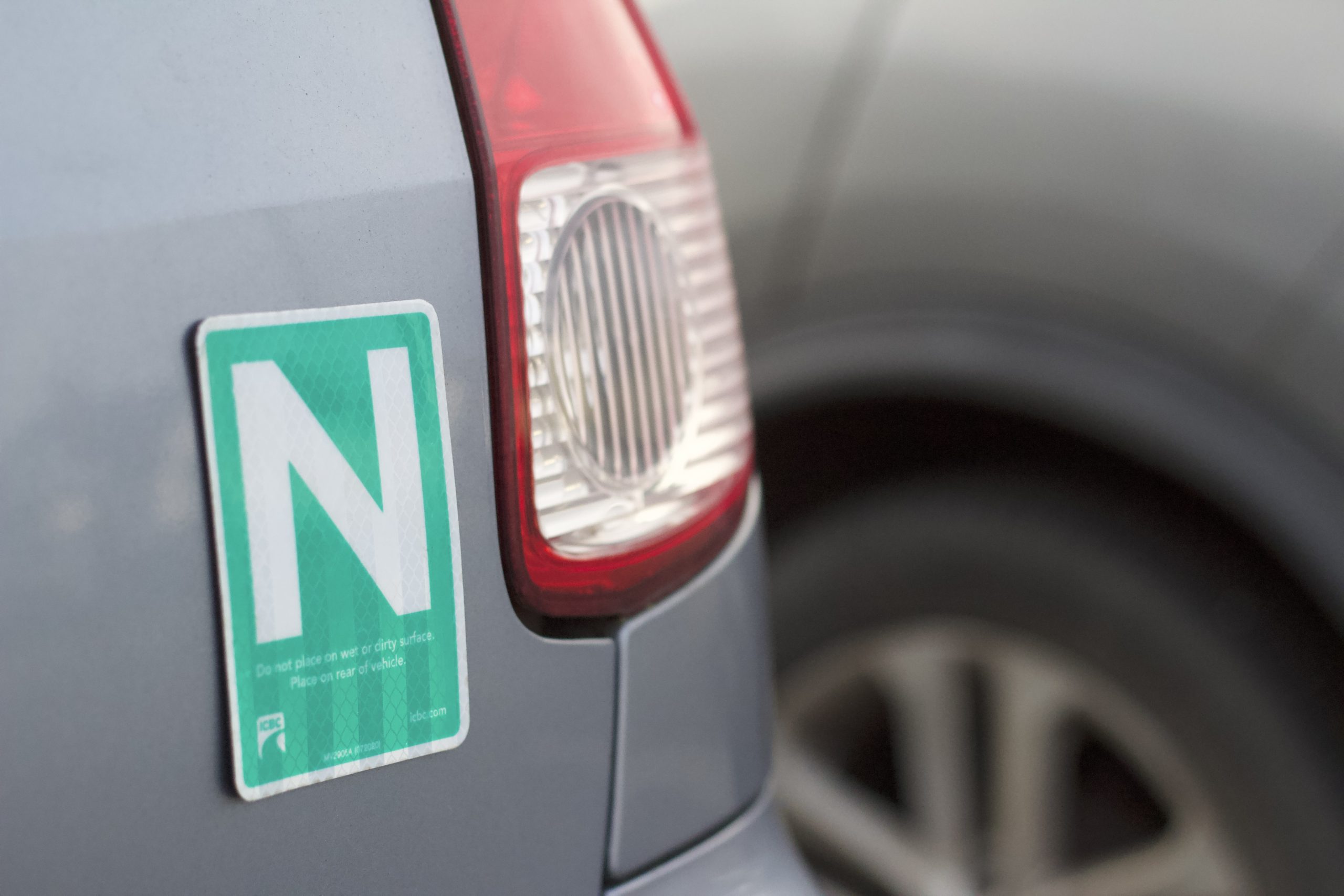
Photo by Robb McCaghren.
Big changes are coming to ICBC’s Graduated Licensing Program (GLP) in 2026. Most notably, the legislation passed by the B.C. Government last year, removing the requirement of taking a second road test to obtain a Class 5 licence.
Initially, this change was set to take effect in early 2026. That timeline has since been delayed until the summer. For many Class 7 Novice (“N”) licence holders, there are still more questions than answers.
The new GLP has the same beginning steps as the previous one: a written knowledge test to obtain the learner’s licence (“L”), and a road test for the N. Drivers under 25 years old must demonstrate 24 months of safe driving, adhering to the Class 7 restrictions. Then, eligible candidates will obtain a Class 5 licence with a 12-month safe-driving restriction period. If, after that period, the driver’s record remains clean, they will be granted a permanent Class 5 licence.
ICBC says that there is no evidence-based indication that “a second road test reduces a driver’s involvement in crashes.” Beyond recorded instances of unsafe driving, such as a speeding ticket or car accident, it is unclear exactly how ICBC will monitor prospective drivers for unsafe road behaviour to ensure the 12-month restriction period is working as intended. The company states that the provincial government will “work closely” with itself, RoadSafetyBC, and other key partners to make sure the changes maintain a high standard of road safety, but what that means practically is unclear.
Kate Harris, co-owner of DriveWiseB.C., told Times Colonist in 2025 that 35 per cent of the driving school’s students failed their Class 5 tests the previous year. Based on those statistics, it seems a considerable number of Novice drivers are unable to pass the final road test and yet, with these changes, many of them will likely progress to obtaining a Class 5 licence anyway.
In October, CHEK News’ quoted Harris saying that, by eliminating the second test, the government is effectively downloading road safety onto the police. Rather than utilizing the structures we previously had in place (i.e. a thorough road test protocol), CHEK reported, it seems that it will be law enforcement’s responsibility to supervise Novice drivers, on top of policing impaired or reckless driving; unless the implementation of the new GLP comes with additional support, this could result in a shortage of resources. The changes appear to increase liaising, bureaucracy, and the need for cooperation across multiple different authority structures. I can’t help but wonder, how does this make driving simpler?
Another substantial change is the fast-track through the GLP for individuals over 25 years old. ICBC’s website states that research and crash data indicates adult drivers are less likely to take risks or crash while driving. Moreover, they said, the change reflects accessibility goals, as “drivers over 25 may have work or family responsibilities and face additional barriers” to obtaining their licence.
Many of these changes were triggered by accessibility efforts, specifically reducing barriers for rural, remote, and Indigenous communities. In 2021, the Union of B.C. Indian Chiefs (UBCIC) published a release, calling to dismantle the barriers presented by drivers licensing to Indigenous wellbeing and safety. The release emphasized the “detrimental impacts” of inequitable access to driver’s licences, particularly on “the safety of Indigenous women and girls, health and education, access to traditional territories, socio-economic advancement, institutionalized racism, and over-incarceration.”
It was imperative that this call to action resulted in change. In a published UBCIC discussion paper on drivers licensing, many of the barriers and inequities raised stemmed from obtaining and practicing with a Class 7L licence — inequities such as issues with primary and secondary identification, literacy and visual impairment, limited test appointments, and extensive travel to ICBC offices.
Comparatively, the discussion paper draws less attention to barriers associated with the Class 5, though some, like the requirement to travel to ICBC offices and a lack of test appointments, also apply. The safety of Indigenous communities is a priority. To ensure the safety of all British Columbians, the provincial government, ICBC, and RoadSafetyBC must have a thorough protocol to monitor Novice drivers, while also removing barriers preventing Indigenous communities from accessing vital drivers resources.
Due to the lagging implementation process and a lack of clear answers regarding road safety, many drivers may feel unsure of the changes — I certainly do. Hopefully, in the coming months, particularly when the changes are set to take effect, ICBC can relay a detailed and defined plan, highlighting exactly how Novice and restricted Class 5 drivers will be monitored, alongside other yet-unreleased details, such as any potential exceptions to the new legislation.
Many are still uncertain, for example, about who this change affects. In my time talking to my fellow students at UVic, there were opposing interpretations of who could potentially skip the second road test; some speculated that Novice drivers who took their Class 7 road test several years ago would not be eligible for their Class 5 without taking a second road test. ICBC has not specified if there are any time restrictions or eligibility windows in the new legislation, and the legal documents have not been made available online yet for public research.
Changing legislation takes time. And, naturally, ICBC is not able to provide all the answers right away, but that does not negate the fact that impatience is building among drivers, many of whom are uncertain about their futures, and safety on the roads.
The inconsistent timelines are cause for further frustration, because drivers looking to complete the GLP can still book a road test, but many are left wondering if they should. For prospective drivers or Novice licence-holders over 25 years old, the upcoming fast-track GLP massively changes the game. It’s no surprise people would like to plan accordingly. With the New Year well behind us, and the spring fast approaching, many of us would like concrete answers, timelines, and regulations for the pending updates to the GLP.