
Despite past internal documents saying the post-secondary sector needs an ‘injection of funding,’ B.C. post-secondary minister says more funding is not an option at this time
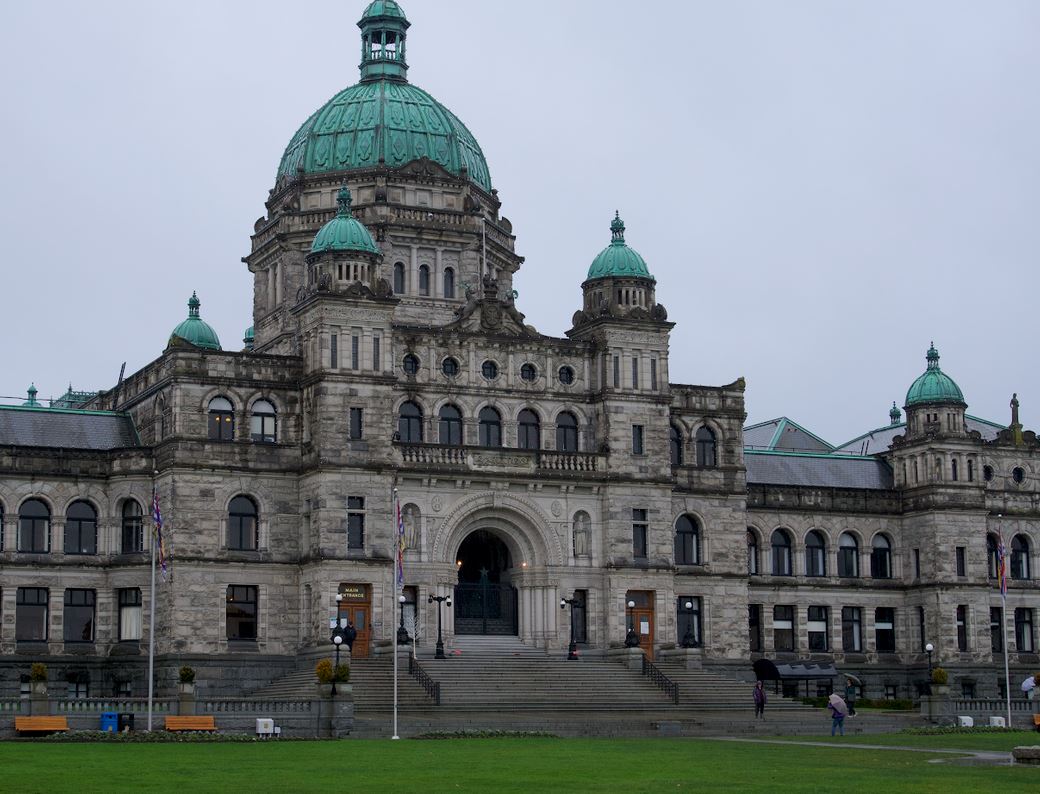
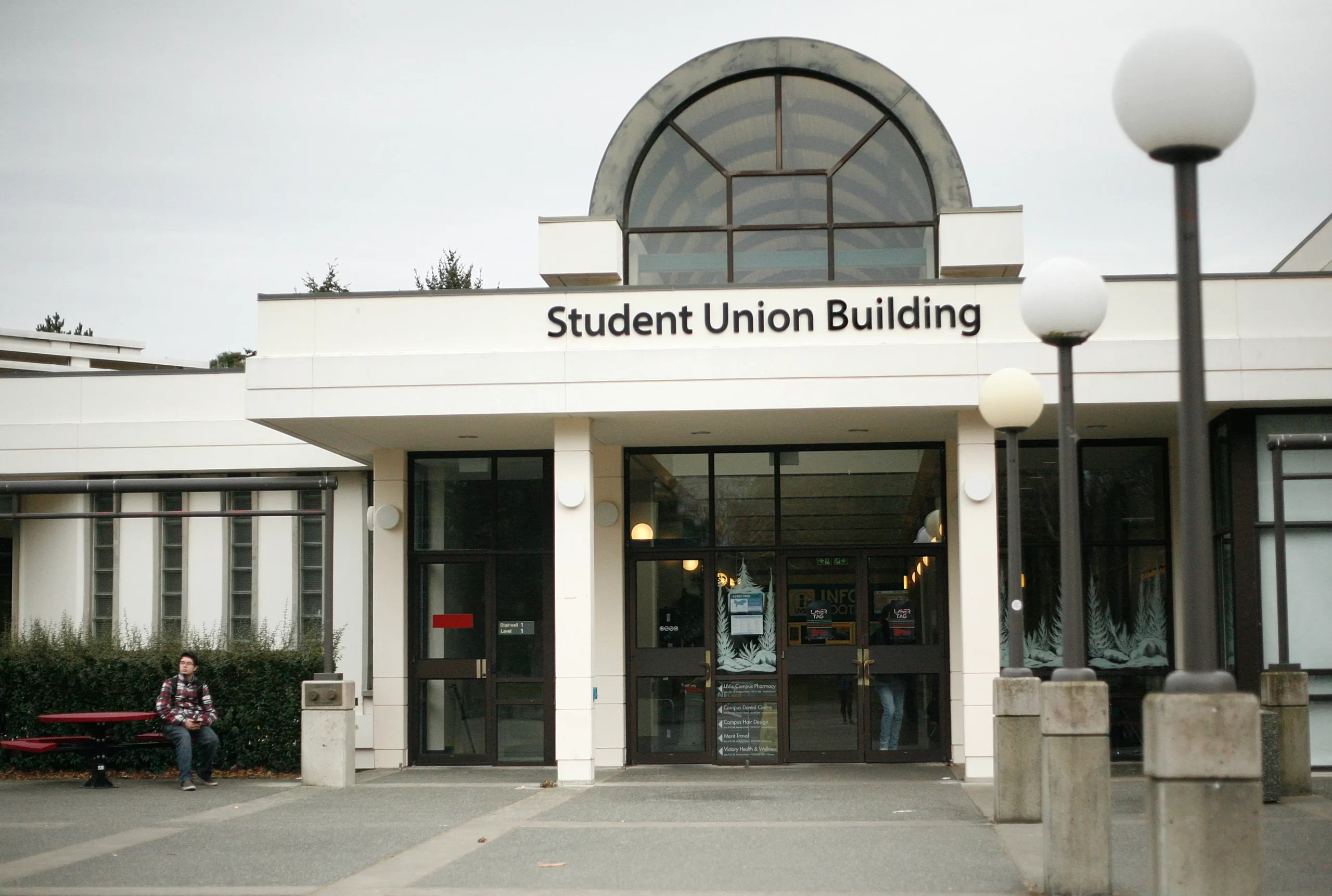
Photo by Declan Snowden.
On Nov. 25, 2025, the B.C. government — under the leadership of the BC New Democratic Party (NDP) — announced they were reviewing the post-secondary system. The review is set to occur over a four month period, with much of that time occurring during the government’s winter break.
The B.C. government’s press release says public post-secondary institutions are facing fiscal challenges due to federal reductions in study permits for international students, declining domestic student enrolment, and global inflation.
“As a result, many post-secondary institutions are in a critical position, with widening gaps between revenues and expenses. To address this, the ministry is launching a review with a holistic approach to sector-wide sustainability to establish a clear path forward to stabilize institutions in the short term and to build a foundation for long-term financial sustainability and operational resilience.”
Don Avison, former B.C. deputy education minister, has been tapped by the province to lead the review, and to deliver a report and recommendations by March 15, 2026.
However, many student unions across the province are sounding the alarm over the review, with the University of British Columbia’s Alma Mater Society (AMS) calling it “rushed,” and stating it “is not a meaningful process and is being used to justify predetermined cuts at the expense of students.”
The Alliance of BC Students — a coalition of the Capilano Students’ Union (CSU), UBC Graduate Student Society (GSS), and Royal Roads University Student Association (RRUSA) — rallied outside the B.C. legislature alongside other student union representatives, including the UVSS, in opposition to the review on Nov. 25.
Graduate student and course unions at UVic, including the Graduate Students’ Society (UVic GSS) and the Graduates of Political Science (GPS) have also expressed concern with the review. UVic GSS said it “limits meaningful participation by students, faculty, and staff, risking access and affordability in higher education, at a time when students are already under considerable financial strain.”
UVic GSS and GPS both criticized the government for announcing the review at the tail-end of the Fall 2025 semester, and said the time window for consultations, which reportedly will close on Jan. 15, is not enough time for students and faculty members to meaningfully participate.
Both organizations demanded the province rescind its terms of reference (ToR), which states “sector needs to be positioned to deliver the right programs, in the right places, at the right times to the people who need them as efficiently as possible.” The GPS said it worries this may constitute a violation of academic freedom protections under Section 48 of the University Act, and called on the government to “establish a new process informed by the results of the 2022 post-secondary funding review that prioritizes equitable and sustainable access to post-secondary education, including graduate education.”
The GSS called on the government to publicly commit to maintaining the 2 per cent tuition cap and other affordability measures, citing concerns over “sudden tuition hikes, disproportionately impacting low-income, first-generation, and marginalized learners.”
Michael Caryk, interim UVSS director of campaigns and community relations, visited the legislature to lobby on behalf of UVic students. For “Lobby Week,” Caryk fought for several policies he believes will benefit UVic students, including improving tenancy rights for students who live on campus, a food security grant to support student food banks, protecting the two per cent cap on tuition increases, and $10 ferry fees for post-secondary students.
Caryk also advocated against the review. In an interview with the Martlet, Caryk said “Students are our future, and the province’s lack of investment in students is very concerning to me.”
He also expressed concerns over the rushed timeline, and the lack of details from the 2022 post-secondary review.
The B.C. government had previously announced a review of post-secondary institutions in 2022, which aimed to revamp the per-student calculation for block funding, which accounts for three quarters of funding the province gives to post-secondary institutions per year.
This review was not publicly released. However, via a freedom of information (FOI) request, details of the review have been made public. UVic GSS called on the provincial government to release the review, in order to “support informed debate.”
One document obtained by FOI says “the notion of government underfunding is not without substance. Government funding has not kept up with total cost increases.”
The Martlet asked Jessie Sunner, B.C. minister of post-secondary education and future skills, if the government had taken any steps to address funding issues in the years since.
In a statement, Sunner responded, “A number of factors beyond the Province’s control, namely unilateral reductions to international student permits by the Federal government, global inflation, and declining domestic enrolment, have created unprecedented pressures for the post-secondary sector.”
Sunner cited enrollment decline, “ongoing economic volatility,” and provincial financial pressures as reasons for why additional funding from the provincial government is not a viable option.
“That’s why we are launching an independent review to strengthen B.C.’s public colleges, institutions, and universities so they remain accessible, affordable, and ready to help students across the province succeed,” she said.
The documents obtained via FOI also show the government was considering several options during the 2022 review. One option outlines an across-the-board budget increase (in the 2023–2024 budget), which could be portrayed as “reflecting the new Premier’s priority in investing in B.C.’s human capital as key to its economic future.”
Another option outlined in the documents was to announce an increase in funding in the 2024–2025 budget. The document says this works better than an across-the-board increase in 2023–2024 “if [an] election is in Fall of 2024,” which was the last time a provincial election was held in B.C.
The Martlet asked Sunner if the decision not to provide more funding this review period is reflective of the government’s current priorities in human-capital investment.
Sunner told the Martlet “Workforce development is a cornerstone of our government, which is why [the] government has made investments in the public post-secondary education system since 2017, increasing funding to public post-secondary institutions by more than $1.2 billion since then.”
The BC NDP have led the provincial government, albeit under different leadership, since 2017. In that time, the annual operating grant provided to 25 post-secondary institutions in B.C. has grown from $1.83 billion at the start of 2017 to just under $3.1 billion for 2025–2026, with UVic’s grant growing from over $176 million to $295 million.
However, ongoing financial difficulties at institutions like Vancouver Island University, whose annual operating grant increased from $49.7 million in 2016–2017 to $85.1 million in 2025–2026, suggest the BC NDP’s investments in the post-secondary sector thus far aren’t sufficient to keep some schools afloat.
The Martlet reached out to the UVic Faculty Association (UVicFA) to inquire if the government had consulted them during the review so far, and to ask how stagnant funding could impact UVic faculty.
Dr. Lynne Marks, lead negotiator for the UVicFA, told the Martlet that the Confederation of University Faculty Associations of BC (CUFA-BC) will be making submissions on behalf of several B.C. faculty associations, including UVicFA.
“We are aware that the university system is currently very much under-funded, as over the last 30 years provincial funding makes up an increasingly smaller proportion of total post-secondary funding,” Marks said.
“This creates significant difficulties for students, staff, and faculty at UVic, in terms of reduced services for students and increased workload for staff and faculty. We hope that the review will help to resolve these serious and growing problems.”
The Martlet asked UVic how the government’s decision not to provide additional funding could impact the university’s financial situation.
“The post-secondary landscape has evolved significantly over the past decade, and many post-secondary institutions in B.C. are facing significant financial pressures,” said a UVic spokesperson in a statement. “UVic is fortunate to be on solid financial footing because of our careful planning and the difficult budget decisions we’ve made.
The university is projecting a balanced budget for 2025–2026 without the need for budget reductions,” the spokesperson added, but said that it is too soon to see how the review will impact the university.
As of publication, tuition and mandatory fee increases remain capped at a maximum of two per cent.
Editor’s Note: This article has been amended to include statements from the UVic Graduate Students’ Society (UVic GSS) and Graduates of Political Science (GPS).