
UVic’s reusable cup program was discontinued earlier this year due to ‘low uptake,’ senior director campus engagement says
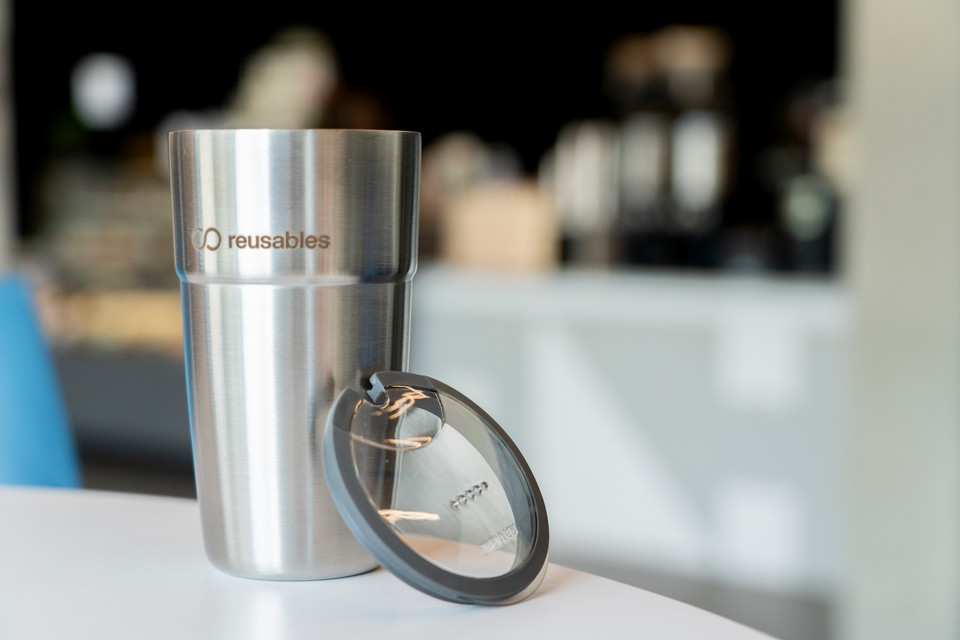
Photo via the University of Victoria.
On Nov. 25, 2025, Surfrider University of Victoria (UVic), a student-led club, relaunched their “#DefaultReusables” campaign, an initiative that aims to make reusable options the default at all campus food outlets.
Last fall, Surfrider UVic launched a pilot project for reusable to-go cups, which was suspended by UVic Food Services a year later. Matt Miller, a PhD candidate at UVic who spearheaded the project, said, “[The recent campaign] is a little broader than just ‘bring back the cups,’ we call it our ‘Default Reusables Campaign’ … we want to see a fully circular economy be embraced [at] UVic.”
Miller said he was disappointed by the project suspension, but is hopeful for its return.
“Our main goal is to eliminate such a huge factor of waste … having this program also encourages people to bring their own cups… we’re trying to make reusables… the normal,” said Sophie Sumner, Surfrider UVic’s vice chair.
In a statement to the Martlet, Jim Forbes, senior director campus engagement, said the university was an early adopter of ReUsables software, but decided to suspend the program after reviewing usage data with ReUsables this year due to “low uptake” of reusable cups. According to data shared by UVic, the cost of the mug program was $13.23 per reuse, while their estimated cost of the EcoBoxes per reuse is $0.40.
“While the reusable-cup program did not receive the level of participation we had hoped for, it helped pave the way for eco-box take-out containers, which are now fully integrated into the ReUsables technology platform,” Forbes said.
Forbes said the EcoBox program has shown “strong adoption and positive performance,” stating that more than 2 500 individuals have benefitted from the program, and more than 15 000 containers have been borrowed/returned in the first few months.
“Thus far, the eco-box program and reusable-cup pilot have together diverted 1.01 tons of disposable waste and saved 2.89 tons of carbon emissions, along with 15 597 litres of water,” he said.
Surfrider Foundation Canada, an international affiliate of the U.S.-based Surfrider Foundation, is a non-profit environmental organization devoted to ocean protection. The UVic chapter shares the same goals, focused on making systemic change through student voices. The club offers educational workshops, monthly beach cleanups, and campaigns to promote and practice a sustainable vision.
Lucy Campbell, a devoted Surfrider volunteer at UVic, said, “Living in Victoria, we are surrounded by the ocean every day. It is important to care about what is around us. Being a part of [Surfrider UVic], being able to go on the beach cleanups feels like you’re a part of a bigger movement.”
In 2021, Surfrider UVic focused on reducing single-use plastic waste on campus, until the federal government banned many single-use plastic items, allowing the club to shift gears, and campaign for making reusables the default. Surfrider UVic and Miller held conversations with UVic Food Services and the Office of Campus Planning and Sustainability, which set the EcoBox program, a reusable take-out option for food, into action.
In a statement to the Martlet, Kylie Hissa, acting manager, sustainability, said the 2022 waste audit was the last one conducted by UVic, however, the university sponsored an applied research project in summer 2025 to improve how UVic tracks and reports waste through the university’s Sustainability Scholars program.
Hissa said the project proposed a framework to track not just waste, but how well UVic keeps materials in use, which she said “has the potential to strengthen UVic’s sustainability efforts and helps ensure that waste data is transparent and actionable for decision-making.”
According to data from the 2022 campus waste audit, 4 000 cups were discarded daily on campus. “In theory, [single-use cups] are recyclable. However, you have a mixture of materials — you have paper, a plastic lid, a sleeve, organics, whether it’s leftover coffee or a tea bag … so, they end up in the wrong categories,” Miller said.
He added that the cups often still end up in a landfill, despite UVic’s recycling efforts. “We used that as our evidence to bring to UVic, and say, ‘look, we have a problem, it’s great you’ve done EcoBoxes, but we need to do something about cups.’”
Miller said he continued having conversations with UVic stakeholders, and pitched that reusables.com, a reusable technology company based in Vancouver, may have a solution. In fall 2024, Miller said he was granted $25 000 from the UVic Campus Sustainability grant to operationalize the pilot project for reusable to-go cups. A few thousand reusables.com stainless steel cups were implemented at two campus cafés, Port Café in the Cove and Boardwalk Café at Mystic Market.
He said that being the first university in Canada to attempt a reusable cup model posed technological and logistical challenges in the beginning. Over time, he said, the technology improved, and reusable cup adoption increased 10-fold. However, he said that the adoption rate was still too low for UVic Food Services to sustain the cost of the cups, leading to the suspension of the cups this fall.
“I think the fact that [UVic] even did EcoBox was a win for us, and I think it was a direct result of our student pressure,” said Miller.
Surfrider has made a petition available to sign on their Instagram, where they stated, “We are urging UVic and the UVSS to be leaders among Canadian universities and fully embrace a reusable food service ware model … making reusables the DEFAULT option.”
For Sumner, this is about more than getting the reusable cups back — it’s about asking for a change in the way UVic views reusables and waste. Sumner said the petition has already surpassed its goal of 500 signatures before Christmas.
According to UVic’s Climate and Sustainability Action Plan 2030, prioritizing sustainability in service delivery on campus is one of the university’s goals. This includes targets to reduce greenhouse gas emissions for university food, purchasing and waste. Some affiliated with Surfrider’s reusable campaign believe that bringing back reusable cups could help UVic reach their sustainability goals.
“[Student-led initiatives] show student interest in different problems that they want solved on campus. It also offers a great opportunity for students to put into practice what they are learning in school,” said Sumner.
Sumner emphasized that learning about climate change can be daunting. She continued, “If you find something small on campus that you are passionate about, and you get a network of students going, and you have a really solid plan, then I think you can make change however you want it to look like.”
Forbes added that UVic is “happy to continue” their partnership with Surfrider UVic and ReUsables, and said that “If cups were to be considered again in the future, it would be important to build on the success of the eco-box program, the updated ReUsables technology, and the lessons learned from the pilot.”