
The newly-passed policy penalizes repeat violators of electoral policies from running in future elections

Photo by Declan Snowden.
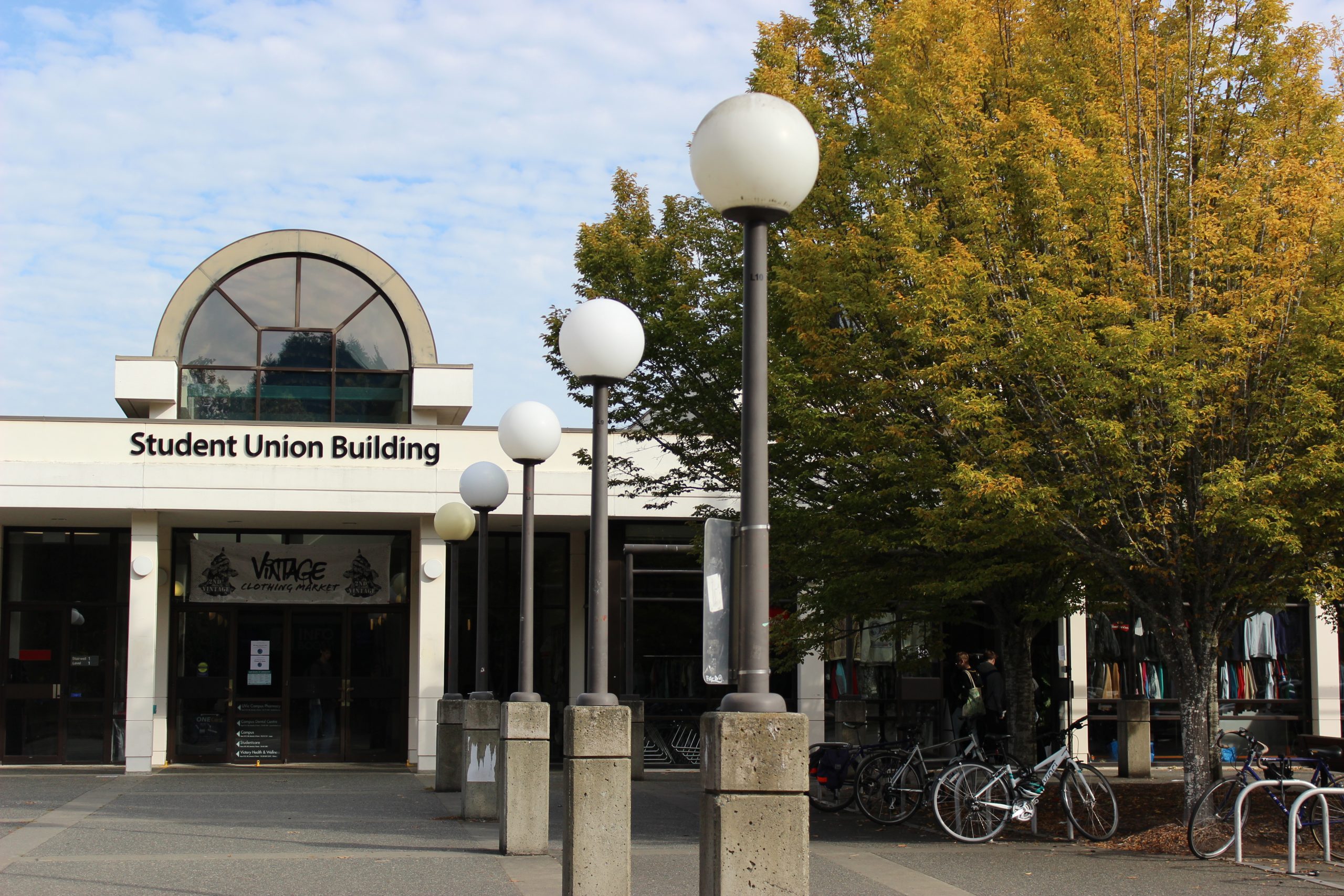
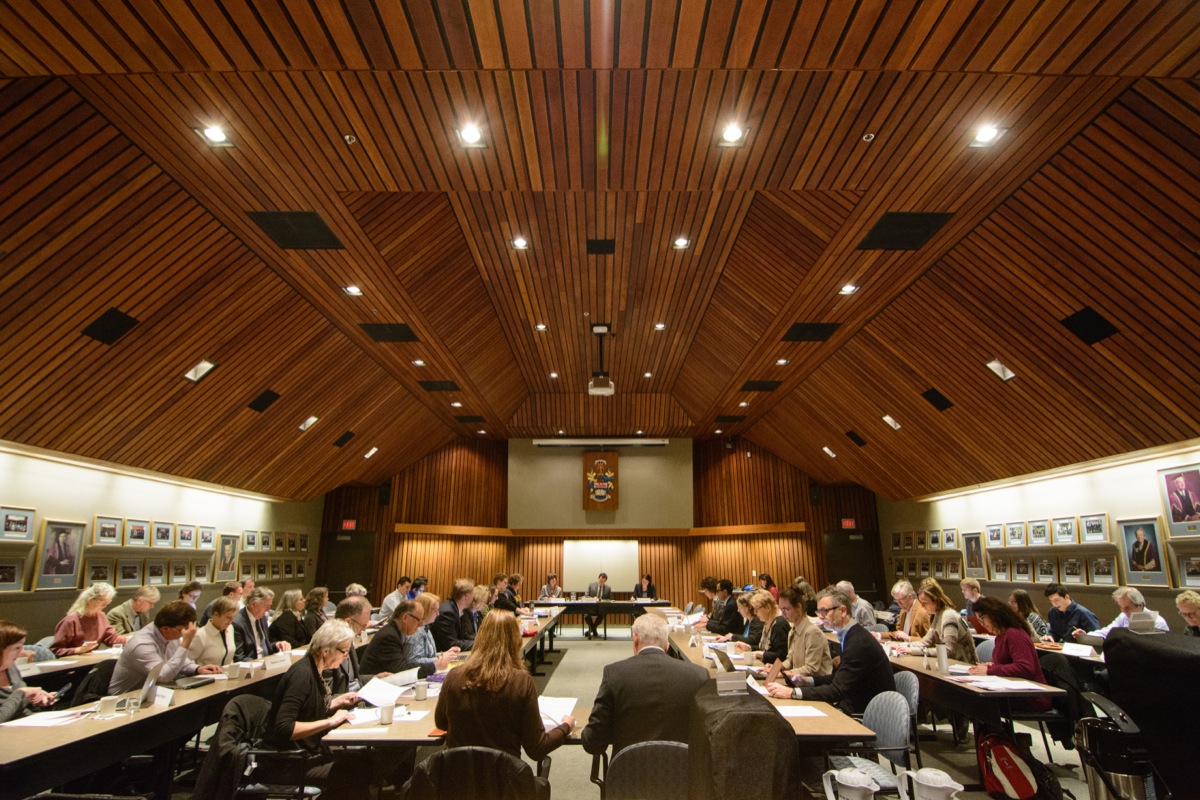
During the Nov. 17, 2025 Board of Directors meeting, the University of Victoria Student Society (UVSS) passed a motion to update their Electoral Policy, allowing them to ban candidates who violate certain electoral policies from running in future election cycles.
The update to the policy specifically allows the UVSS to ban candidates who commit “repeated major infractions” or “equivalent minor infractions” from running in the following election cycle. Under the policy, three repeated bans will result in a permanent ban.
Some other Canadian universities’ student unions have similar policies. The Capilano Students’ Union has a policy that bars anyone who has been disqualified for campaign misconduct from running in the following general election or by-election. The University of British Columbia’s Alma Mater Society bylaws render executives who are removed from their positions ineligible from running again for a period no longer than one year.
The University of Calgary Students’ Union has policies allowing candidates to be disqualified in current elections, but no policy to limit a candidate’s participation in future elections.
During the board meeting, Katie King, director of student affairs, moved to add to the agenda a vote on updating the Electoral Policy. According to King, the policy only looks at infractions that occur during electoral events, and past infractions will not be upheld retroactively.
The policy was subject to significant debate. Griffin Foster, director of outreach and university relations, fought against the update to the policy, describing it as “alarming” and “personally offensive.”
“I consider participation in our democratic process, both as a voter and as a candidate, to be a right, not a privilege. And what it means for me for something to be a right is for something to be inalienable, unconditional, unimpeachable, [and] non-negotiable,” Foster said.
“The notion that any one of our members might be stripped of their right to run for election, under any circumstances, is terrifying to me.”
During the meeting, Roven Brooks-Stephenson — board representative for the Students of Colour Collective (SOCC) — said candidates who harass students and staff should not be allowed to run.
Lindsey Andrew, director of events, also advocated for the policy during the meeting, arguing that election staff have experienced harassment in past years and the policy is important for staff safety.
“A lot of people have spent the last couple of months working really, really hard on it to make sure it’s fair, and I believe that it is. I really hope that everybody will support this policy to make our campus [and elections] safer,” Andrew said.
“It’s quite difficult to become permanently banned from running in an election.… This is meant to act as a second level of protection for students,” a member of UVSS staff added.
During the meeting, King said “the policy is very forgiving. You don’t get banned for life right away. It takes quite a few infractions to actually get banned.”
In an interview with the Martlet, Foster said he was not against disqualifying participants from election periods they have committed infractions in, but is against banning them from elections that have not happened.
“I would like to see us not go quite as far as taking away people’s rights, which is what this does,” Foster said.
“The right to candidacy is no longer unconditional. It’s no longer inalienable.… I think that’s a very worrying sign.”
Foster also said he had legal concerns regarding the policy.
“This policy may very well be illegal, in that it amends the potential rights that a student is entitled to in our elections, while not amending those same entitlements in our bylaws.
“My understanding of the B.C. Societies Act, and our own bylaws, is that such change would have to happen in the bylaws, which would require approval through either a general meeting or through a referendum, neither of which has not happened.”
The Martlet reached out to the UVSS about this concern. In an emailed statement, King said:
“The amendments made to the Electoral Policy are, in the judgment of the Board as a whole, within the scope and intent of the Bylaws and otherwise consistent with the Societies Act.”
King said the policy is intended to provide greater protection and safety for students and election staff.
“Disqualification was already something that could happen, but there was nothing in place to help protect students if a candidate was already disqualified and decided to continue unsafe behaviour,” she said.
“Adding a consequence like a subsequent disqualification or ban discourages students who commit major infractions from continuing to commit them.”
Foster said he believes the policy would not be an effective deterrent, arguing that disqualification from future elections removes a key incentive for good behaviour going forward, as candidates will have nothing left to lose.
“I think this is where a very dangerous sort of thinking gets started. In its current form, it is fairly benign…. But it represents a thinking that there are some people that shouldn’t be a part of our process.”
Despite disagreeing with the policy, Foster said he felt the policy had good intentions, and was made with student safety in mind.
King said the policy would allow for more people to participate in student governance by creating a safer environment.
“The policies and practices are in place to protect students and staff, and need to exist in order to create a safe environment for everyone in the UVSS…. [It] adds an extra step that can be taken if necessary,” King said.
Editor’s note: Article has been edited to more accurately reflect the Capilano Students’ Union’s electoral policy.