
According to the Existence Project, an individual’s personal story is one of their greatest resources
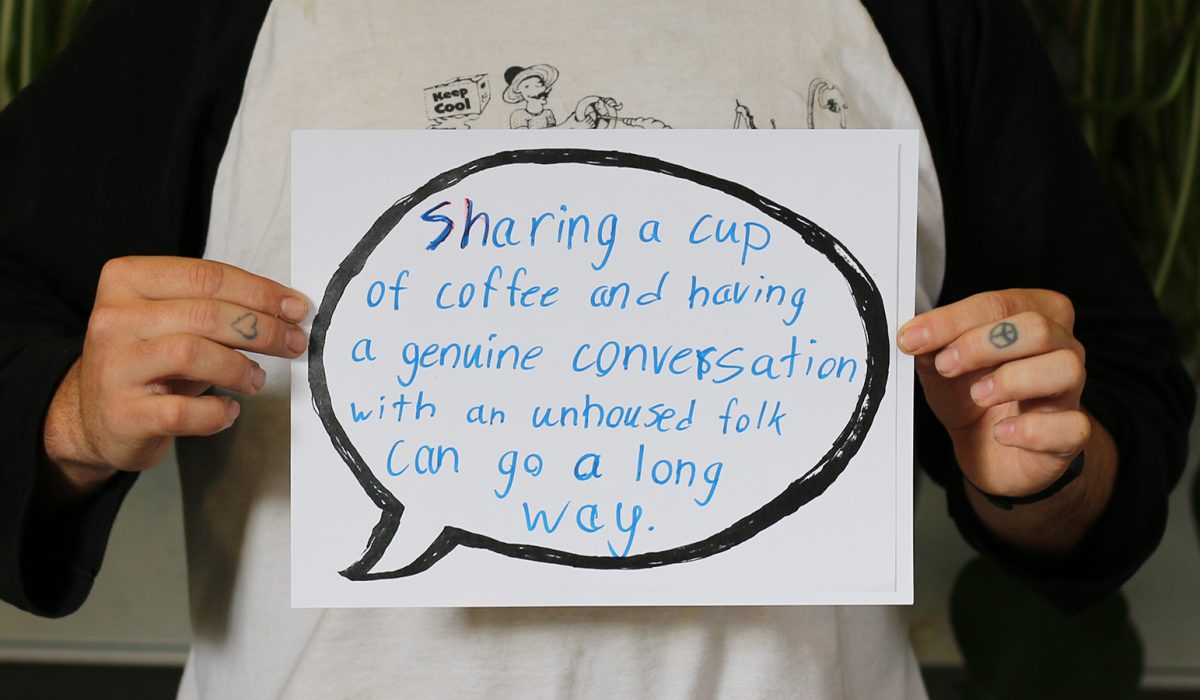
Photo courtesy of the Existence Project.
The Existence Project is a Victoria-based organization which fills a unique niche in services for the local unhoused community — not harm reduction or housing assistance, but storytelling workshops.
The Martlet sat down with Sinan Demirel, associate director of the Existence Project, to discuss the organization’s work and impact on the community. “The mission of the Existence Project is to humanize the issue of homelessness by telling people’s stories,” Demirel said. “And our understanding, our hope, is that when you know somebody’s story, you can’t just see them as a problem anymore — you see them as a human being. And that, to us, is the first step in solving this crisis.”
The organization has been operating since 2016, taking on an array of projects including “creating accessible multi-media projects” that showcase individuals’ stories, and hosting “capacity building initiatives for the unhoused.”
One of the Existence Project’s central initiatives over the past decade has been storytelling workshops, where people with lived experiences of homelessness are invited to learn how to refine their personal stories. “This takes place over several weeks, where we really hone their story … then if people want to tell their stories in a public setting, we create opportunities to do that,” Demirel said.
In a statement, the Existence Project said they have worked with 75 speakers to date, including four in the past year.
Demirel said that they “have annually … invited two of [their] storytellers to take part in a large public event” where they engage in a live Q&A, facilitated by the workshop’s leader.
At the live Q&As, the questions are asked by the person who led the storyteller’s training, rather than being asked by the audience, or by someone the storyteller has never met. This is one of the many ways the Existence Project takes a trauma-informed approach to its work. This way, the storyteller has already developed a relationship with the question-asker, and can trust that they will be sensitive to the aspects of the story that might be challenging to share.
Demirel said the organization recognizes that “talking about [trauma] can be triggering,” and in some cases, can even be re-traumatizing.
To help mitigate this, Demirel said, “we have practices that we use to just invite people to ground themselves in their body and, you know, be calm … to just help folks in a very gentle way unpack these stories.”
Demirel told the Martlet that, after storytelling workshops, the Existence Project makes a point of checking in with participants to see how they’re doing. Demirel said they will “make sure that people have support,” and if they don’t, “we have the ability to bring somebody in to do that kind of critical debrief. Somebody with some clinical skills.”
Crucial to taking a trauma-informed approach to their work is understanding what trauma is, and understanding that every person will “contextalize and integrate” experiences differently. Demirel references Canadian physician and author Gabor Maté’s definition of trauma, and says, “it’s not the event itself, it’s not what happened, but it’s how we process that.… Trauma is not what happens to you, but what happens inside you.”
Dennis Palubeski is a Victoria resident with lived experience of homelessness, who has participated in the Existence Project’s storytelling event “Keeping it Human.” In a video about the experience, he said: “It was suggested to me that it might be something cathartic to tell my story.… It might be a way to give back.”
“If I can help someone else raise their voice, then I think it would be a good thing.”
Demirel said the Existence Project also takes seriously the relationship between colonialism and homelessness. They recognize that “the pain that was created” by forcing people off their native land is directly connected to the overrepresentation of Indigenous people in unhoused populations today.
Furthermore, Demirel said they recognize the cultural significance of storytelling to many Indigenous cultures. As such, they are actively conversing with Indigenous-led organizations regarding ways to bring components of Indigenous life and culture to the forefront of their workshops.
Other work that the Existence Project offers include what Demirel called, “empathy based workshop[s].” At these workshops, they invite housed participants to listen to a variety of audio clips, containing others’ recounted experiences with homelessness, as well as others’ recounted experiences at past Existence Project workshops, followed by group discussions.
More recently, the organization has also begun offering de-escalation training.
They are “hoping to, really, take [the de-escalation training] all over the city and the region,” where the “primary tool [they teach] is empathy.” Demirel explained that the hope is for empathy-based de-escalation training to become “an analog to other kinds of hands-on self defense training,” to help people “diffuse conflict before it occurs.”
One way that the Existence Projects attempts to measure its impacts on the attitudes of the housed community is by collecting and sharing photos of what they call “story boxes.” A story box is a written message, explaining an individual’s key takeaway from a training session or workshop. Story boxes are then shared on their website, and with participants at future training sessions.
Examples of story boxes featured on their website say things like, “The path to healing is being seen,” and “Our story is what connects us and what allows us to heal and grow.”
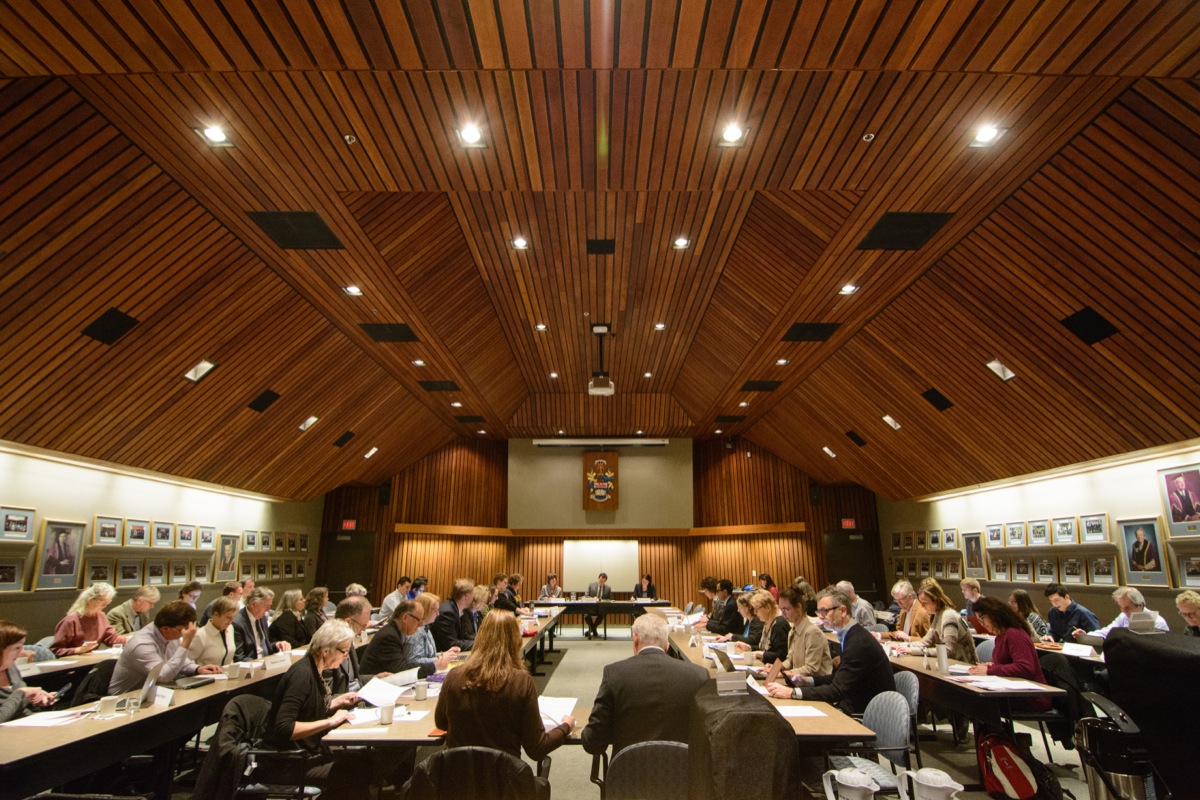
This year alone, the Existence Project said they have hosted seven workshops, with over 250 total participants. They have hosted workshops at UVic, at the William Head Institution, and aim to host a training session with the Victoria City Council in the near future. The organization also hopes to expand their reach to bylaw personnel, the police, local businesses, business associations, community centers, and libraries.
Demirel says the Existence Project’s ultimate goal is to contribute to a culture-shift in Victoria around how the housed and unhoused populations relate to one another. “We would love to … just build a culture in Victoria where we do receive people as humans. Even when they have problems, even when things are difficult.”