
The termination of Dr. Robert Gifford for sexual harassment allegations raises questions about the support students receive the university
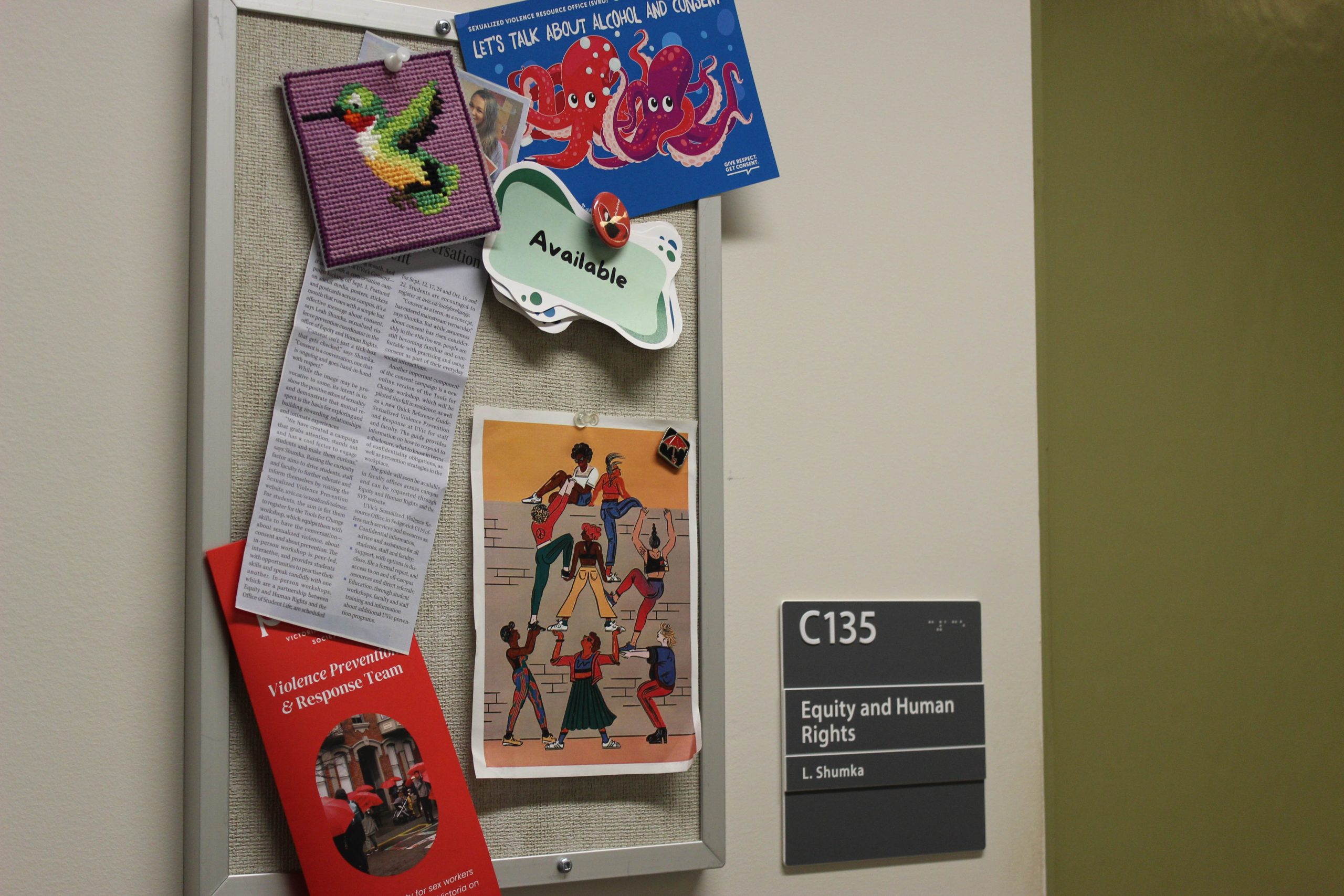
Photo by Abigail Fishman.
Dr. Robert Gifford, a longtime professor at the University of Victoria, was fired in June 2024 after investigations found he had sexually harassed students. The details of his firing recently came to light after the Labour Relations Board published their findings on the case, which sided with the university’s decision to terminate him.
His case raises questions about how UVic responds to harassment, and whether students feel safe using the systems in place.
Gifford taught psychology and environmental studies at UVic for 45 years. He was suspended from teaching in 2021 after a student came forward, alleging that Gifford had told her he was attracted to her.
Following this allegation, a different visiting graduate student came forward about an email she received from Gifford in 2018, when the two were supposed to attend a conference together to present a paper they had co-authored.
In the email, Gifford wrote, “As you might have guessed, my idea is for us to share a room, partly of course so we can spend more time together, and partly to save money.” This was followed by “And, of course, everything beyond the mere sharing of the room is to be decided on a completely mutual basis, at the time. How does that sound?”
In 2021, he was suspended from teaching, and in June 2024, his employment was terminated following an investigation into his misconduct.
UVic has two main policies that guide its response to harassment and sexualized violence: the Discrimination and Harassment Prevention and Response Policy (DHPRP) and the Sexualized Violence Prevention and Response Policy (SVPRP). The most recent iterations of each policy are effective as of September 2024 and July 2025, respectively.
Both policies state that harassment and discrimination will not be tolerated, and outline how students can come forward. Students can make a disclosure, allowing them to share any experience of sexual misconduct confidentially, without starting a formal process. They can also file a formal report, which can lead to an investigation, or choose a voluntary resolution process (VRP), described by the university as a “non-punitive” measure to resolve a situation without assigning fault.
A VRP can occur in a number of ways, including a series of meetings between participants and EQHR personnel. The participants (the survivor and the respondent) are not required to meet as part of a VRP.
Every process begins with a disclosure. After this, students are given information about their options. If they choose to file a report, the university has five days to decide whether an investigation will go ahead. If they choose to proceed with an investigation, a third-party investigator is then assigned.
Both the survivor and the respondent are given a chance to share information. Ultimately, the investigator determines whether the SVPRP has been violated. If it has, the university decides on possible sanctions, which can include suspension or termination.
To protect students during this process, the university can restrict where the respondent can go on campus or limit access to certain services. Retaliation for coming forward is banned under both policies.
The policies allow the university to put in place interim measures during an investigation, such as no-contact orders, or changing a student’s supervisor to reduce harm during the process.
In October 2024, the Martlet reported that the previous version of the SVPRP was failing survivors of sexualized violence. With the new policy having come into effect July 1, 2025, it is not clear yet how it is meeting the needs of survivors.
Data from UVic’s Equity and Human Rights (EQHR) office reveals they received 52 disclosures of sexualized violence and harassment between September 2023 and August 2024 –– down from the 59 disclosures in 2022–2023. 15 per cent of survivors initiated a VRP –– a significantly smaller number than the 24 per cent who requested a VPR in 2022–2023, while two survivors requested a formal investigation. UVic’s EQHR office reports they opted to investigate both cases, one of which was found to result in a policy breach while the other was still ongoing at the time the report was made public.
The EQHR report states that students made up the highest percentage of both survivors (79 per cent) and respondents (51 per cent), respectively. Six per cent of survivors were faculty members, while two per cent of respondents were faculty members.
This data indicates that harassment or sexualized violence caused by faculty members makes up a relatively small proportion of instances disclosed to EQHR. However, because sexual harassment and sexualized violence are routinely underreported in Canada, it is likely that many more instances go undisclosed.
In instances where students are subjected to harassment or sexualized violence from faculty members, they may feel pressured not to disclose the incident, given the power dynamics between students and faculty. Gifford, as a pioneering researcher in the field of environmental psychology, held considerable power and influence over the students and researchers he worked with.
At the time of writing, data from September 2024–August 2025 is not available, making it difficult to assess how the revised SVPRP is working.
The Sexualized Violence Resource Office (SVRO) is a key support hub for students. It offers counselling, academic accommodations, safety planning, and referrals to community services. Students can access support even if they choose not to file a formal complaint.
In a statement to the Martlet, UVic shared that some students may be hesitant to report. Many worry about confidentiality, fear retaliation, or are concerned that alcohol or drug use at the time of the incident will be held against them.
According to UVic, information shared with the SVRO is kept confidential, except in rare cases where there is a serious safety risk. Retaliation is considered a violation of policy, and the university grants amnesty to survivors and witnesses for substance use connected to an incident of sexual violence.
In addition to case support, the SVPRP works on prevention and education. The office runs regular workshops with student leaders, varsity athletes, and residence staff. Each September, the SVRO also joins other groups on campus for Consent Awareness Week, where they table in front of Petch Fountain to raise awareness about available resources.
The university has also made several recent changes to improve its processes related to sexual assault response. These include an option for anonymous disclosures, new training for faculty and staff on trauma-informed practices, and a policy review every three years to make sure the rules reflect best practices. The most recent update came into effect on July 1.
In a statement to Victoria News, UVic said that firing a professor is not a decision taken lightly and it reflects the serious nature of the findings. The university continues to emphasize its commitment to providing a safe and respectful environment for students and staff.
The Gifford case shows how UVic’s reporting systems can work, but also highlights the challenges students face when coming forward, especially when the person involved is a professor or supervisor. Policies can outline protections, but many students must still weigh personal, academic, and career risks before deciding to report.