
The $72 million project took six years to complete, and remains controversial among some Saanich residents
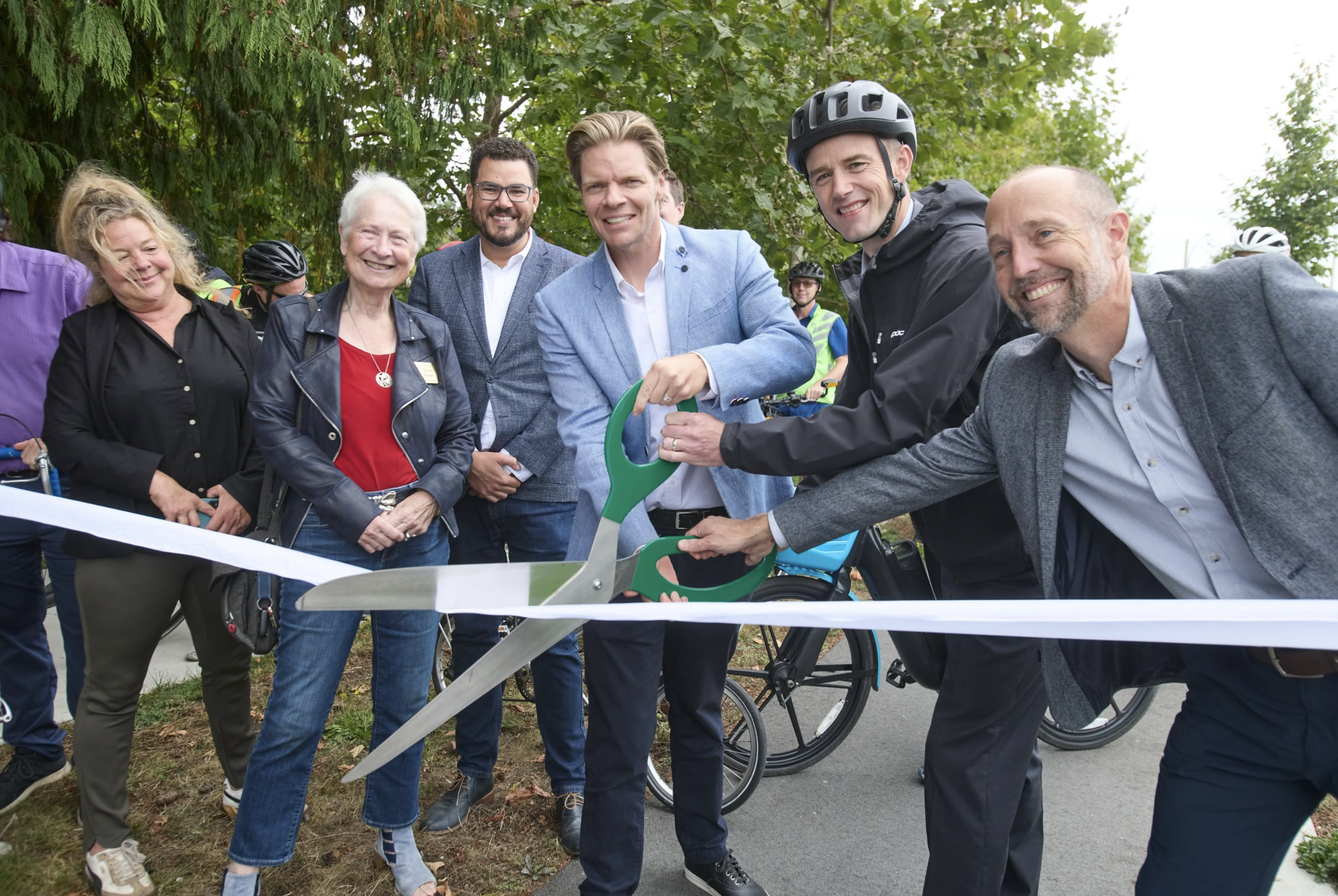
Photo via Dean Murdock/Facebook.
On Sept. 14, the District of Saanich finally cut the ribbon, marking the completion of the controversial six-year-long Shelbourne Street Improvement Project (SSIP).
The project sought to improve water infrastructure, road safety, and overall accessibility to community members, and saw the installation of new bike lanes, pedestrian safety improvements, transit infrastructure improvements, the replacement of underground utility infrastructure, and renewed asphalt road surface.
“I think that the changes that have taken place here not only ensure that everybody walking, biking, taking the bus, or driving can do so safely, but that there is also the creation of spaces where people can come together, where they can build community,” said Saanich Mayor Dean Murdock at the announcement.
“[Everyone] can enjoy all of the rich benefits of the incredible natural spaces, and services and amenities that this valley and its neighbourhoods have to offer. And that is truly the vision behind the plan.”
The project was initially part of the Shelbourne Valley Plan, a 30-year strategy focused on improving land use, transportation, climate action, and housing.
The SSIP was made possible through funding from Saanich, the Canada Community-Building Fund, B.C. government, ICBC, and funds distributed by the federal and provincial government. At completion, the total cost of the project was $72.3 million.
Cycling advocacy and education group Capital Bike hosted a short celebratory bike ride at the ribbon cutting ceremony. The ride served as an opportunity to demonstrate the new transportation accessways.
“It just speaks to the importance [of this project] that the community has deliberately kept moving this forward over such a long period of time,” said Capital Bike’s Executive Director Ian MacKichan in an interview with the Martlet.
“It’s kind of a once-in-a-generation reconstruction of a road,” he said.
The duration of project, however, was a point of contention with many community members. Phase one of the project took two years, beginning in April 2020, and saw major water system upgrades that continued into phase two.
The second phase started new sidewalk paving and raised bicycle lane construction from North Dairy Road to Pear Street, which took approximately two years as well.
The third and final phase focused on continued drainage infrastructure replacements, relocating BC Hydro and Telus lines, the removal of 13 trees, and planting 46 new trees.
Stuart Hackett, President of the Save Our Saanich Neighbourhoods Society (SOS), said he shares concerns “seen on social media,” primarily that of barricaded cycle lanes preventing access for emergency vehicles.
“SOS is in favour of changes to roadways to improve safety and flow for everybody,” said Hackett, “but we don’t agree with the way Saanich has implemented some of these changes; we think it’s to the detriment of vehicles [and] emergency vehicles.”
Jean Newton from pedestrian advocacy group, Walk On, Victoria, said she is looking forward to safer and improved alternatives to driving in the Saanich area.
“[The SSIP] is a good example of improvements being actualized,” said Newton. “It took forever, so it’s not a good example of doing it quickly … but it’s a good example of it finally happening.”