

Adapting her novel to the screen was a “bizarre and quite wonderful,” says Edugyan
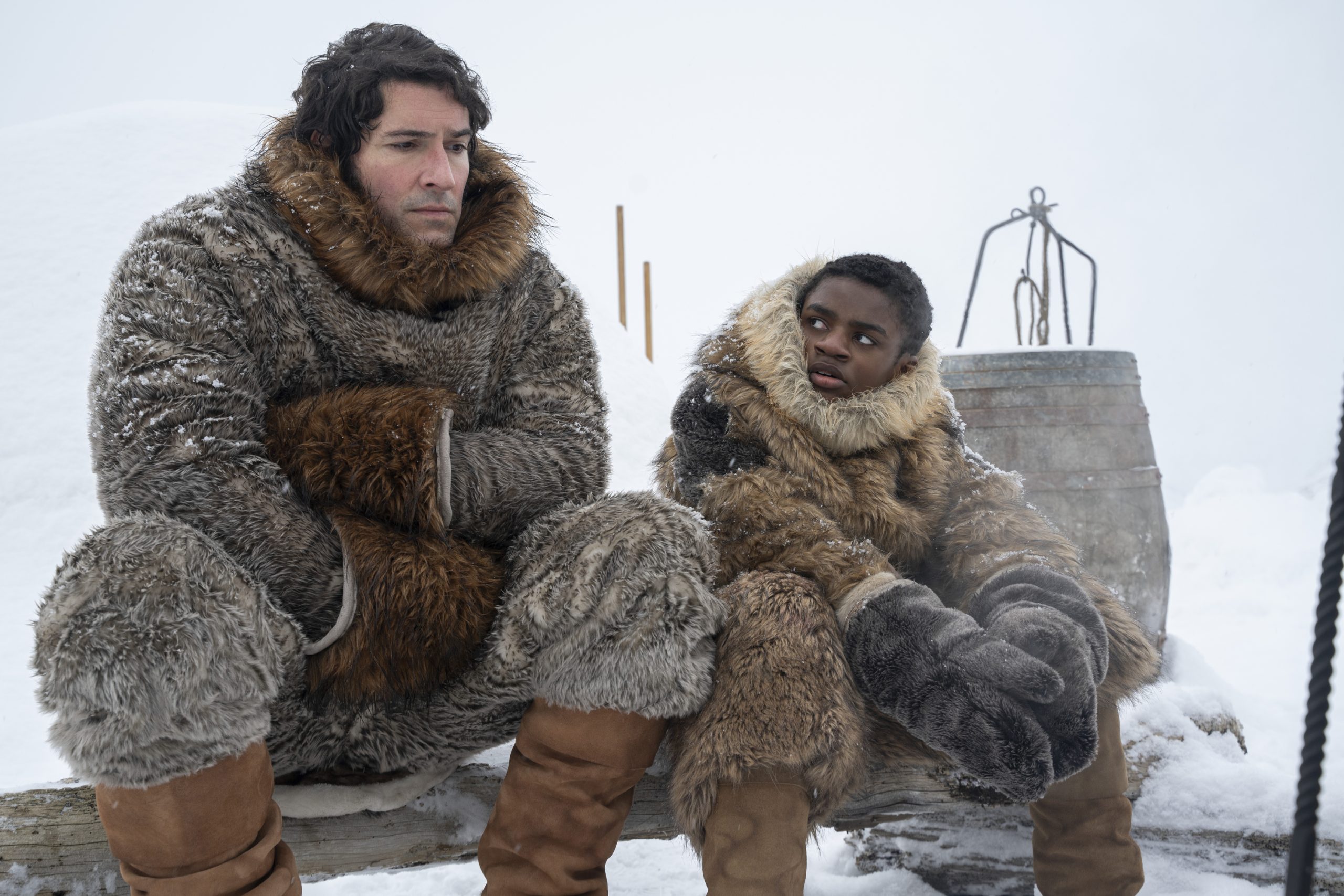
Photo courtesy of the Walt Disney Company.
Esi Edugyan is a UVic Writing alum (1999), a two-time Giller Prize winner, and a Booker Prize finalist. Her third novel, Washington Black, set in the 1830s, follows a young man named George Washington “Wash” Black. Wash is born into slavery on Barbados, and the novel follows his life post-slavery on a journey to find himself and true freedom.
An adaptation of Washington Black premiered on Disney+ on July 23.
The eight-episode mini-series was adapted by Selwyn Seyfu Hinds, starring Ernest Kingsley Jr. as Wash and Emmy-winning actor Sterling K. Brown as narrator Medwin Harris. Starting in Nova Scotia, the last stop on the Underground Railroad, the series recounts the intersecting journeys of Wash and his comrades.
The Martlet spoke with Edugyan about the novel, and her experience with the process of adaptation.
This interview has been edited for clarity and concision.
There is considerably more attention given to the backstories of characters like Tanna and Medwin in the adaptation. How much were you able to be involved on set and in decisions such as this?
Initially, the book was optioned back in 2019, and I was able to speak to Selwyn Hinds, the showrunner, and also Sterling K. Brown, and hear a bit about their vision for things. I sat in on a writers’ room meeting, which was really illuminating. I was sent maybe five very, very early scripts and I gave a bit of feedback, but, as a novelist, you never know if that’s really welcome. I think they were very gracious and took it in a lovely way.
From that point on, it’s been very hands-off. I, for instance, would have been as surprised as you to see so many of the changes being made, because I wasn’t privy to the writing.
It’s kind of lovely to see where they’ve taken characters like Medwin or characters like Tanna; to see how they’ve fleshed out their backstories and their life events. As the fiction writer, you’re quite surprised, but you’re tickled and sometimes you think, “Oh, that’s very interesting,” and you feel like “that’s really apt, even though I didn’t think of it myself.”
What was it like for you to see these characters, and this world that you created, come to life?
It was really surreal. I visited the set back in 2022, in a desert-like area outside Mexico City.… To step out of the car and round the corner, and see that they’ve constructed this massive ship that’s basically a replica of the Bluenose … was just breathtaking.… And then, I turn[ed] the corner and there was the Cloud-cutter (an airship appearing in the novel). It was just so weird to see all of these things that I had conjured and imagined being physically built in the real world. It was bizarre and quite wonderful.
It’s a wonderful experience to have seen everything made flesh, to see the actors take on the personas of people who’ve been alive in my mind for so many years.
Writing is typically a solitary activity, especially compared to film. How was the process of collaboration and sharing this story with so many others?
The act of writing is very solitary. It’s something that you’re very much engaged in on your own: you in a room with your own thoughts, getting them down. On some level it’s also a collaboration because you have readers. Once it leaves your personal private realm then you’re getting feedback, you’re getting people’s reactions, you’re getting new contexts for the work.
In terms of the filmmaking aspect, because I was so removed from the whole process … it felt more like they were doing a translation of something that was already closed and finished for me, [something] already set down. I could sort of feel free to let them do what they needed to do with the work.
Executive producer Sterling K. Brown said he wanted to emphasize the whimsy in the story, especially as stories with Black protagonists are not often centered around such “whimsical elements.” Was this something you considered when creating this world and these characters?
For me, not so much. I always begin each draft not knowing where the story is going to take me. I thought I was going to write a completely different novel about a completely different sort of character, a different version of Wash.
I started to feel like all of the restless moving around the globe was this outward manifestation of Washington’s search for his sense of home, and his sense of place in the world, and also a sense of selfhood. His constant shifting and moving and grasping for a physical place where he is going to feel safe and good and most like himself [became] a psychological journey made flesh.
I didn’t set out to have whimsy in the story. I think for me as a literary writer … the idea of slavery and whimsy is a difficult thing to negotiate. If I had set out with that goal in mind, I think I would have failed. But, I suppose that’s where we’ve ended up, and for me it works.
All eight episodes of “Washington Black” are now available for streaming on Disney+.