

Chloé Zhao’s latest film is a reminder of the innate humanity of art
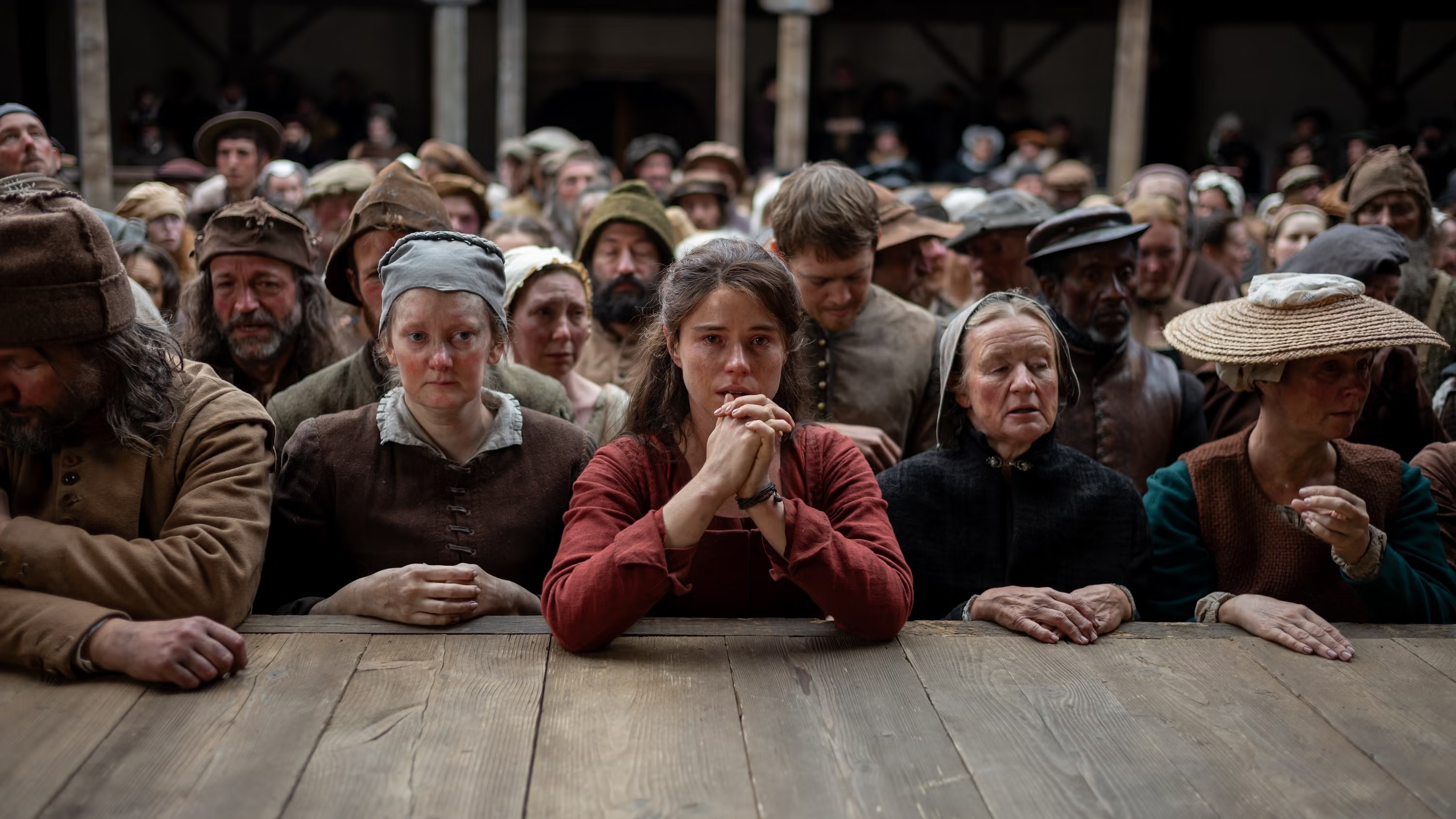
Image via Focus Features.
This article contains spoilers for the film Hamnet.
On a chilly afternoon in early January, I sat down to watch Chloé Zhao’s Hamnet. I arrived at the movie theatre as I always do: eager to, for a moment, be emptied of self, to enter fully into the artistic world of someone else, and delighted to sit alongside other moviegoers who decided to see this particular film at this particular time and place. They were strangers to me, but for approximately two hours, we willingly entered into a journey together. We allowed ourselves to be moved by the story unfolding in front of us.
This is the tacit agreement one makes every time they walk into a theatre, although I am not usually so aware of it. Hamnet, however, is a bold exploration of how art can connect those who engage with it through story and feeling. Captivating viewers with an intimate tale of love, loss, and legacy, Zhao expertly demonstrates how art can transmute pain and turn personal experiences into meaning.
Hamnet follows the story of Agnes and William Shakespeare, played by actors Jessie Buckley and Paul Mescal. The pair navigate balancing their romantic and familial relationships with the demands of William’s artistic career, and attempt to keep their shared world intact after the death of their 11-year-old son, Hamnet.
William and Agnes are long-distance lovers for most of their relationship, as William spends long stints in London, working on his plays with a theatre company. This dynamic is challenging for Agnes, who respects but does not entirely understand William’s need to be away from his family. Viewers aren’t left wondering what keeps the pair together, though. They have electric chemistry onscreen, shown through scenes of their impassioned courtship, and, as their relationship progresses, stolen kisses become moments of deep tenderness and affection.
After Hamnet’s death, however, their relationship reaches a critical degree of strain. Agnes is more confused than ever about why William cannot remain with them, particularly as they grieve the loss of their son. She begins to resent his absence, feeling as though he is abandoning her when she needs him most. Until, that is, she ventures to London to watch his play –– Hamlet –– herself.
In the film’s emotional climax, we watch as Agnes realizes in real time what playwriting means to her husband, and what exactly he has been channeling his grief into since Hamnet’s passing. William and Agnes share a moment of eye contact laden with meaning as he exits his first scene onstage; despite Agnes knowing that she was going to London to see her husband’s play, the moment of seeing him on stage is visibly shocking to her. She is taken aback at the sight of him in a context that she had previously only imagined him in. It’s her William, and yet it’s not; it’s William made into a vessel for his story, as the tragic character of King Hamlet’s spirit, a figure who is inert to intervene in his own son’s ill fate, mirroring the relationship between William and his son.
When he exits the stage, the camera follows him, allowing moviegoers to see him — for the first time in the film — in a moment of raw feeling. He is overwhelmed by the experience of presenting to the world a play that contains so much of his real heartache, and knowing that his wife is in the audience, sharing in that heartache, witnessing him in his. We, as a second audience, are shown how intimately his inner world is connected to his art.
Just before Prince Hamlet utters his last words on stage, all spectators, real and fictional, share a moment of bated breath. The theatregoers onscreen are visibly rapt, fully bought into the story of a man haunted by the ghost of his father. The theatregoers around me on that Tuesday in January were likewise rapt, aware of what that moment must have meant to both Agnes and William, as they watched the death that was so real for them be interpreted and reenacted on stage for the masses.
As Prince Hamlet falls to the ground, Agnes, who is close enough to the actor to touch him, does the unthinkable. She reaches her hand out to the actor. How could she not, when she is watching her son die once again before her eyes? The actor does not miss a beat — he grasps her hand in return. Within moments, the entire audience slowly reaches their own hands out to the stage as well, signalling that they are right there with him, real hearts going out to fictional Hamlet, and unknowingly, to Agnes, William, and the real Hamnet, whose death changed them forever. The actor takes a moment to acknowledge them and their sincere engagement with the story before finally collapsing.
As he lies on stage, Agnes responds next in a way that I found entirely less predictable. She begins to laugh, signalling an emotional shift inside of her. In Hamlet, she witnessed something within her husband that she had not previously been privy to, alongside other spectators who engaged with her personal pain as if it was their own. In that sharing, her pain began, perhaps, to alchemize. She was finally able to see a glimmer of meaning on its other side.
Agnes reaching out to touch the actor — and the actor grasping her hand in return — makes the idea of art’s ability to reach out and touch us literal.
Despite having no physical hand to grasp in that moment, I nonetheless left the movie theatre feeling deeply touched, like I had just participated in something larger than myself. I felt a kinship with those around me, who likewise journeyed through William and Agnes’ lives, letting our hearts share in their sorrows and joys, with many of us crying in public about it together. I felt a kinship with Zhao, who must have known that there was something in this story that would elicit the empathy of viewers universally.
Hamnet demonstrates why we should turn to the arts to expand our sense of humanity and meaning-making. Our hearts are given the opportunity to soften, as we fully accept what the artist is showing us, and then we may share in it, learn from it, and sometimes even let it inform how we go forward. In creating art ourselves, we allow what’s inside of us to move. We sit with it (whatever “it” is), examine it, and perhaps allow ourselves to be more fully known by others by sharing it. The result can be transformative.
In a world seemingly bent on making us feel numb to the pain of others, I cannot help but sing the highest of praises for a film that reminds us what it means to be human. It’s an experience that I could stand to feel more of, and that I am pleased to know others will likely be feeling as they watch Hamnet themselves.