
The Electoral Officer’s decision rejected the complaint submitted by graduates affiliated with WUSC UVic, but said the election identified issues with GSS governing documents that should be rectified for the next election
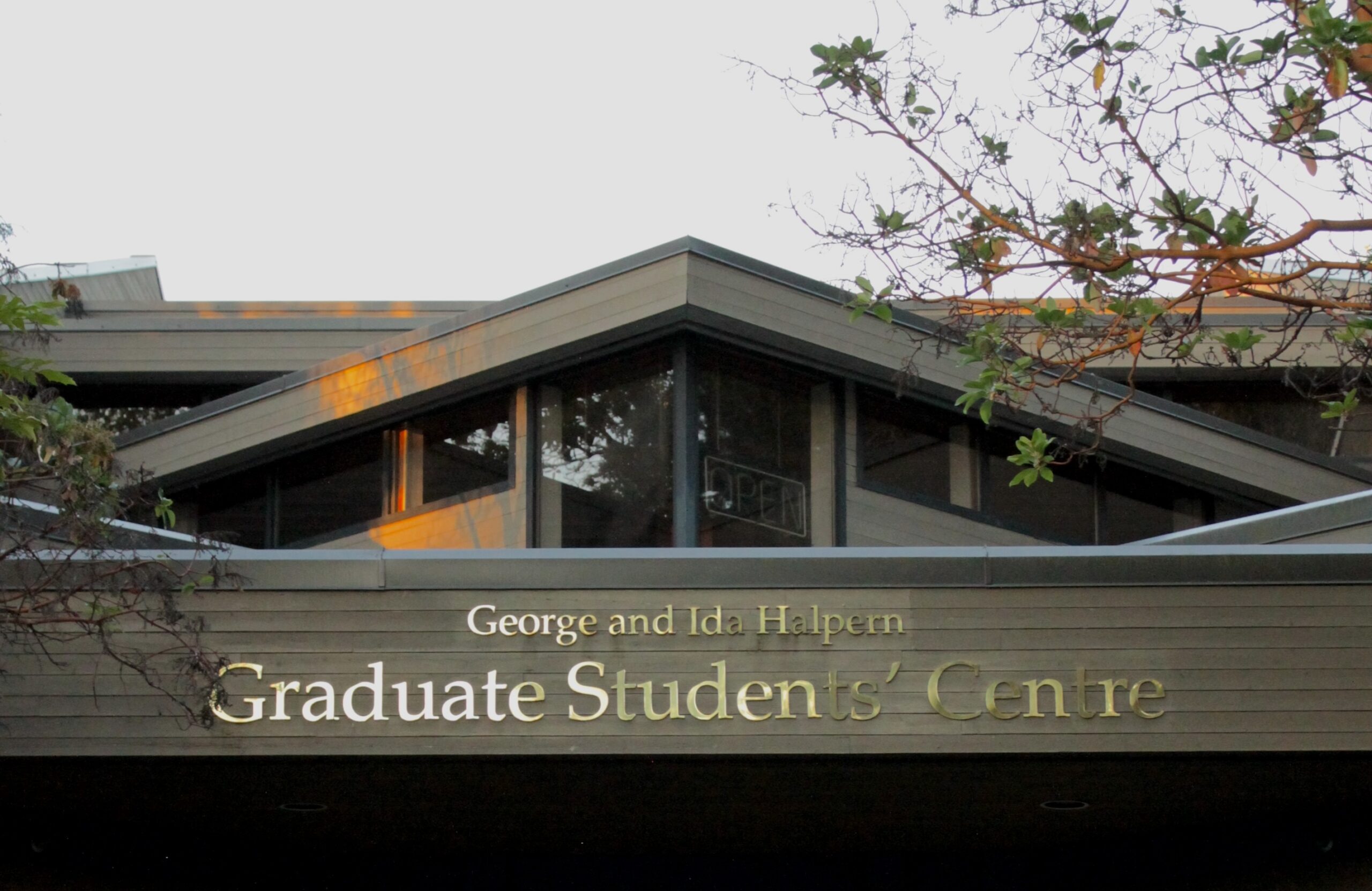
Photo by Vithória Konzen Dill.
The Graduate Students’ Society (GSS) Electoral Officer rejected the grounds of a complaint submitted by graduate students associated with the World University Service of Canada (WUSC) UVic chapter over allegations that a referendum question in the 2026 GSS Election was campaigned for in an unfair manner.
In the 2026 GSS election, a referendum question was proposed reducing the funding allocated to WUSC UVic — a student group that sponsors refugee students at UVic — from graduate student fees by $5 to $1 per student each semester.
Voters in the GSS election voted 217 to 132 in favour of reducing the funding allocated to WUSC.
The group of graduate students filed a complaint with the GSS Electoral Officer about the referendum process on March 13. Dr. Marlea Clarke, an associate professor of political science at UVic who serves as a faculty advisor to the WUSC UVic chapter, told the Martlet in a statement that she felt that the GSS was in a position of power and it used that power to unfairly campaign for students to vote for the “yes” side.
However, Clarke also said WUSC UVic respects the process and the decision of the Electoral Officer.
The GSS Electoral Officer at the time, Semyon Drozdetckii, wrote a letter formally recusing themself from making any decisions regarding the complaint.
“I acknowledge the complaint submitted by WUSC regarding the referendum process and the concerns they have raised about fairness and impartiality. After careful consideration, I have concluded that my personal relationship with a member of the GSS Executive Board, combined with my prior involvement in approving aspects of the referendum FAQ, creates a reasonable perception of conflict of interest and compromises the legitimacy of my decision,” Drozdetckii wrote.
Following Drozdetckii’s recusal, a new Electoral Officer, Samuel Fielder, was appointed. Fielder released a decision about the complaint on April 24, stating that the grounds of the complaint are not upheld, and the referendum result will stand.
“I am not satisfied that the conduct of the referendum process crossed the threshold of significant misconduct or unfairness that undermines the integrity of the electoral process,” Fielder wrote in the three page decision.
“In reaching this conclusion, I have been informed by the finding that the FAQ published on the GSS website, the primary vehicle through which WUSC alleges bias, was produced by GSS staff independently of the Executive Board and was reviewed and approved by the previous Electoral Officer (2025-2026) before publication,” Fielder wrote.
Fielder also wrote that “no language” in GSS bylaws or the governance manual prohibits members of the Executive Board from taking an official position on a referendum side, only designated neutral parties like the Electoral Officer and Electoral Appeals Committee.
Fielder similarly did not accept the allegation that the FAQ drafted by GSS staff gave the “yes” side a “structural advantage.”
“The standard under Policy 7.13.1 is significant unfairness that undermines the integrity of the electoral process, not any incidental advantage that institutional communication may carry. WUSC has presented no evidence that the FAQ materially affected the result,” Fielder wrote.
Fielder acknowledged the GSS’ decision to outline the “all-pass” outcome of the referenda rather than enumerate each possible outcome, meaning the outcome of a “no” result on the WUSC question combined with a “yes” result on the other referenda was not clearly communicated by GSS.
However, Fielder wrote, “the questions were structured and presented as distinct, and each with a yes/no ballot. Members were not required, instructed, or invited to treat them as a package during the voting.”
Clarke had previously raised concern that the framing of a “cost-neutral” referendum pitted their funding against the increased allocations to UVSS constituency groups.
The five constituency groups similarly told the Martlet in March that they felt the questions were linked, and said they did not request the GSS reduce WUSC’s funding to obtain a fee increase to their groups.
WUSC UVic decided not to appeal this decision. Clarke, who clarified she was speaking solely as a faculty advisor but not a representative for WUSC UVic as a whole, said that they were “disappointed but not surprised” by the result, but that they “respect the process,” as a new Electoral Officer was appointed and upheld the original results.
Additionally, Clarke said they did not think it would be a good use of time, as the new WUSC UVic leadership are preparing to welcome the new sponsored students to UVic.
Clarke said it’s possible the campaign rules themselves are the problem. “WUSC as a club wasn’t allowed to campaign as ‘a club.’ Only grad students involved in WUSC were allowed to campaign. As such, the club itself couldn’t do any campaigning – even though the cuts will deeply affect them,” she said.
Fielder concluded his decision with a recommendation to the GSS to address “issues” in the society’s governing documents.
“In my view, the policies and bylaws governing elections and referenda would benefit from greater explicit language in key areas, and that clearer guidance would better support the Electoral Officer in carrying out their role,” Fielder wrote.
GSS Executive Director Kyla Turner said the GSS Bylaw Policy Committee is currently doing a “total overhaul of [their] elections and referenda bylaws, policies and procedures to address all issues that arose in the Spring 2026 referendum.”
Clarke said that she is confident that WUSC’s incoming leadership will work hard to figure out alternative ways to increase the organization’s budget.
“WUSC has an unwavering commitment to accessible education and social justice: we will not let the GSS’s decision to defund refugee support work on campus weaken our work.”