

UVic Different Minds Lab participated in Australian National University’s study that found a successful and easy mechanism to train AI-generated face detection
Photo by Mark Farías via Unsplash.
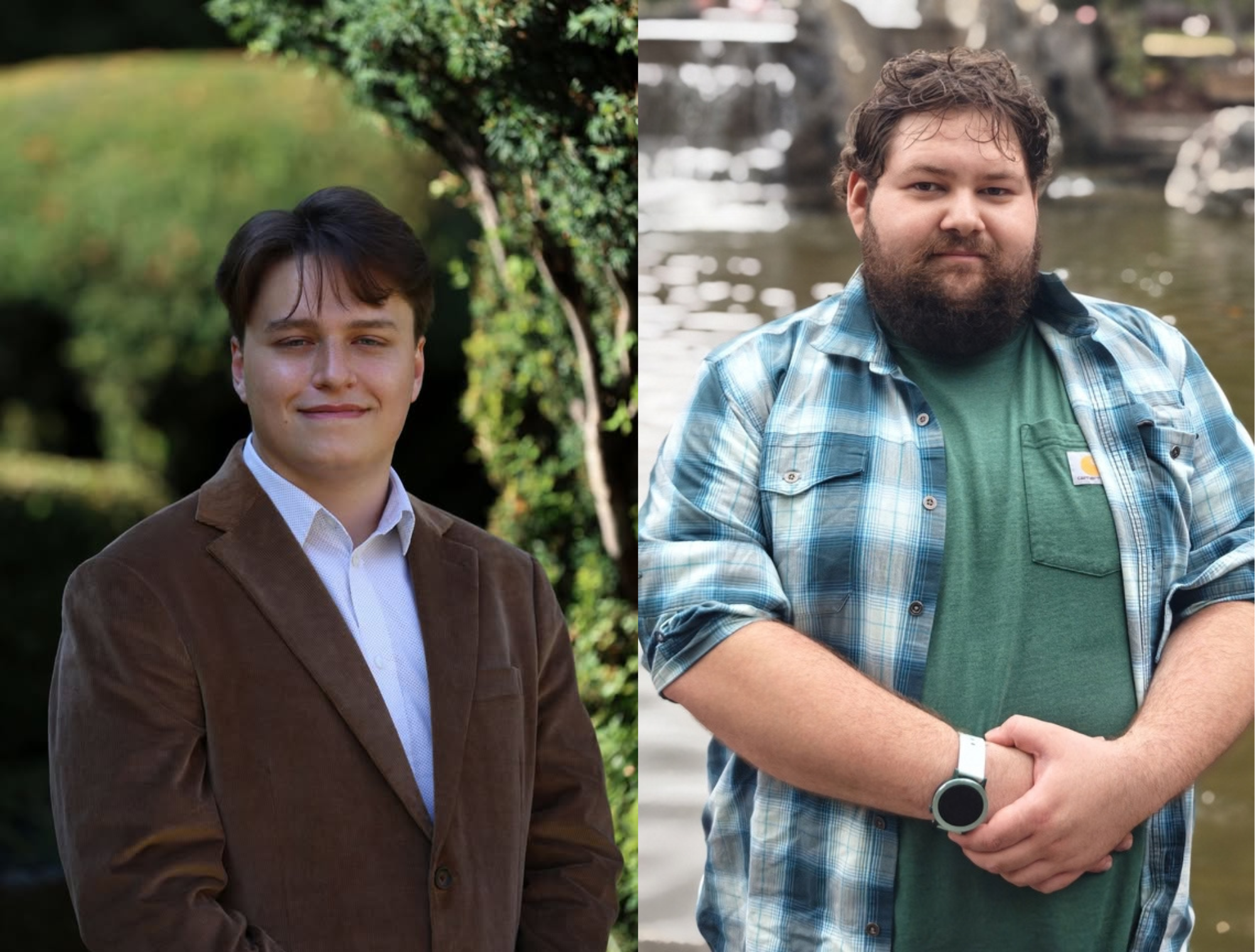
A recent study proved successful in training humans to differentiate AI-generated and natural faces. The project was conducted at the Australian National University’s (ANU) Emotions and Faces Lab by Dr. Amy Dawel, lead on the project.
She later brought it to Dr. Jim Tanaka, a professor of psychology at UVic who co-leads the UVic Different Minds lab, to replicate.
“Her research was really kind of looking at authenticity … she was quite naturally drawn to AI,” Tanaka said.
The technique developed by Dawel drew participants’ attention to six defining characteristics: distinctiveness, memorability, proportionality, symmetry, attractiveness, and expressiveness.
The study’s abstract explains that previous efforts to train AI-generated facial recognition focused on training people to spot “artifacts” that AI-generated images tend to have, “such as mismatched earrings or anatomical abnormalities.”
Dr. James Dunn, who worked on the study from the University of New South Wales (UNSW), said in a statement to the Martlet that their “approach is different because it directs attention toward broader perceptual qualities of the face.”
Tanaka said that early generations of AI-generated faces had “artifacts,” that served as cues, “but over the last couple years, these synthetic faces and AI faces have gotten really good,” he said.
However, Tanaka said that AI-generated faces tend to be more attractive, symmetrical, and proportional than a typical face. “We’re average in a funny, unique way,” he said.
He said that the more faces that are morphed into one, the more attractive that face is perceived as. He said that AI-generated faces have a similar phenomenon, as they are being generated from massive “face databases.”
Dr. Eric Mah, co-lead of the Different Minds Lab said that the training is simple, and takes about thirty minutes. Participants are given a face that is labelled as human or AI, then asked to rate it on the six defining characteristics.
“It really gives them an opportunity to start to associate the differences in symmetry,” Mah said.
He said that Dawel’s initial idea for the characteristics came from prior work she had done which showed that people tend to view AI and human faces as being different on these characteristics.
While the initial study at ANU was conducted in-person, UVic’s replication of the study was done online. Both studies showed drastic improvement; in less than one hour of training, identification improved by 30 per cent.
A major focus of the study is AI-related fraud and misinformation.
Dunn said in a statement to the Martlet that “fraud and misinformation were important motivations [behind the study] because AI-generated faces can give false identities and deceptive communications a convincing human appearance.”
He explained that this research is important because of the rapid advancement of this technology, and that “AI-generated images, voices and identities are increasingly difficult to distinguish from real ones, which is beginning to blur the boundary between what is authentic and what is synthetic.
“I think our dream really is to have this as an easily accessible kind of tool or training program that people can go through,” Mah said.
“I hope the study changes the assumption that ordinary people are essentially helpless when confronted with highly realistic AI-generated faces,” Dunn said in a statement.
Dunn said that the next steps are determining how training transfers to faces produced by newer and different generative-AI systems. He said that because the replication showed that training is successful when deployed online, it has potential to be delivered affordably at scale.