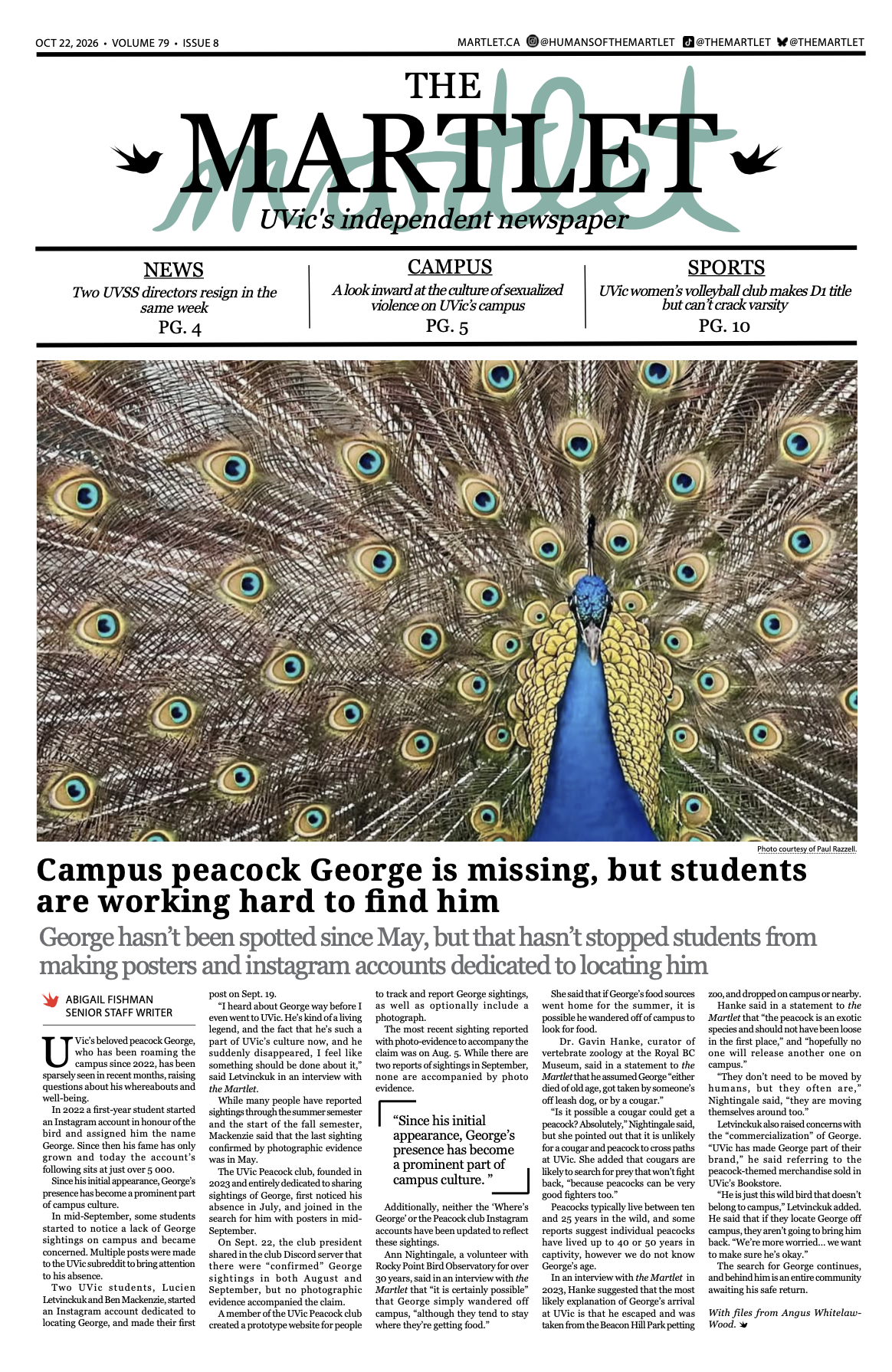

The Canadian government announced two AI data centers planned for Vancouver and the community mobilized to successfully resist the new builds
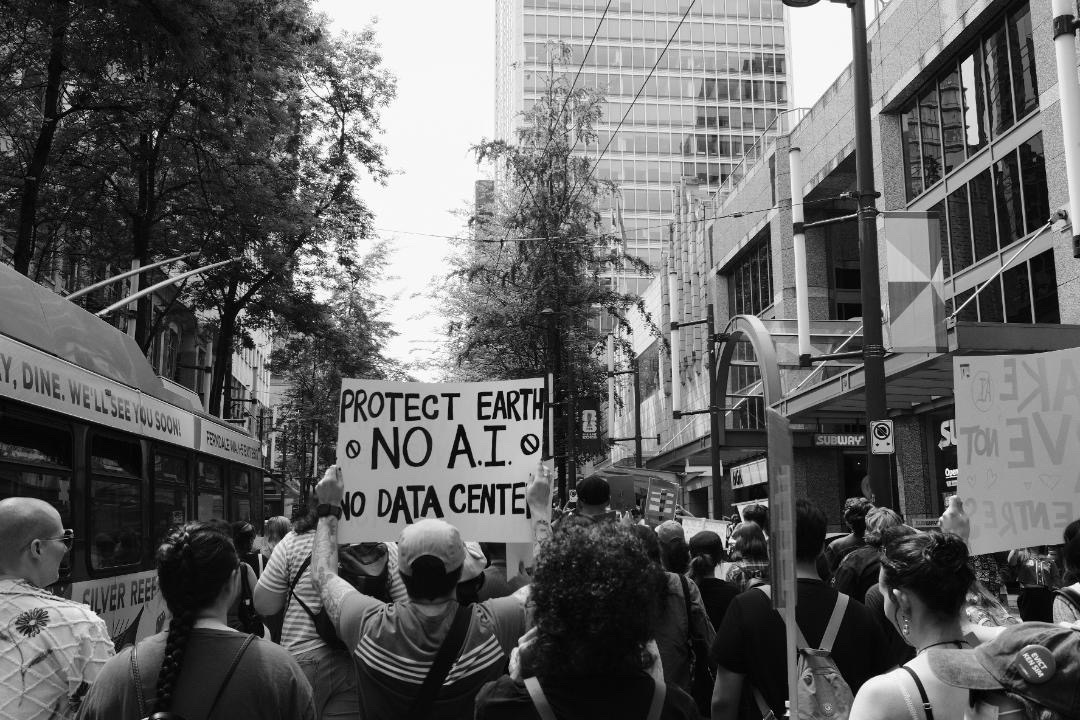
Photo courtesy of No AI Vancouver.
Data centers are rapidly rolling out, and communities are mobilizing just as quickly.
In May, the Canadian government announced a partnership with Telus, under which two Artificial Intelligence (AI) data centers will come to Vancouver, and the existing Telus AI data centre facility in Kamloops will be expanded.
The two data centers in Vancouver are planned to be located in Mount Pleasant at the former Hootsuite headquarters, and at 150 West Georgia Street, respectively. According to the CBC, Telus says the Mount Pleasant data center will come online later this year, while the second facility is planned to come online in 2029.
Data centres are being proposed across B.C. and Canada, including one facility so far on Vancouver Island, which will be located in Nanaimo. While the Nanaimo data centre is not intended for AI, the city still estimates it could use up to 69 000 litres of water per day.
Bell Canada is also developing a closed-loop AI data centre — which a Bell spokesperson told the Martlet will not draw on municipal water sources — at Thompson Rivers University (TRU) in Kamloops, and a Microsoft data center in Etobicoke, Ontario has been approved to use up to 39.75 litres of water per second for cooling purposes.
Over recent months, the Vancouver community has pushed back against the data centers — and Torin LaRocque, an eighteen-year-old Vancouver resident, has been at the heart of it all.
He said that he had been following the data centers popping up around the U.S. before learning about the plans for Vancouver. “So that is when I knew that, if no one else was going to do it, someone had to, and that person would have to be me.”
LaRocque, with help of his friend Mary Easton, organized the first protest Vancouver saw against the data centers. “It was super amazing to see how only two people turned into hundreds of people helping out,” he said.
Over the following weeks, LaRocque’s opposition grew into the grassroots organization No AI Vancouver. According to LaRocque the team currently sits between 300 and 400 people.
On July 14, the Vancouver City Council voted to send the rezoning application for the Mount Pleasant data center to a public hearing on July 23. However, on July 21, the council unanimously voted to reverse its decision from the week prior, effectively delaying the public hearing and sending the proposal back to the application review stage.
“I think that really speaks to the hunger for community consultation,” said Emily Lowan, leader of the BC Green Party, in an interview.
Vancouver City Councillor Sean Orr, said in a statement to the Martlet that while the public was successful in delaying the hearing, “it really came down to fortunate timing.”
He explained that the council did not sit during the FIFA World Cup, and therefore saw an unusually high number of applications referred to public hearing. Some of the applications — including the Mount Pleasant data centre — had a large number of public speakers, and the council decided to refer the item back to staff so that it could finish all of its business by August.
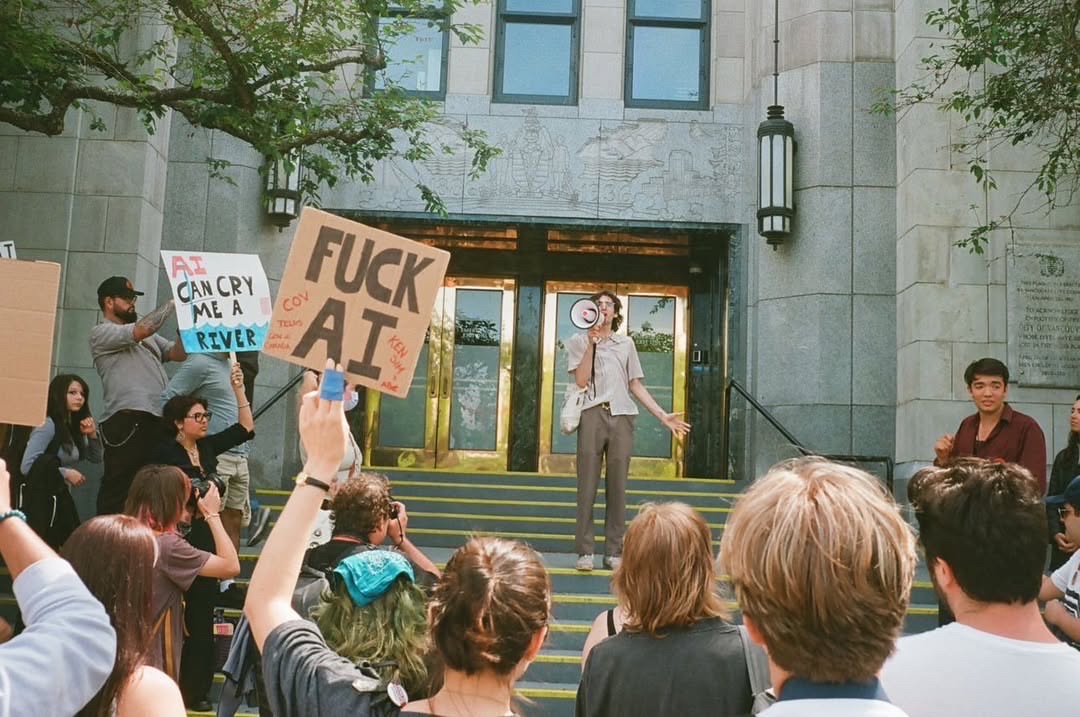
Photo courtesy of No AI Vancouver.
With a municipal election approaching in October, LaRoque said that the delay has turned data centers into an election issue.
Solomon Yi-Kieran, a Coalition of Progressive Electors (COPE) backed candidate for city council, said “it shows that turning out works, and shows that making your voice as a regular person heard works.”
They said that at the very least, the deferral gives the community more time to fight the data centers before they are built. “Best-case scenario, it’s an election issue. We can mobilize on it.”
In the leadup to the election, LaRocque shared that No AI Vancouver is reaching out to each candidate to learn their stance on AI.
Yi-Kieran said that COPE has been present and active on this issue over the last few months. The party has attended marches and run town halls on the topic of data centers, they said, intending to teach individuals how to mobilize.
Additionally COPE began a No AI Data Centers petition with a goal of 10 000 signatures, which it has nearly reached at the time of publication.
“We were the first party that started calling for a moratorium,” Yi-Kieran said.
Regular citizens and politicians alike are calling for a moratorium on AI data center builds — a pause in development until the consequences of AI data centers are better understood, and there are plans in place to manage said consequences.
In a media release in May, Lowan joined the call for a moratorium. In the release, she also calls for an end to what she describes as the B.C. government’s “build-first, regulate-later” approach to data center development.
“I tend to agree with B.C. Green leader Emily Lowan in calling for stronger regulations,” Orr said in a statement, “I would like to see strong assurance that we aren’t sacrificing our water and environment to corporate interests.”
Like others, Lowan shares a wide array of concerns about the rapid roll out of AI data centers nation- and province-wide.
“Right now, we have British Columbians being told to stop watering their plants, to take shorter showers, because of the climate crisis causing droughts across our province, but suddenly we’re supposed to cheer for tech billionaires squeezing profit out of us with AI data centers at the expense of our clean water.”
On May 1, Metro Vancouver began stage two water restrictions, under which all lawn watering is prohibited, aesthetic water features cannot be filled or topped up, washing surfaces like driveways is prohibited except in limited circumstances, and tighter restrictions were placed on watering plants and sprinkler use.
“Adding massive AI factories to the grid only means one thing: it means higher energy bills for working families and even more strain on our grid,” Lowan said. Yi-Kieran shares this concern, pointing to examples in the U.S. in which data centers’ burden on the energy grid has resulted in higher energy bills.
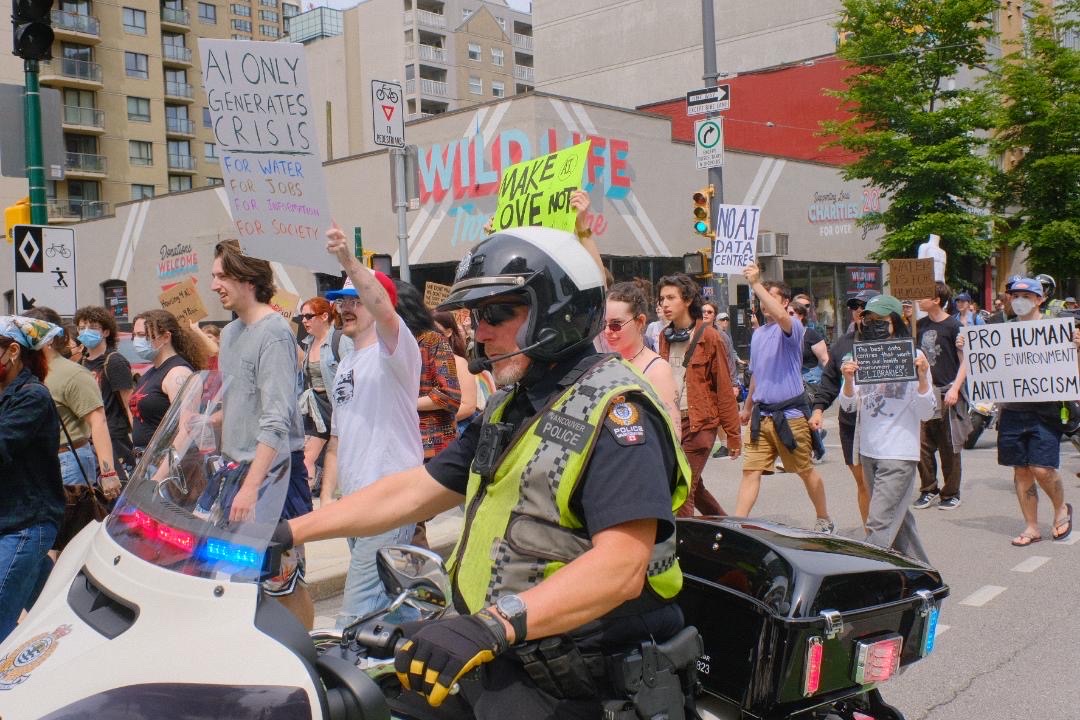
Photo courtesy of No AI Vancouver.
According to Consumer Reports, residential electricity bills jumped 7.1 per cent in 2025 — and up to 20 per cent in some states — with AI data centers as a significant factor.
Yi-Kieran said that a moratorium is necessary until there is a reliable way to ensure that AI data centers are not hiking utility bills for average Vancouvorites. “Because it’s a gamble that is going to have likely very negative effects on a lot of people’s lives and a lot of people’s cost of living.”
Orr said that his biggest concern is the lack of regulatory framework to properly assess the impacts of this digital infrastructure.
In the July 15 Committee on City Finance and Services meeting, Councillor Lucy Maloney brought forward a motion that called for addressing the “risks of digital infrastructure,” which ultimately failed. Orr seconded the motion, and said that he supported it.
The motion points to the U.S. that “has shown that, in the absence of thoughtful regulation, data centre construction and operation can create legitimate concerns and serious impacts on both nearby residents and municipal infrastructure.”
Additionally, the motion outlines a number of concerns raised from various sources.
It acknowledges a growing number of municipalities questioning whether residential areas are suitable locations for data centers, and requiring further studies to manage potential impacts; the potential of data centers occupying “scarce” commercial and industrial-zoned land while creating few post-construction jobs; and concerns that AI infrastructure generates substantial value for private investors while only contributing marginally to the local economy.
The motion would have had council direct staff to urgently report back on how to develop a Data Center Public Impact requirement, on how staff could assess consistency of data center development applications with Vancouver’s climate targets, and assess other impacts such as noise pollution.
Yi-Kieran said that the fight against data centers in Vancouver is not yet done, and stressed the importance of continued community organizing.
“When the first AI march happened, I did not think it was going to change anything. When the second AI march happened, I did not think it was going to change anything. But after the second AI march … [it became] such a big conversation locally and nationally.”
They said that their advice to people in other parts of Canada and the U.S. is “do not back down, do not let them force these data centers through.”
Yi-Kieran is not alone in sharing this sentiment.
The first protest Lowan spoke at had around 500–700 attendees, she said, but the numbers have consistently grown since then.
“Don’t wait for someone else to take the reins,” Lowan said. “Don’t just organize one rally and call it a day.”
Lowan said that it was inspiring to see eighteen-year-old LaRocque take action within days of learning about the project.
“I think that everyone should know that one person can indeed make a difference,” LaRocque said. He pointed to No AI Vancouver, which began with just himself and has now grown into a large organization with many more looking to join in the fight.
“The fact is that it all starts with one person, it is important to be that one person and make that change that you want to see in the world.”
Correction: An earlier version of this article said the Bell data centre was open-loop, rather than closed loop, and that it was being developed by Thompson River University. The article has been updated to reflect this.