
The UVSS, supported by the Pride Collective, will lobby for expanded options such as injectable estradiol and testosterone pills, gels, and patches to be covered under the health plan
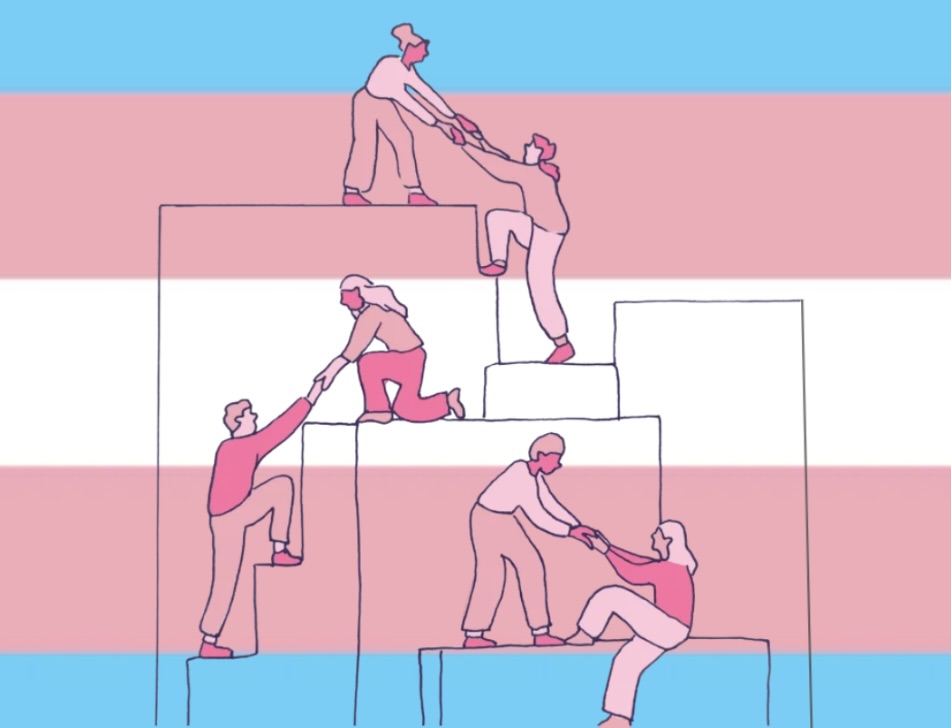
Illustration by Sabina Mendoza.
At the July 20 UVSS board meeting, one motion, introduced by Director-at-Large Ame Sillars, proposed that the UVSS endorse injectable estradiol and testosterone pills, gels, and patches — used in hormone replacement therapy (HRT) — to better support gender-affirming care for students.
The motion, which passed with seven in favour, no objections, and three abstentions, will have the UVSS lobby for expanded HRT options under the UVSS Health and Dental Plan and include the issue in future advocacy efforts.
UVSS advocacy groups, including the Gender Empowerment Centre, Pride Collective, the Native Students Union, the Society for Students with a Disability, and the Students of Colour Collective, all endorsed the motion and expressed their belief in its importance.
The Pride Collective began working alongside Sillars to lead the initiative for expanded and easier access to HRT options after the issue was brought to their attention by friends and students.
In a working draft of a brochure created by Ame Sillars and Liya Tensae, Pride Collective coordinator, they stated that “Two-Spirit, Transgender, Non-Binary, and Queer folk deserve to have access to necessary medications that support them and allow them to thrive. As such, advocating for full hormonal access is important.”
During the UVSS meeting, Sillars said an increasing number of transfeminine people are taking estrogen by injection as their preferred method of administration. Injectable estrogen can eliminate the need for both oral estrogen and anti-androgens (testosterone blockers), reducing strain on the liver.
However, Sillars said compounded hormone medications are not covered by Canadian pharmaceutical companies or the provincial Pharmacare program, with the exception of last-case-scenario authority, meaning a patient has tried all other HRT options before requesting approval of injectable estrogen.
Because UVic is on a Pharmacare-shared healthcare plan, Sillars said, Pacific Blue Cross generally does not cover these medications.
According to Trans Care BC, injectable estrogen may have a lower cardiovascular risk for people over 40 compared to options like oral estrogen, which is the least expensive choice relative to estrogen patches.
Injectable estrogen is more costly and less available, with no public options available to cover the costs.
For transmasculine people, Sillars said only injectable testosterone is currently covered, though some struggle with needles, making alternative options preferable. Trans Care B.C. says that injectable testosterone may lead to highs and lows in energy and mood swings in-between doses, unlike testosterone gel/cream.
Like injectable estrogen, both testosterone gel/cream and oral testosterone are significantly more expensive than injectable testosterone.
In a written statement to the Martlet, Tensae said that all forms of testosterone require Special Authority Approval, which requires patients to prove they have the medical need for a drug and must be filed by a prescriber or pharmacist. If one’s doctor is not knowledgeable about this application process, barriers might arise, Tensae said.
She highlighted how difficult it is to navigate the healthcare system and insurance matters, especially for marginalized people.
According to Sillars, the healthcare plan offered by the Graduate Student Society (GSS) provides more coverage for HRT, but it comes at a higher cost for students.
The GSS held a referendum in 2024, introducing gender affirming care alongside other health amendments. Following the referendum, gender affirming care is covered for a lifetime amount up to $15 000 per student. This amendment led to an $8 per year increase to graduate students’ health and dental insurance costs.
Sillars said that, while a referendum could be a route for the UVSS to take in the future, she believes it is a significant undertaking.
Furthermore, she believes that advocacy for expanded HRT coverage must go beyond the university, such as through political advocacy.
“It’s a systemic issue,” Sillars stated. “If healthcare coverage were equally prioritized between cis and trans people’s needs, similar to the need to equally prioritize men and women’s healthcare, then this wouldn’t be a concern.”
Sillars said that efforts have been made to expand access to HRT, including advocacy work by UBC in 2022. However, the lack of standardization in the non-covered medication — like the lack of a Drug Identification Number necessary for compliance with Canadian law — has made these efforts challenging.
Following the passing of the motion, Sillars said the UVSS is beginning its advocacy work.
Tensae said that the initiative to expand HRT access is in its early days, and will be a large undertaking, but that the Pride Collective is starting to gather information, build awareness of the issue, and come up with an action plan and approach to advocacy.
The UVSS motion proposed that advocacy would include, but not be limited to, advocacy to the Pacific Blue Cross, GreenShield, pharmaceutical companies, and the B.C. government in support of expanded HRT coverage and production, as well as to other student unions and student healthcare plans to build coalition support. One of the next steps planned for advocacy is these coalition-building efforts.
“We have a large contingent of trans people on campus, and I think supporting that minority is extremely important, especially to give the best care that is possible.… It adheres to our mandate to support minorities in the UVSS too,” Sillars said.
Tensae said that the UVSS can be a key source of change and action for the issue. “If not us then who?” she wrote. “Ultimately, we will need the support of multiple peoples, professionals, and organizations, but I believe the student union is a great place to get the ball rolling.”
Sillars said that students who want to support efforts to expand HRT coverage can take action by contacting politicians or reaching out to queer organizations to see where their help is needed, noting that HRT access is only one aspect of supporting queer people.