
The committee was established on August 10 after policy development and revisions, graduate students will have a non-voting voice in the committee only.
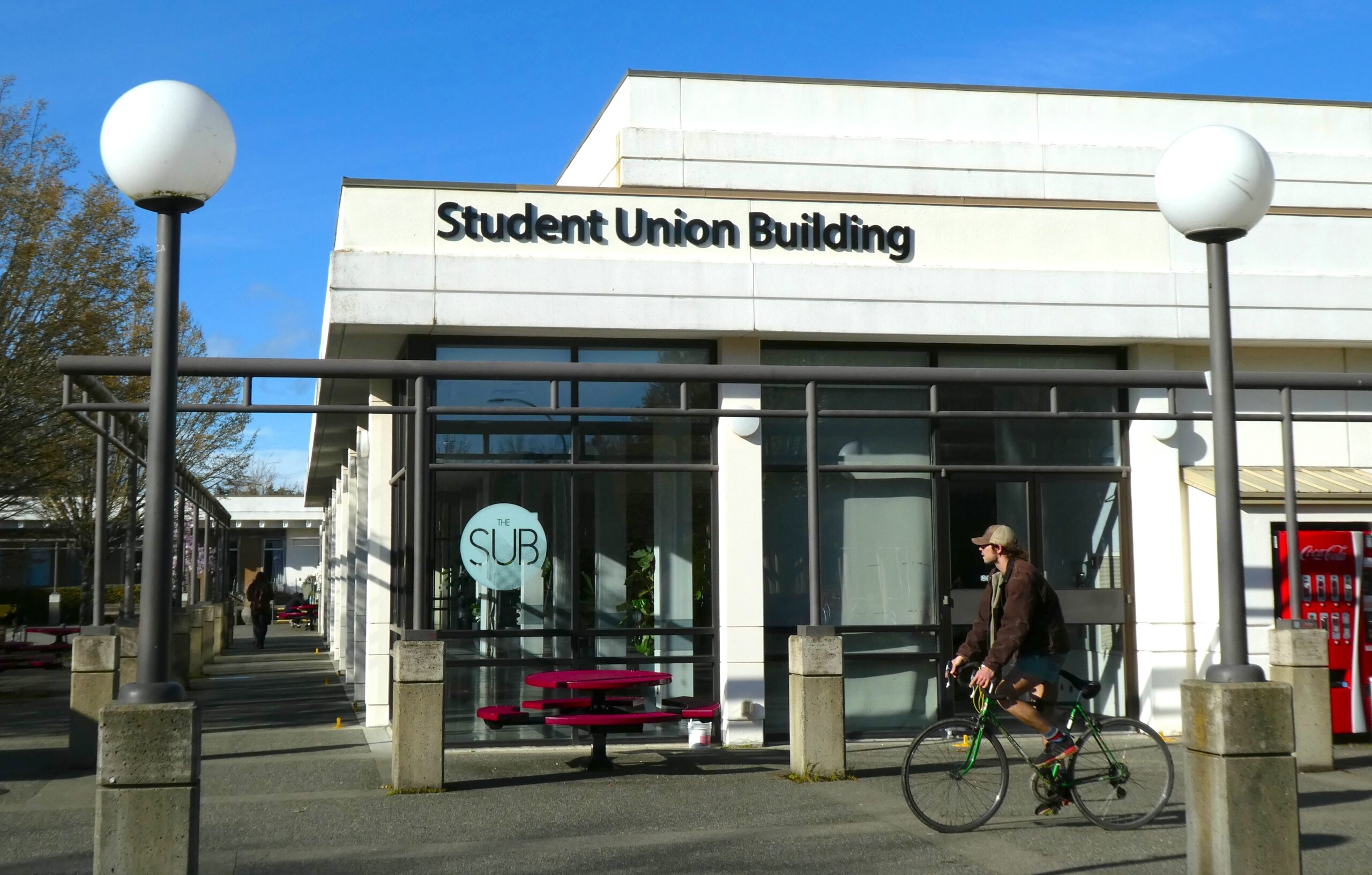
Photo by Aurora Campbell.
As of August 10, a new University Relations Committee has been re-established by the UVSS Board of Directors to “represent and protect students’ interests to the university,” as outlined in the newest terms of reference.
Director of Outreach and University Relations Matthew Allen Curtis said the open committee’s purpose is to be a “united front” for student interests — a one-stop space for consultation about all things related to the university, as well as updates on various UVic committees.
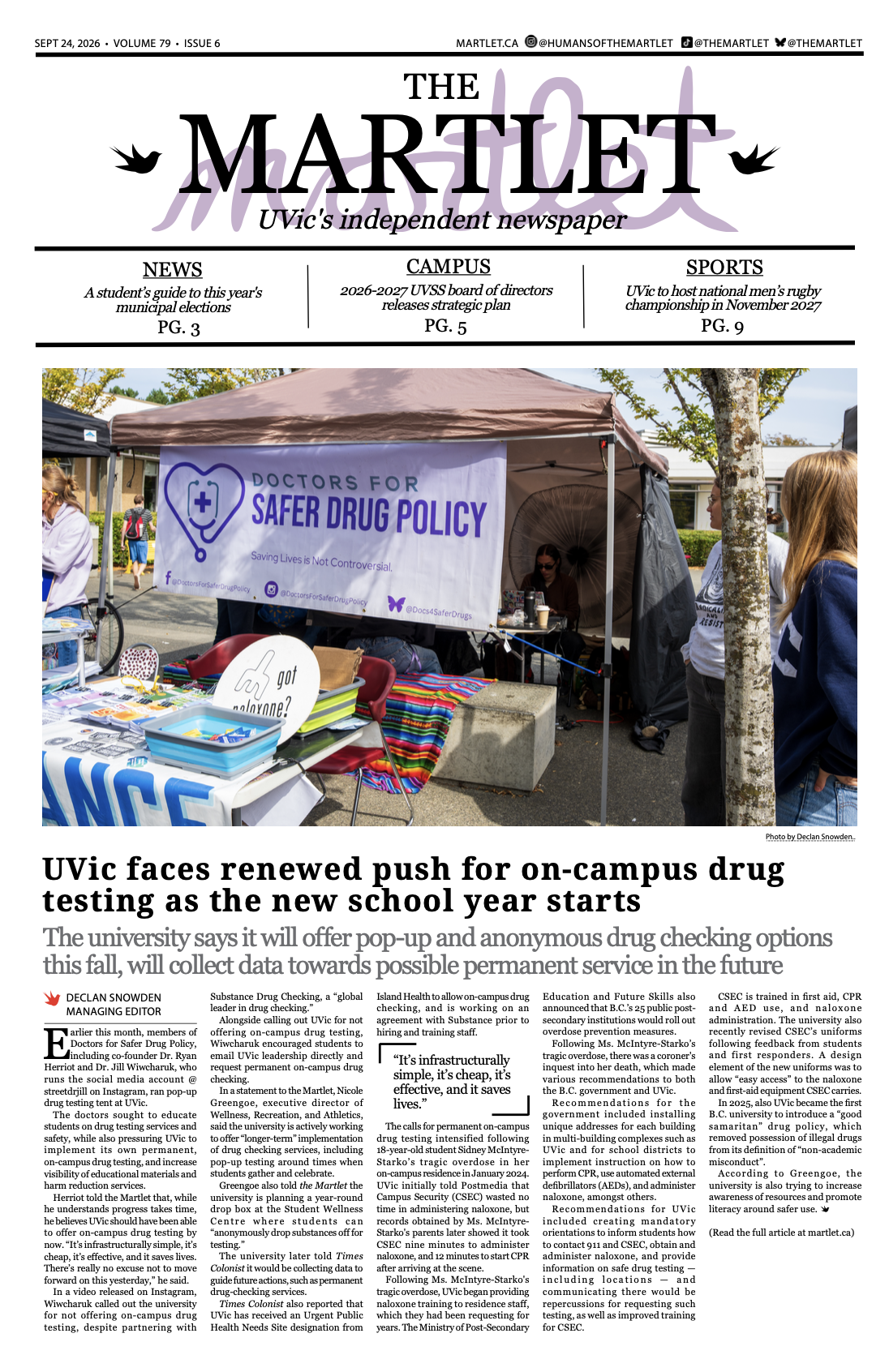
The wide-reaching group will bring together student members of the UVic Senate, student members of the Board of Governors, members who sit on University committees, and more — with a recently clarified restriction to only include undergraduates.
The committee is not a new creation; rather, it is a reprise of a previously “forgotten” committee. The motion to resurrect it was first proposed in a July 20 meeting by Director of Events Mohan Selvarajan.
In a statement to the Martlet, UVSS General Manager Dale Robertson wrote that the original “committee met very infrequently,” and “was removed from policy a number of years ago since it had not met in sometime.”
On July 20 during initial discussion, the question of involving members of the Graduate Student Society (GSS) was debated by the board. Director at Large (DAL) Donovon Wood-Gaines suggested they have a voting member on the committee, while fellow DAL Evan Maher cautioned against it.
The group may “be in-confidence discussing things … that the university might not appreciate,” Maher said. He also suggested that graduate students have previously “voted in directions that are not in favour of the general student body.”
Native Students Union Firekeeper K’sana Wood Lynes-Ford said it would be undemocratic to decide on GSS involvement based on how their representatives may vote. If the committee makes decisions that affect graduate students, she said, “they deserve to be in the room.”
The inclusion of graduate students ultimately proved a sticking point, and in a narrow vote it was decided the motion be shelved to undergo further policy development.
On July 29, a meeting was held to edit the committee’s terms of reference with outside consultation from student members of UVic Senate and the Board of Governors, who had previously not been contacted. The revised motion was then reintroduced on Aug. 10 by Director of Campaigns & Community Relations Tam Aljundi.
Revisions included the explicit restriction of voting membership to undergraduate students. After a vote, the re-establishment of a University Relations Committee was confirmed without much fanfare.
With the new committee established, an informal discussion was held on Aug. 13, connecting GSS Director of Internal and University Relations, Hannah Brown, and Director of External Relations, Victor Marrugat Arnal, with their UVSS equivalents — Curtis and Aljundi.
While the terms of reference describe the body as “a collaborative working group that aims to support all students,” Brown said the GSS has since “gathered that this committee is intended to represent undergraduate students … [not] the entire student body — which is a kind of key differentiation.”
As a result of cross-society talks, Brown said they will be invited as a non-voting member of the committee. Brown anticipates their role will likely involve providing relevant information, and reporting back to the GSS board to align the two societies’ efforts.
“I think [the] UVSS really wanted this to be kind of their collective undergraduate student voice, but still wanted my connections,” said Brown, who’s been involved in on-campus advocacy for over five years, particularly with the Society for Students with a Disability.
“I think that’s often forgotten … the advocacy groups receive funding from graduate students as well, and I personally know a lot of graduate students are actively involved … within the programming that those groups provide,.” they said.
On the concern about potential conflicts of interest between graduate students and the committee, Brown said the GSS “in no way [makes] our reps vote in any particular way, that’s up to their own decision-making.”
“We trust … they can make the best decisions that they think represent the needs of graduate students.”
Pinelopi Tsami is a second year PhD student from Greece, studying in the Department of Chemistry. She works at the university as a teacher’s assistant, alongside conducting paid research.
On Brown’s appointment as a non-voting member, Tsami said “It’s like giving someone a pinhole to look at what’s going on, but not giving them any chance of making a difference.”
She expressed that graduate student voices aren’t being heard at the university level, stating that on other committees, “we had representatives with the ability to vote and we were still facing problems.”
Tsami went on to say “the issue is that grad students are outnumbered,” making up only around 13.6 per cent of the student body..
“We also have different needs,” said Tsami. She named the high cost of living outpacing wages and long hours as some of the biggest problems graduate students face.
“Your work follows you everywhere.”
“Who will advocate for me?,” Tsami asked. ”The undergrads … just don’t have the issues I am having.”