
The first cohort will begin in the fall of 2027, with applications opening this Sept. 1
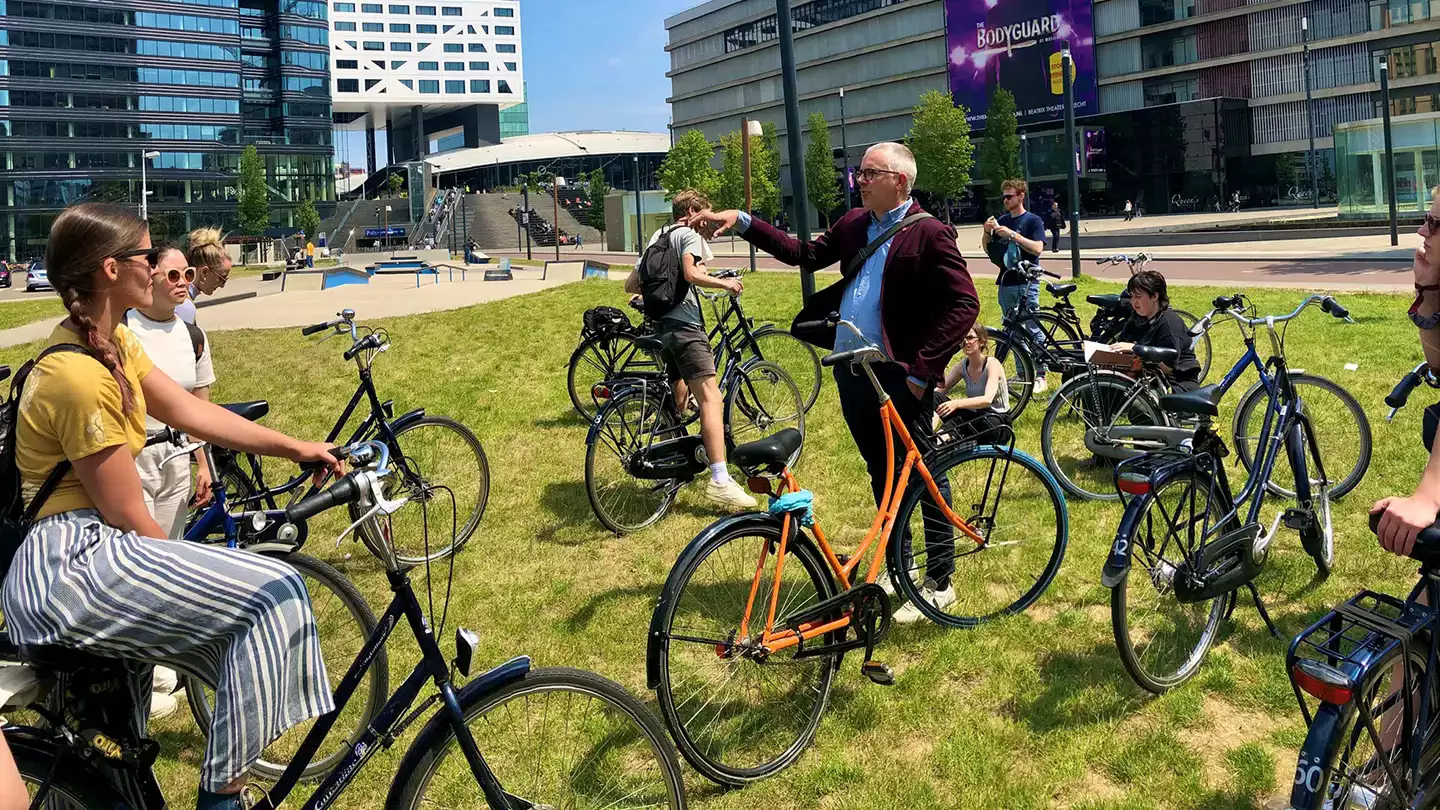
Photo via the University of Victoria.
Starting Sept. 1, UVic’s Department of Geography will be accepting applications for the recently announced Master of Community Planning. The graduate program’s inaugural cohort of around 30 to 35 students is expected to begin in September 2027.
The program’s launch comes after the shuttering of over 13 programs at Vancouver Island University in May of 2025, including their 10-year-strong Master of Community Planning.
Since then, the closure has left Vancouver Island without any equivalent graduate program, meaning those wishing to become professional accredited planners would have to train elsewhere within Canada.
Island communities have unique dimensions and considerations when it comes to planning, having finite landmass and distinct geography.
“[I] feel very strongly that the planning issues on Vancouver Island are different than if you were to attend a mainland planning school,” said Dr. Pam Shaw, one of the originators and previous director of the Master of Community Planning program at VIU.
“You think about land differently when you are on a finite place … that has real edges … there’s many things that are very specific to islands that need to be … learn[ed] about by being there.”
Maintaining a local program will be key to Vancouver Island’s future development as, according to the Planning Institute of B.C., the province is experiencing a planner shortage coupled with growing demand.
That gap in the island’s graduate programming caught the attention of UVic faculty, such as Dr. Reuben Rose-Redwood, a geography professor and associate dean academic of the Faculty of Social Science, who has helped develop and spearhead the new program.
Rose-Redwood worked alongside Shaw, who now serves as a program advisor at UVic, to plan the program’s new curriculum.
“We wanted to ensure that that gap was as small as possible … because we recognized that we have to go through all these university approvals, the provincial approval, [and] the accreditation process that could potentially take two years,” said Rose-Redwood. “We were able to do it in one year.”
Rose-Redwood noted that the director of the Indigenous Governance program was consulted concerning the new curriculum, and the Office of Indigenous Academic and Community Engagement was also consulted through existing protocols.
Now, after receiving nearly all final approvals, the program is preparing for its inaugural 2027 cohort.
As a course-based — rather than thesis-based — graduate program, emphasis has been placed especially on community-engaged learning and practical experience — with Co-op participation highly encouraged.
“It’s finding ways to get students engaged in real life issues,” said Shaw. “I was telling one of our potential community partners about co-op and he said ‘okay, I’ll take seven’ … that’s the level of excitement that’s out there among communities and organizations”.
In line with that, during the second year of their degree students will complete PLAN531: Planning Design Studio — collaborating “in teams with local partners to co-design” a “community-based planning project.”
Student planners will also gain hands-on experience through a year-long capstone project, presenting an opportunity for deeper independent study much like a thesis would.
Graduate students may also find themselves joining up with existing field schools like the European sustainability travel study program, run by Geography professor Cameron Owens, through the crosslisted course PLAN 591: Field Studies in Community Planning.
Rose-Redwood added that the special topics course PLAN541: Current Issues in Planning might, for instance, address “hot-button” issues like artificial intelligence or bike-sharing systems.
As an interdisciplinary field, the community planning program also intersects with many UVic programs, ranging from Indigenous governance to sociology and more.
“In our program, we’ve really tried to incorporate Indigenous knowledges and decolonial perspectives within the course curriculum,” Rose-Redwood said.
While each student will be required to take PLAN521: Planning with Indigenous Communities, the curriculum team have also “tried to incorporate … the history of settler colonialism and the role that planning has played within that process, as well as the importance of understanding Indigenous knowledges and cultural protocols as part of the planning process as well.”
These wide-ranging overlaps have resulted in an extensive electives list and crosslisted courses like PLAN560 / CIVE560: Urban Transportation Planning or PLAN540 / CD540: Community Development and Planning in Action.
Whether your interest lies in urban planning or policy development, the master’s flexibility allows for students to shape their own learning. Shaw likened the diverse course offerings to “an element of choose your own adventure.”
Students of all undergraduate backgrounds are thus encouraged to apply, as Shaw recalled “someone who had done their undergraduate degree in percussion … [who] is now working as a registered professional planner in British Columbia”.
“Planning as a profession benefits from that diversity of thinking,” she said.
Shaw also outlined a number of potential careers for future graduates, including but not limited to traditional municipal planners, private development, disaster planning, environmental or social planning, and roles in the non-profit sector.
She expressed that some of the real-world challenges planners will face in the field include B.C.’s ongoing houselessness crisis, toxic drug crisis, aging infrastructure, and climate change (including natural disasters like this year’s ongoing wildfires.)
Rose-Redwood confirmed the program is now in the final stages of pre-accreditation with the Professional Standards Board for the Planning Profession in Canada, which will guarantee incoming students leave UVic properly accredited and prepared to work in the field.
As the program is entering its last steps in achieving accreditation, the department is actively searching for its inaugural director along with additional instructors.