
An average of 21 incidents of violence are reported daily in Victoria schools, but coming to a consensus on the best course of action is proving difficult
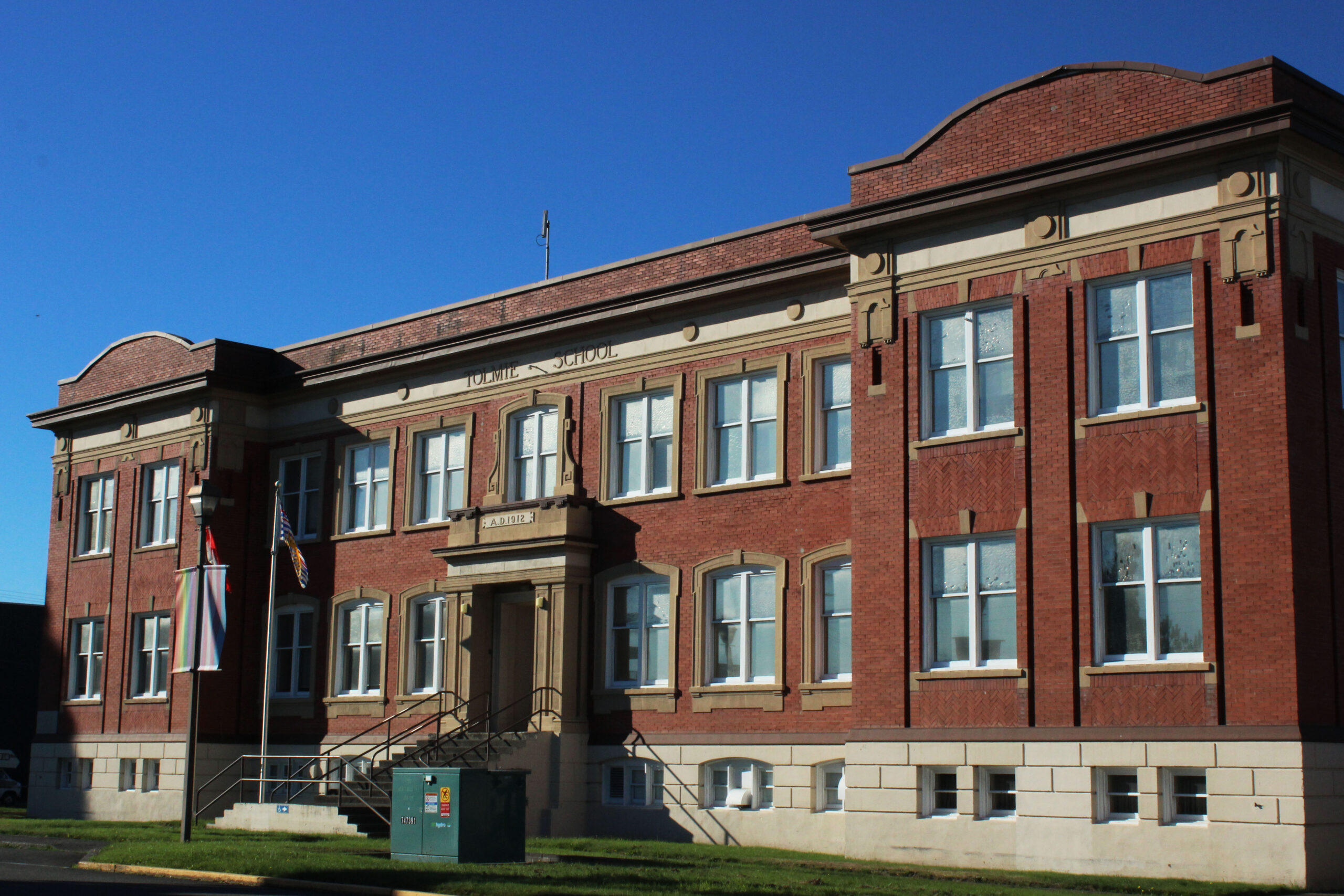
Photo by Luisa Dela Cruz.
In September, the Greater Victoria Teachers Association (GVTA) released a report on school violence, calling for urgent action from the Greater Victoria School District (SD61). As part of the report, the GVTA surveyed 165 respondents, representing 8 per cent of Victoria teachers.
The GVTA report says that the district experienced an average of 21 incidents of student-on-staff violence per day, and that 95 per cent of respondents report having experienced violence in the last year.
“We know for sure that’s underreported,” said GVTA President Carolyn Howe in an interview with the Martlet.
She said that teachers often do not have time to report violent incidents, and that many teachers think reporting an incident won’t lead to any action.
“I have filled out many violent incident reports in the last 3 years. Not once has anyone from the district reached out,” a survey respondent said, as quoted in the GVTA report.
“We’re not first responders,” one respondent wrote. “I’ve been teaching for thirty years and it wasn’t always like that,” another stated.
SD61 released a statement on Sept. 17 in response to the GVTA report.
The district’s response acknowledges the experiences outlined in the GVTA report and thanks staff, including teachers, educational assistants, counsellors, and administrators, but it goes on to say the label “violence in schools” may “[oversimplify] a complex reality that could have a harmful impact on families with young children navigating behavioral challenges.”
The statement also highlights that the GVTA staff survey response rate is 8.3 per cent, and that the GVTA report incorporates district data that only represents 3.7 per cent of over 20 000 students in the district.
“Of the District data referenced in the report, 96% involve young, elementary-school-aged children whose behaviour reflects challenges with communication, self-regulation, mental health, or disability-related needs rather than intent to cause harm.”
Howe told the Martlet “the district’s response was completely inadequate.”
“It’s clear in the report that these behaviours are an outcome of an unmet need that schools aren’t meeting, and teachers have incredible empathy for the students who engage in these behaviors. We work really hard with them because they are suffering too.”
The district’s Board of Trustees released a separate response on Sept. 21, “which is better,” Howe said.
The Board of Trustees’ response thanked the GVTA for compiling and sharing the report, labels safety as their highest priority, and gives their full support to an “evidence-based approach to assessing the effectiveness of current approaches.”
The GVTA report outlines three recommendations along with action items for each at both the district and provincial level, with a list of tactics and strategies to implement.
The first recommendation is to “reduce incidents of violence” in schools by “setting and assessing measurable targets.”
The second recommendation is to “improve learning conditions for all students by providing adequate alternative spaces and programming options.” At a provincial level, this includes “drastically improv[ing] student-educator ratios.”
In 2024, the BC NDP campaigned on a promise of putting a learning assistant in every classroom from kindergarten to grade three, as well as a mental health counsellor in every school.
“Those are things we think the province could act on immediately by providing the funding to allow districts to implement those programs,” Howe said.
The third recommendation is to “respond to incidents and support all staff and students impacted by violence in meaningful ways.”
Samantha Corrington, an assistant teaching professor in UVic’s School of Child and Youth Care, said that “it definitely is not a one-size-fits all kind of response.” Instead, she said, conversation with teachers about what is working and what is not will be necessary moving forward.
She added that inclusion must respond to students’ changing needs. “They’re not going to be the same across an entire classroom, entire school, entire grade, or even within the educational experience of a particular cohort or even student.”
Sofia Huster, an executive board member of UVic’s Education Students’ Association, said in a statement to the Martlet that as a future educator, the possibility of violence in classrooms concerns her. “My future colleagues and I deserve to be safe in the workplace,” she wrote.
Huster wrote that the Professional Standard for BC Educators, created by the BC Teachers Council, says that educators must always consider the well-being of students in their classroom. She said that some strategies she has learned for when students’ well-being “might be at risk” include maintaining a positive relationship with students.
However, she said that while she can learn about and implement classroom management strategies, “change needs to happen at the provincial and school district levels to ensure the well-being of teachers, students, and staff.”
Corrington said that, in her observation, students being seen by their teachers “has been the most powerful learning experience for them.”
“How do we create those opportunities for our students to be seen by their teachers and to feel that they’re cared for?” she asked.