
Slates could be the “death of democracy,” advocate says
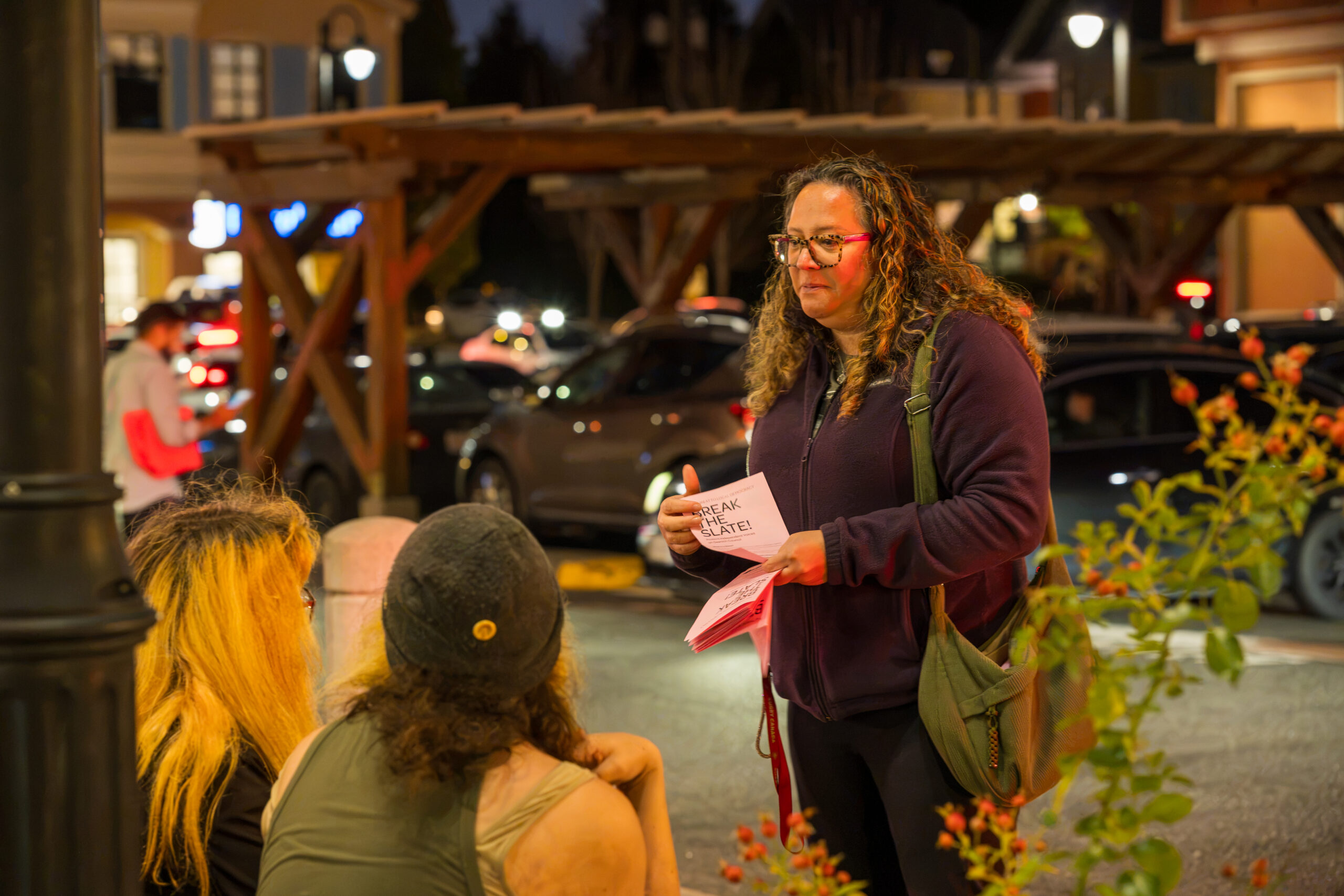
Photo by Declan Snowden.
Break The Slate, a local advocacy group that opposes slates in municipal politics, has restarted their campaign, urging residents not to support slates in the District of Saanich.
Elector organizations, colloquially known as slates, are groups of candidates who run under one banner, like a political party.
Break The Slate first started organizing against slates in 2018, when the “United For Saanich” slate, headed by former mayor Richard Atwell, was running for various positions in the district.
Now, as residents are close to hitting the polls on Oct. 17, the group has reformed, urging residents to vote independent and discourage slates.
A primary concern for the group in this election is the “Save Our Saanich” (SOS) slate, which includes one mayoral and five council candidates. If all are elected, Save Our Saanich would occupy six of the total nine mayor and council seats, giving them a majority.
SOS Council candidate Lorne DeLarge, in a post on Facebook, encouraged voters to vote for the six SOS candidates, saying a six-to-three majority is “all we need to make meaningful changes in Saanich.”
However, Nancy Di Castri, another SOS council candidate and former president of the Save our Saanich Neighbourhood Society, told Chek News that candidates would not have to vote together if elected.
Voters in Victoria will also see three candidates on their ballot who are running under the Victoria For All slate. Furthermore, across municipalities of Greater Victoria, like Langford and Victoria, many candidates are also campaigning together, though without belonging to a shared slate.
In an interview with the Martlet, Merie Beauchamp from Break The Slate said that “electing six candidates to run a nine person council is the death of democracy.”
Already in Saanich, SOS has been a contentious group, with some community members strongly favouring the group for opposing tall and high-density buildings, and others suggesting the group “encourages mob behaviour” and that they are “out of touch,” amongst other criticisms.
“I really think that municipal government works best when our councillors answer directly to residents, but also come from a diverse background of different skin colours and experiences and ages,” she said. “Saanich is really quite diverse and I just didn’t really feel like the slate offerings offered that diversity.”
In the SOS slate, four of six candidates are involved in either real estate or development.
One issue with slates, according to Beauchamp, is that a council governed by a majority would allow them to govern “unchecked,” with little effective opposition.
Although the Break The Slate campaign has received negative reception on the Save Our Saanich facebook group, Beauchamp said that “80 to 90” per cent of people she’s spoken to while campaigning have been “very positive.”
Beauchamp said she hopes people vote for a council that reflects Saanich’s diversity, and that young people go out and vote in the local elections.
“We need more young people going out and voting for the things that they are passionate about and voting for the things that they are passionate about … because we could lose it,” she said.
“It’s important to choose diverse people…. [People] who deserve to be there because they have an important voice to share with council.”
For additional information on B.C.’s general local elections, visit your municipality’s respective page, the B.C. government’s voter guide, local elections 101 brochure, the 2026 local elections FAQ page, and Elections BC. The Martlet also has an explainer on both the local and provincial elections occurring this month, including how to vote for each and information on voting resources.