
Everything you need to know about how to vote in the upcoming local and provincial elections
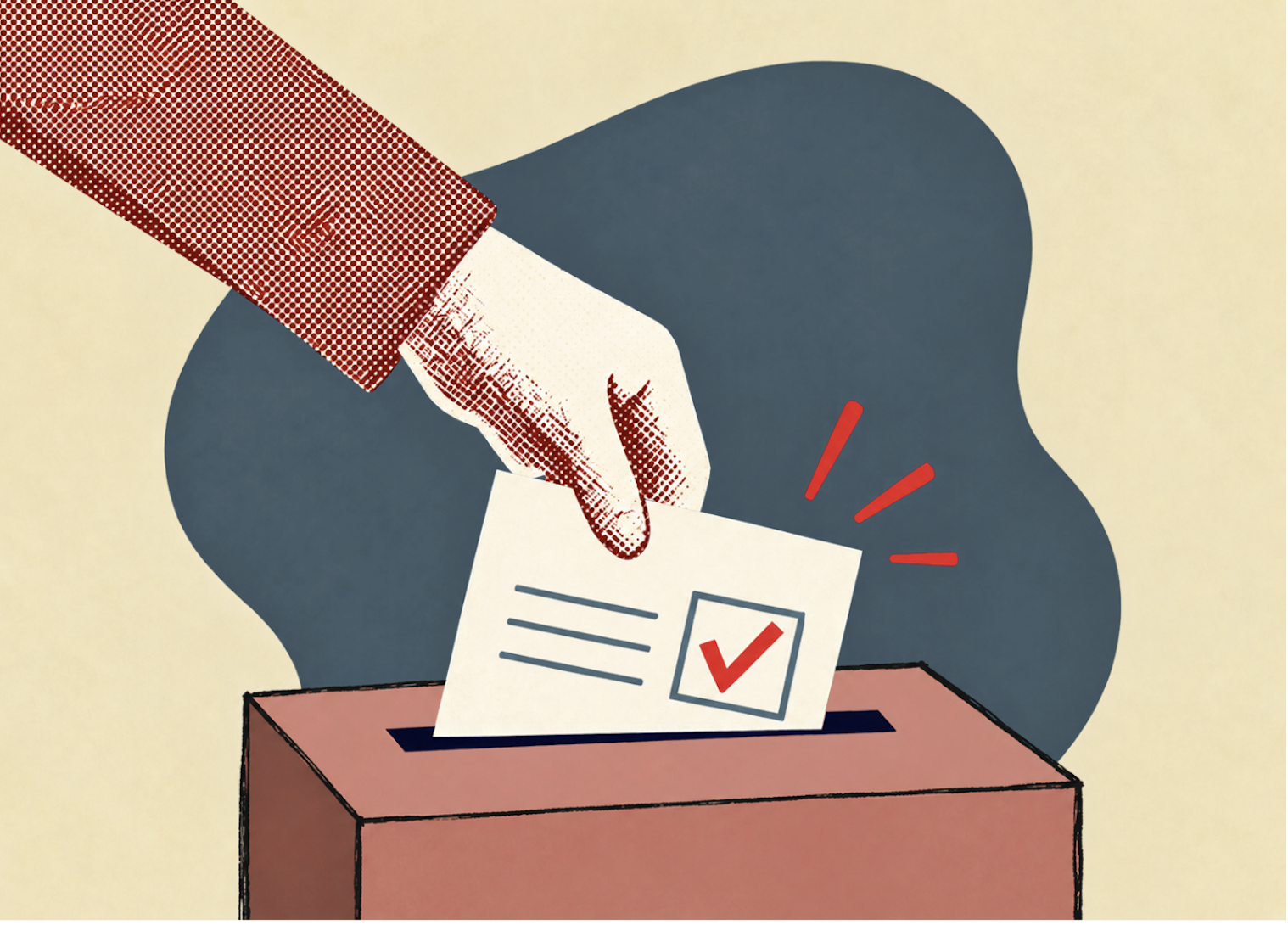
Illustration by Sabina Mendoza.
Voting is an important part of the democratic process. Whether or not you are happy with how your municipality, or how the provincial government has been tackling the issues facing its residents, you should go out and vote to ensure your voice is heard and your views are represented. After a snap election call on Sept. 22, B.C. will now be hitting the polls for both local elections on Oct. 17, and a provincial election on Oct. 24.
Many voters focus solely on federal and provincial elections, but municipal politics can greatly shape how you experience life on a day-to-day basis.
On Oct. 17, voting for B.C.’s general local elections will occur. Every municipality in B.C. will be voting in new municipal representatives, including mayors, councillors, school board trustees, parks boards, the Islands Trust, and regional district directors. On Oct. 24, you have the opportunity to vote for your ridings MLA, who represents your community at a provincial level.
What are the criteria to vote?
To vote in both the provincial and local elections, you need to be at least 18 years old, a Canadian citizen, have been a B.C. resident for at least six months, be a resident of the municipality or electoral area on the day you register to vote, and not be disqualified under the Local Government Act or any other act from voting in an election.
What are you voting for?
The local elections will include voting for new mayors and councillors, regional district directors, school board trustees, parks boards, and the Islands Trust.
The mayor and council are the primary governing body of a municipality. Collectively, they will engage with residents, consult with staff, and move motions that impact life in the city. Municipal councils, like Victoria City Council and District of Saanich Council, are responsible for delivering local services to their residents.
On your ballot, you will also have the ability to vote for school board trustees, and, if you’re voting in a municipality in the Capital Regional District (CRD) — the regional government comprising the municipalities of southern Vancouver Island and the Gulf Islands.
The CRD board of directors make decisions on matters affecting the whole CRD, and are responsible for services like regional water supply, solid waste, wastewater treatment, regional parks and recreation facilities, and some housing supply.
While these roles may not feel as important as mayor or council, they still influence your life in your municipality. For example, many candidates in the last general local elections were anti-Sexual Orientation and Gender Identity (SOGI) policy, and opposed allowing students in grade school to self-identify using their preferred pronouns, or use washrooms that correspond to their gender identity.
Mayor and council also make decisions on major issues such as housing supply, transit, and policing — among others.
If you’re a resident of the City of Victoria or the District of Saanich, you will have an additional item on the ballot — a non-binding question to gather public opinion on the potential amalgamation (merging) of the two municipalities.
For the provincial election, you will be voting for the MLA who will represent you in the legislature. MLAs make laws, approve provincial spending, and scrutinize the government. On the ballot, you will see candidates from various parties (every riding has a Conservative candidate, and almost all ridings have an NDP candidate, while independents, Green, CentreBC, and OneBC will vary by riding).
When, where, how?
Most voting stations for the local elections will be open from 8 a.m. to 8 p.m. on Oct. 17. There will also be advanced voting prior to Oct. 17, but dates, times, and locations will vary. For details on your municipality’s advanced voting, visit their respective webpage. Vote-by-mail is also offered, with details varying by municipality.
Depending on where you live, your municipality may have advance registration. You can call your municipality’s local election line to inquire about advance registration and whether you are on the voters list.
You can also register when you go to vote. To do so, you will need two pieces of acceptable ID, such as a B.C. drivers license, services card, Canadian passport, or SIN number card, one of which needs to have a signature. A piece of ID with proof of residence is recommended. If you do not have a piece of ID with proof of residence (such as an up-to-date driver’s licence with your address on it), or another proof of residence (such as a utility bill) you can make a solemn declaration as a substitute.
For more information on acceptable ID visit the B.C. government’s 2026 local election FAQ page, or call your municipality’s legislative service or election line.
Provincially, voting locations are still to be determined at the time of publication, but updates can be found here. Advanced voting for the provincial election will occur from Oct. 16 to Oct. 21. The final day of voting for the provincial election will be on Oct. 24. You can register to vote for the provincial election here. While registering for the provincial election, you can also request a vote-by-mail package.
Provincially, you must prove your identity and residential address before voting. This can be done through a B.C. driver’s license, identification card, service card, another card issued by the Government of B.C. or Canada, a certificate of Indian Status, or two pieces of ID or documents that both show your name. Voters who don’t have identification can have another individual vouch for them, provided the voucher is a registered voter in the same electoral district, a spouse, parent, grandparent, adult child, or a person with authority to make personal care decisions for the voter.
If you are unsure of your municipality and your provincial riding, you can use the MyDistrict page to find both. After you enter your address, your riding for the provincial election will be displayed at the bottom of the page. The address line will autofill to have your municipality, after your street name.
What if I’m from one municipality, and staying in another for school?
Say you’re from Vancouver, but you’re staying in the City of Victoria to attend UVic. Where should you vote? In B.C., you can vote in either (but not both) municipalities, provided you are an eligible voter.
For additional information on B.C.’s general local elections, visit your municipality’s respective page, the B.C. government’s voter guide, local elections 101 brochure, and 2026 local elections FAQ page. Information regarding the provincial and local elections can be found at Elections BC.
Links to several municipalities’ election pages can be found below: