
UVic has stepped up in the quality and relevance of their research, said Ian Mauro, executive director of the Pacific Institute for Climate Solutions (PICS)
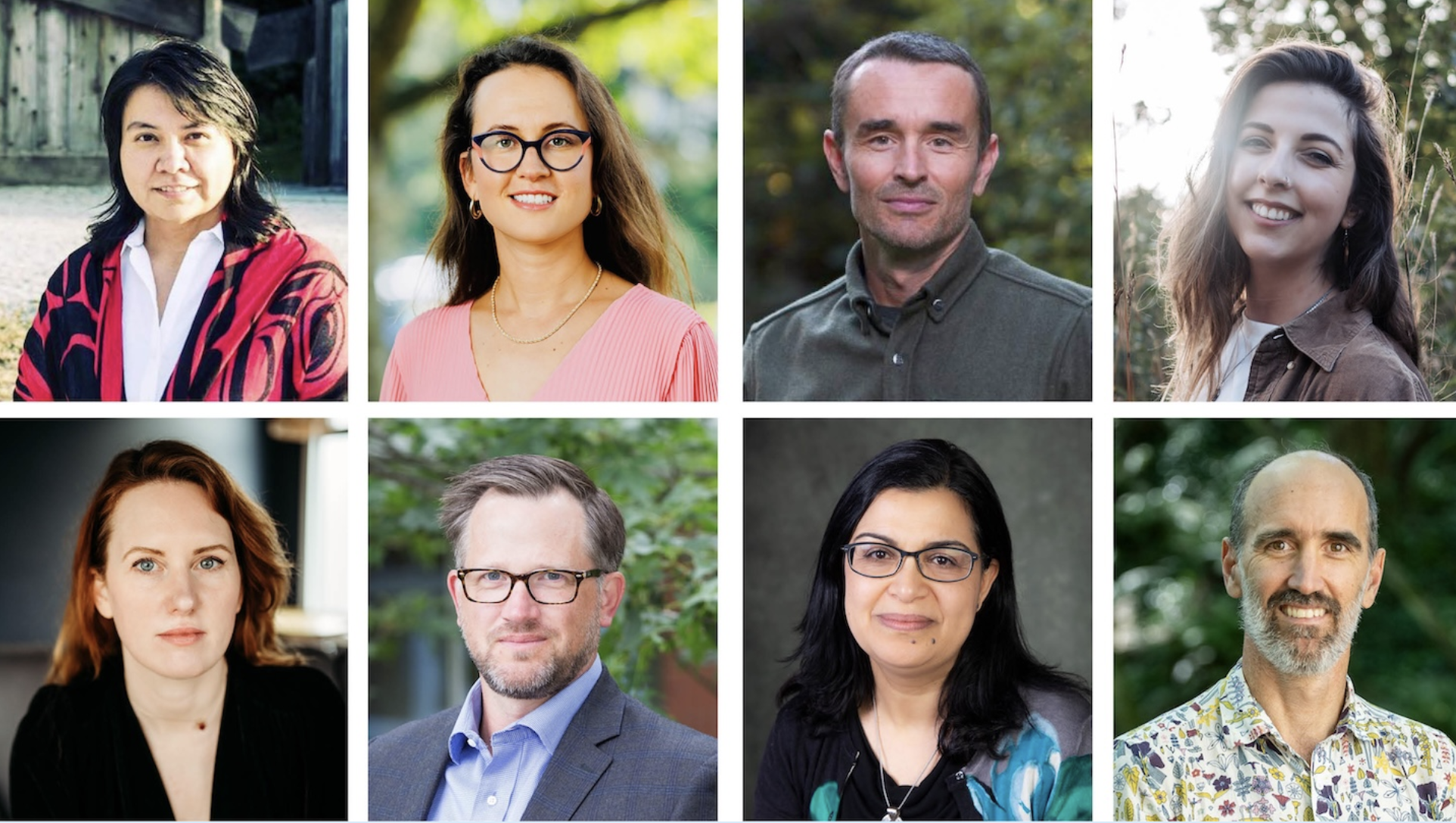
Images via the University of Victoria.
The Pacific Institute for Climate Solutions (PICS) has awarded $800 000 to eight UVic research projects.
The research projects focus on climate issues, ranging from Indigenous leadership and story work, to the harms of climate misinformation, impacts of wildfire on groundwater, and many more.
PICS was created in 2008 through funding from the Government of British Columbia. It is a multi-university institute hosted and led by UVic, and includes partnerships with the University of British Columbia, University of Northern British Columbia, and Simon Fraser University.
“We essentially catalyze research inside this university network and mobilize it through storytelling and policy tool development to support government and other decision makers, including First Nations,” said Dr. Ian Mauro, executive director of PICS.
In the first 15 years of PICS, the organization focused on responding to the impacts of climate change. More recently, PICS has invested in interdisciplinary projects that identify problems, develop solutions, and implement results.
“We’ve taken … a more strategic approach around how we address complexity, and how we bring interdisciplinarity to research problems,” said Mauro. “We’ve always sought to address complexity.”
To support interdisciplinary initiatives, PICS has awarded funds to projects rooted in a variety of fields, from public administration, to civil engineering, social work, and business.
Dr. Jenny Morgan, a faculty member of the Bachelor’s of Social Work program at UVic, is one of the eight recipients of the new funding. PICS has funded her project via the World Weaving Climate Research Program, which supports First Nations-led climate research.
Morgan is from the Gitxsan First Nation, and her research is grounded in the work of her own community.
“As a Gitxsan myself, I have close connections with people from back home,” she said. “It was nice to see ways that I can incorporate [my roots] in meaningful ways through research.”
Throughout the three-year PICS funded research program, she will be focusing on taking an approach based on some of the Truth and Reconciliation Commission’s calls to action towards climate change and climate solutions.
Matt Murphy, a professor in the Faculty of Business, also received funding through the World Weaving Climate Research Program, alongside researcher Julian Yates.
Murphy and Yates are working with the Dena Keyah Institute (DKI) to uphold the organization’s “mandate of preserving Kaska knowledge, culture, and stewardship responsibilities within Kaska territory.”
The DKI is a not-for-profit, which coordinates and supports knowledge-related educational and scientific programs in the traditional territory of the Kaska Dena, in northern B.C. and southeastern Yukon.
The project focuses on developing a Kaska adaptive stewardship cycle (KASC) which will root climate solutions in the the traditions, values, customs, and laws of the Kaska Dena.
Yates has been collaborating with DKI for many years now, and is acting as a bridge between the organization, Murphy, and the Balance Co-Lab.
The Balance Co-Lab is a Social Sciences and Humanities Research Council partnership grant, which “brings community- and university-based partners together to co-create knowledge and resources for developing decision support and impact assessment systems aligned with and informed by Indigenous knowledge and values.”
The three-year long PICS funded project aims to support the co-designing of KASC and the Balance Co-Lab’s customization of its sustainability assessment system.
“This is an action-oriented collaborative project to support Kaska self-determination in climate action,” said Murphy and Yates through an emailed statement to the Martlet.
Sara Wickham, a sessional instructor at UVic, is working alongside Dr. Chris Darimont, a professor in UVic’s Department of Geography, on a clam garden restoration project within Wuikinuxv Nation lands — in the Central Coast region of B.C.
“Clam gardens are an incredible example of how Indigenous peoples have actively stewarded and enhanced coastal ecosystems over generations,” said Wickham in an emailed statement to the Martlet.
Wickham and Darimont also received their funding via the World Weaving Climate Research Program. Their three-year funded project gives them the opportunity to hire members of the Wuikinuxv Nation to work alongside them, and build infrastructure that can be used after the work of the project is completed.
“Wickham said in her statement that the fact that the funding is for three years is important as they are trying to understand the process of restoration over time. She also said that “it gives the researchers the opportunity to monitor the responses of the ecosystem, as well as adjust approaches, and build an understanding of what clam garden restoration in the Wuikinuxv territory will look like.”
According to Dr. Lisa Kalynchuk, Vice-President Research and Innovation at UVic, the investment from PICS “strengthens research that is already addressing some of the most urgent climate challenges facing communities in British Columbia.” The funding provides additional resources to researchers to further investigate and develop climate solutions.
“Climate change is one of the defining challenges of our time, and addressing it requires collaboration, creativity, and sustained investment in research,” said Kalynchuk in an emailed statement. “We are proud of the researchers whose work is helping communities navigate climate risks and identify opportunities for a more sustainable future.”