
Students and UVic researchers alike provided material for the Royal BC Museum’s new permanent exhibit, ‘Climate Change: Everything is Connected’
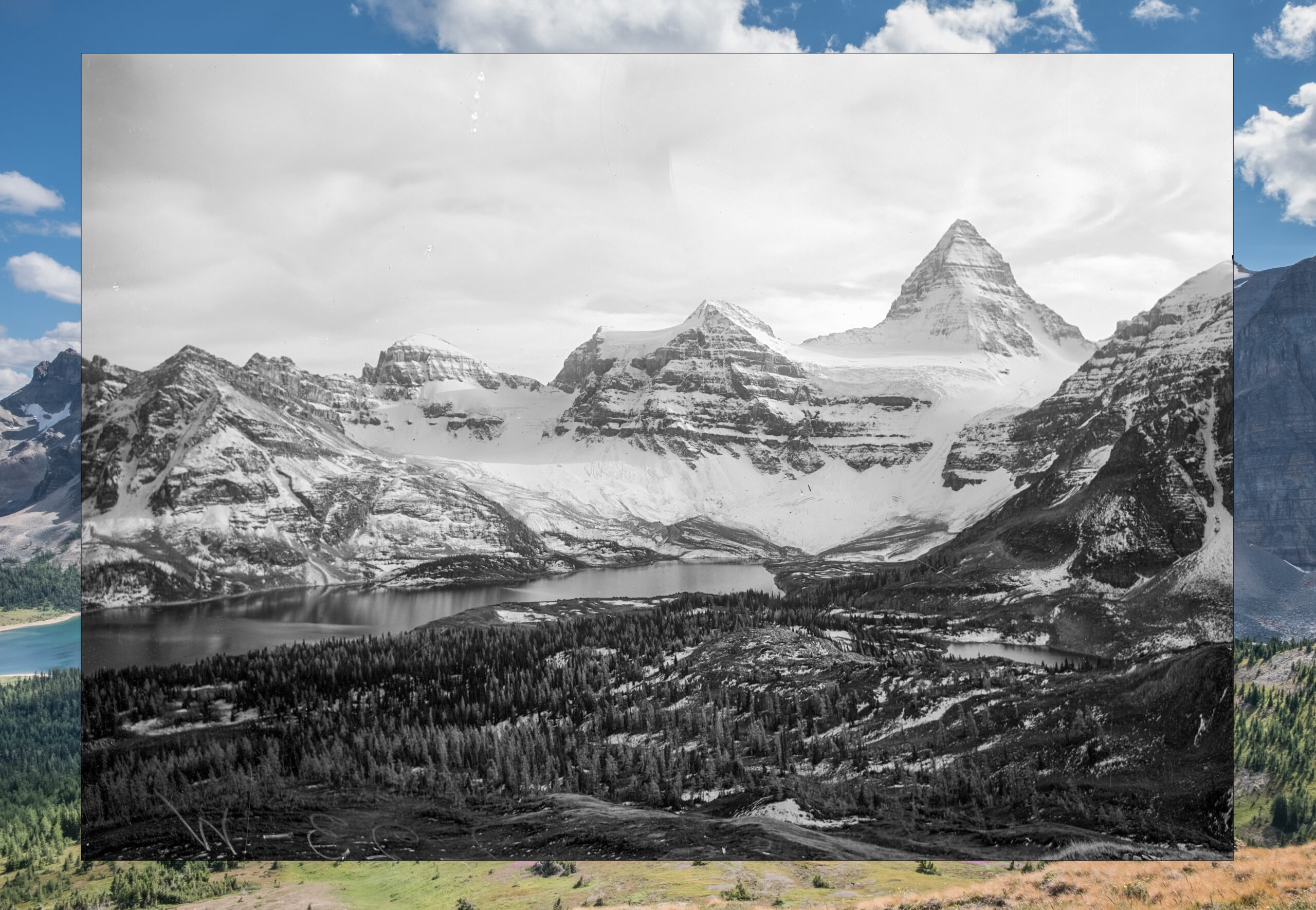
Photo taken below Nub Peak, looking over Magog Lake to Mount Assiniboine, British Columbia, 1913 and 2017. Photos by A. O. Wheeler, 1913, Library & Archives Canada / Bibliothèque et Archives Canada ecopy number e002505902, and Mary Sanseverino for the Mountain Legacy Project, 2017.
Researchers and students at UVic played a major role in providing research for the Royal BC Museum’s (RBCM) new permanent climate change exhibit, Climate Change: Everything is Connected.
“There’s not a lot of museums that really cover climate change as its own topic … [they don’t] get into the foundations of climate change, what the impacts are, and also the history of climate change,” said Victoria Arbour, acting manager of research and collections at RBCM.
The new exhibit launched on Sept. 11 after two years of development. The RBCM opened its first temporary exhibit on climate change in 2005, which explored how climate change works scientifically, and what would happen if destructive environmental actions remained uninterrupted.
Now, Climate Change: Everything is Connected is working to answer these questions posed two decades ago. The exhibit aims to present data that proves climate change is real, explain how people affect the climate, and show how climate affects everything.
Sean Holman, UVic climate journalism professor and director of the Climate Disaster Project –– an international teaching newsroom based at UVic and led by Holman –– worked with his students to capture video testimonies of climate disaster survivors for inclusion in the exhibit.
At UVic, Holman teaches the environmental journalism classes WRIT 344 and 345, cross listed with Environmental Studies 354 and 355, which explore how to share the stories of climate disaster survivors in a trauma-informed way.
Last semester, Holman and his students worked with survivors of the 2021 Western North American heat wave and the 2021 Pacific Northwest flooding to document their stories.
During the summer, the team worked to adapt five testimonies into “microdocumentaries” that are now installed at the Royal BC Museum.
“This … was student work that environmental studies and writing students did as part of their final project; they worked with the survivors to create documentaries about their experiences,” said Holman.
UVic’s contribution didn’t stop with the Climate Disaster Project documentaries. Fellow writing professor David Leach helped create 3D immersive screens displaying diatoms –– a type of plankton that produces about 20 per cent of the Earth’s oxygen.
Carey Newman, associate professor in UVic’s Visual Arts Department and prominent Indigenous artist, also contributed a video about creating totem poles out of second-growth trees — meaning, trees planted after natural disturbances such as wildfire, wind-throw, or harvesting to replace old-growth forest.
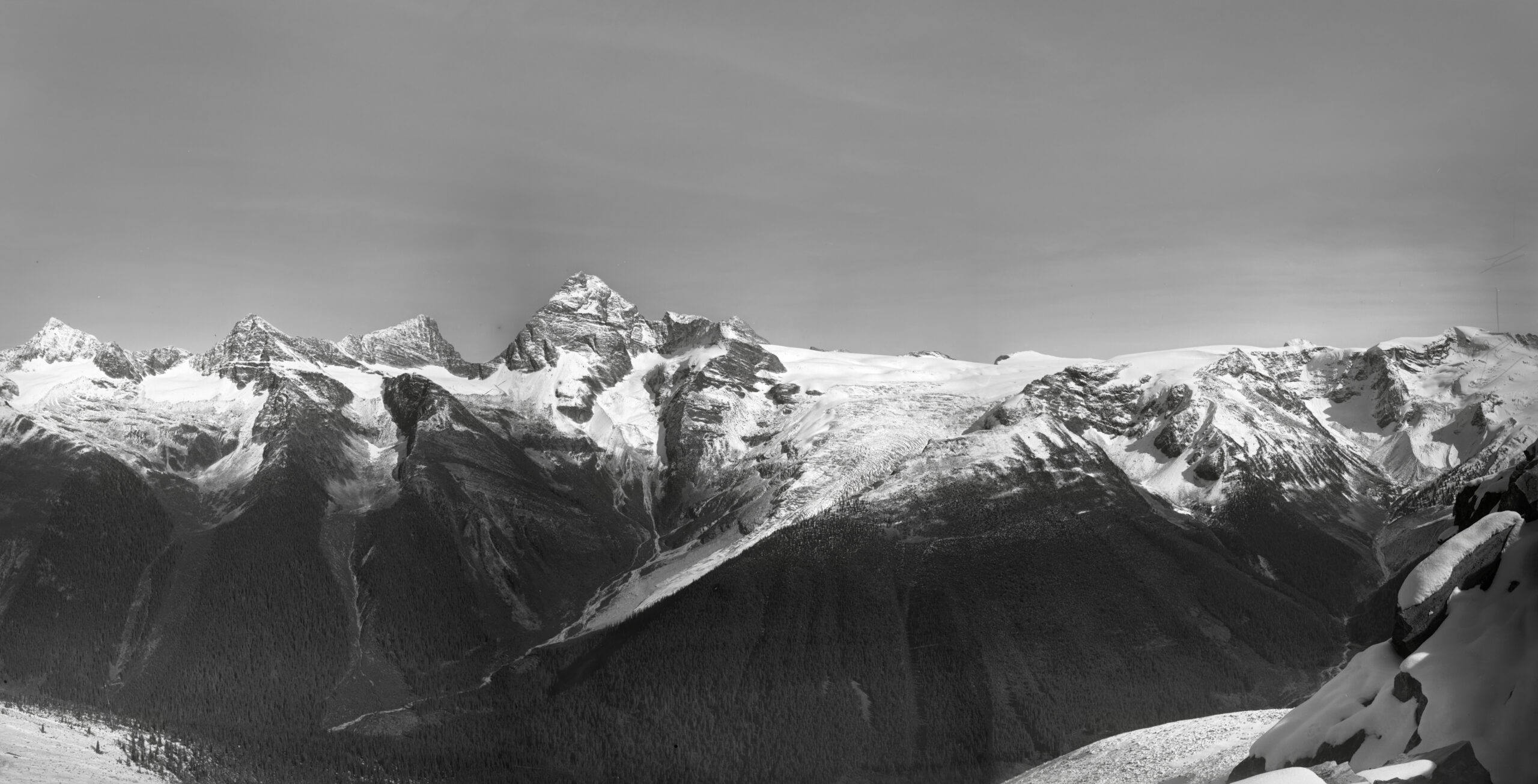
Photo taken on Abbott Ridge in Glacier National Park looking eastwards over Mt Sir Donald and the Illecillewaet Glacier. Photo by A. O. Wheeler 1901, Library & Archives Canada / Bibliothèque et Archives Canada.
Also featured in the exhibit will be The Mountain Legacy Project (MLP), an initiative based out of UVic and co-led by environmental studies professor Dr. Eric Higgs, tracks changes in mountainous landscapes through photographs. Teams made up of majority UVic students have taken more than 10 000 photographs of mountains in Western Canada, and contributed new and archival photos depicting the retreat of glaciers.
Mary Sanseverino, a research associate with the MLP, worked with Arbour, the acting research and collections manager, to decide which photos would be shown in the exhibit.
“Mountains are harbingers of rapid climate change, and the images speak powerfully about shifts in vegetation, snow and ice, human settlement, resource extraction, activities, and geomorphology,” Higgs said in a statement to the Martlet.
“The images speak powerfully on their own.”
Those interested in purchasing tickets to visit the new exhibit can find them here.