
Councillor Colin Plant, with the support of a majority of council, voted against considering student food bank grant and reduced ferry fares for post-secondary students
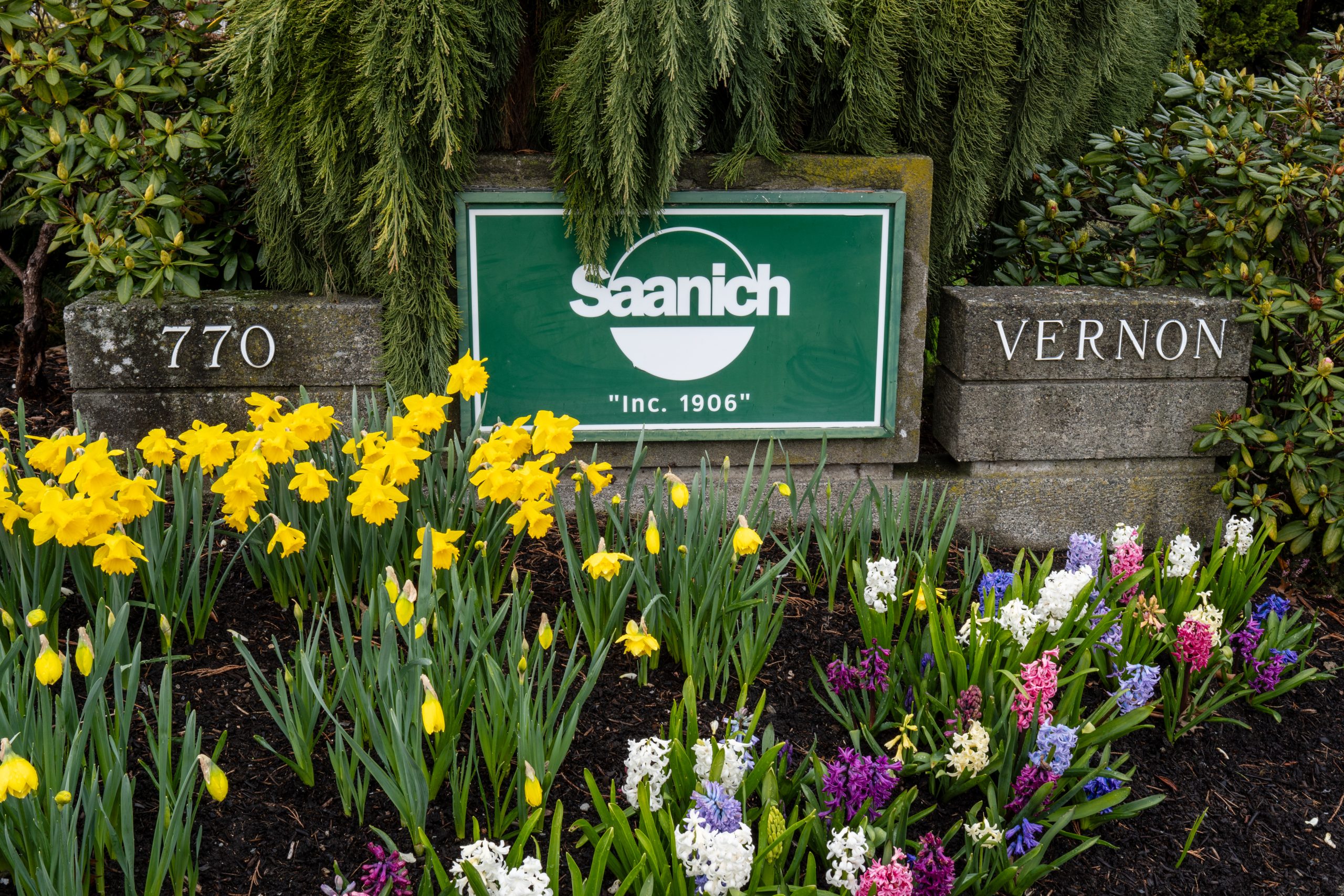
Photo by Declan Snowden.
Saanich city council will not be endorsing student advocacy resolutions — including a resolution to support a student food bank grant and $10 ferry fares for post-secondary students — following an objection that they fell “outside council’s jurisdiction.”
On March 2 2026, Saanich city councillor Teale Phelps Bondaroff brought to council resolution suggestions to call for the Association of Vancouver Island and Coastal Communities (AVICC) and Union of British Columbian Municipalities (UBCM) to advocate to the province to support a student food bank grant, which would provide $1.50 per student to B.C. post-secondary student unions to support campus foodbanks, and $10 ferry fares for post-secondary students.
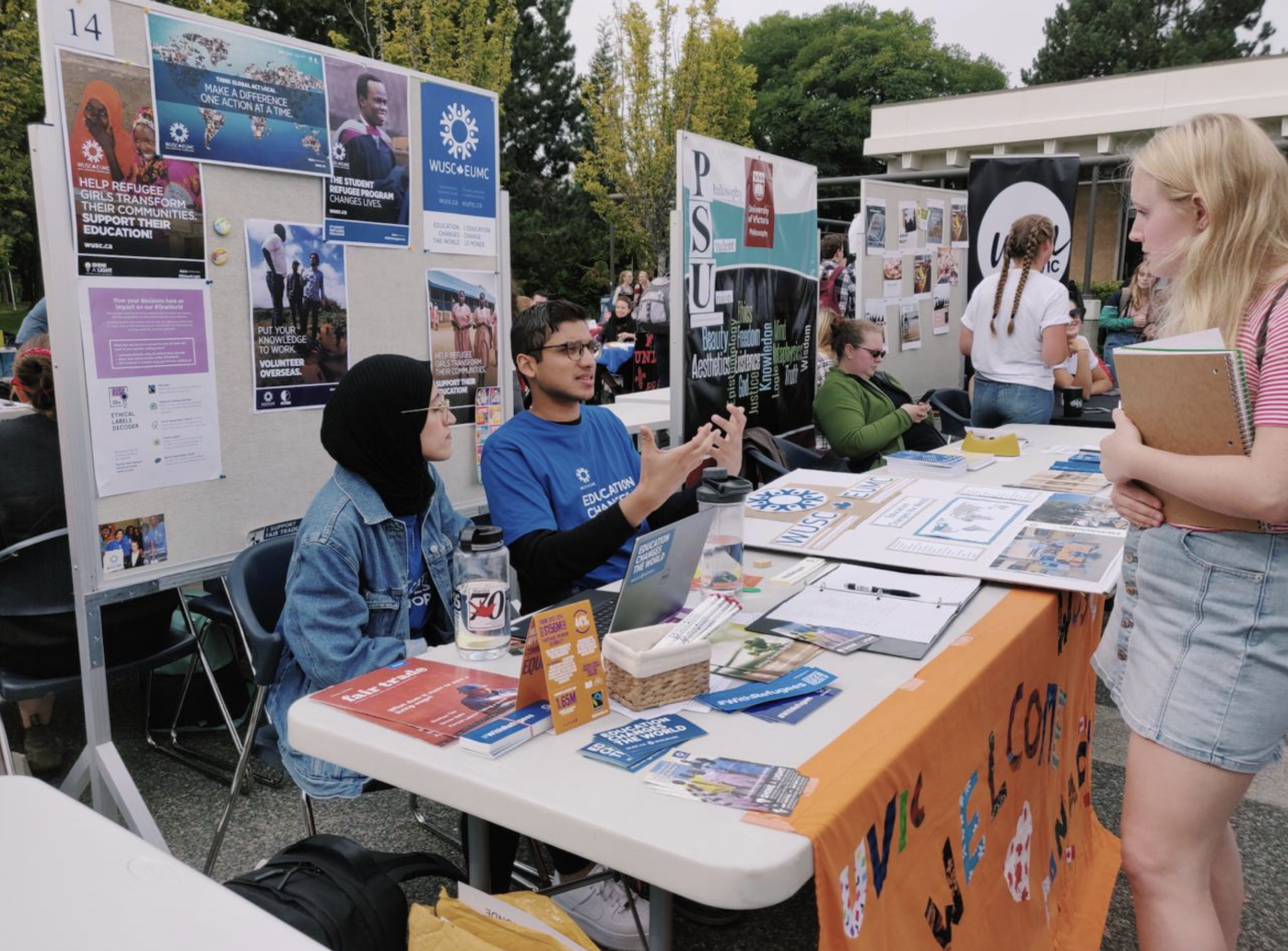
Both the student food bank grant and $10 ferry fares are initiatives of the BC3 Coalition — which includes the student unions from UVic, UBC, UBCO, and SFU — according to Michael Caryk, interim director of campaigns and community relations at the UVSS.
Councillor Colin Plant objected to the student food bank grant motion, on the grounds that it was “outside of council’s jurisdiction.”
Dean Murdock, mayor of Saanich and chair of the council, said he believed the motion was appropriate, saying that, because it is an advocacy resolution it “does not necessarily have to be germane to the District of Saanich.”
Plant then challenged the chair’s ruling. Councillors Susan Brice, Judy Brownoff, Mena Westhaver, and Karen Harper joined Plant in challenging the chair, overruling Murdock and stopping Phelps Bondaroff’s motion from being considered by council.
In a statement to the Martlet, Phelps Bondaroff said he supported the will of Council, but that he believed advocacy for provincial support for food banks is within the district’s jurisdiction.
“This situation is a little puzzling, as the issues directly impact thousands of our residents, who are themselves clamouring for action. In my mind, the very least we could do is have a short discussion about the issues. It is doubly puzzling given council’s history of adopting UBCM resolutions on a wide range of issues and given the fact that other municipalities have advanced these resolutions,” he said.
After this challenge to the chair, Murdock said it set “a precedent about what shall be considered as appropriate in the chamber, even as it relates to resolutions.”
Plant, however, said he “[does] not concur it sets a precedent. Any member of Council can ‘object to the question’ on any motion put forward.”
Phelps Bondaroff shared a similar sentiment to Plant, telling the Martlet that how council handles future motions and draft resolutions will be up to the chair and the council of the day, and that he is not aware of any precedent-based procedures that would prevent further resolutions from being discussed.
Following Plant’s objection to the student food bank grant resolution, Phelps Bondaroff presented the resolution suggestion regarding $10 ferry fares for post-secondary students. Plant again objected, and due to the previous challenge to the chair, Murdock ruled Phelps Bondaroff’s motion out of order.
Phelps Bondaroff challenged the chair, but the majority of councillors did not support Phelps Bondaroff. Councillor Zac de Vries, however, voted in favour of Phelps Bondaroffs challenge.
In the past, Saanich city council has supported advocacy motions for issues outside its jurisdiction. On June 9, 2025, council unanimously supported draft resolutions for the Union of British Columbia Municipalities (UBCM) to advocate for the province to adopt European elevator standards, and to declare housing a human right.
The Martlet asked Plant what distinguishes the student food bank grant and $10 ferry fares resolutions from other resolutions outside municipal jurisdiction that he has previously supported.
“When issues are largely regulated by other orders of government and will not directly impact Saanich operations and strategic initiatives [and] priorities, I tend to not support spending Council time debating such matters,” Plant said.
Plant also told the Martlet that “one resident spoke asking us to not advance these motions,” with no one speaking in favour of them at the meeting.
He said that if “significant community input were to be received” he could change his perspective.
Solomon Yi-Kieran, vice president external affairs of the UBC Alma Mater Society (AMS) and Coalition of Progressive Electors Vancouver (COPE) candidate for a Vancouver city council nomination, told the Martlet there had been input from the community.
“We worked closely with Councilor [Phelps] Bondaroff, we also worked with the UVSS on this. And what I can definitely say is there has certainly been input from the community,” Yi-Kieran said. “The student union representing a post-secondary institution in your community is pushing for it…. That’s a pretty big part of the community.”
Plant noted that the resolutions “were already going to advance to the AVICC for debate and did not require Saanich’s endorsement.”
The resolutions have received support in other municipalities, such as the District of Oak Bay, which supported both. Phelps Bondaroff said he was “grateful to Oak Bay Councillor Carrie Smart, who working with student advocates, took the lead on drafting these motions,” and that he is “pleased to see the motions heading off to AVICC.”
He also told the Martlet that the goal for advancing these motions in Saanich, even though they had already been supported by Oak Bay, was to make them appear as “joint resolutions” on the AVICC agenda, claiming resolutions supported by multiple municipalities carry more weight.
Caryk told the Martlet he believes “municipal leaders” have the opportunity to help students advocate for their needs. “As a Saanich resident myself … I believe our representatives need to make every effort possible to support students and student initiatives with affordability, with making the overall community a better place to access education,” he said.
Plant told the Martlet he is sympathetic to the challenges facing students and believes “our society needs fair and responsive provincial and federal taxation systems that provide the funding necessary to deliver services that meet the needs of the most vulnerable in society,” but he “believe[s] advocating to the province to fund a UVIC student food bank is something the UVSS and UVIC should advocate for, not the District of Saanich.”
The $1.50 food security grant BC3 is campaigning for is notably not specific to the UVSS foodbank, said Caryk, and would benefit institutions and students across the province.
Caryk acknowledged that ferry fares and food bank grants themselves are outside of municipal jurisdiction, but still believes municipalities have a role to play. “I think a key part of municipal politics is to call out the province when they are not doing their job within things that [are] in their jurisdiction…. I just think it’s ridiculous if you don’t want to speak up when the province is falling short on supporting the people they need to support.”
Yi-Kieran shared a similar sentiment, stating that advocacy to the province is “a core part of what municipalities are supposed to do.” Yi-Kieran believes that Saanich advocating for reduced student ferry rates is within their jurisdiction, particularly as it is the municipality that houses UVic.
Phelps Bondaroff said that “as councilors, [they] have a job to bring forward concerns from residents,” and that when the solutions lay outside council’s jurisdiction, they can turn to advocacy.
“I got my start doing student politics at the University of Calgary Students’ Union … I am proud to stand in solidarity with students and student advocates, and to work with them to fight for [these] issues like improving transportation affordability and improving food security. I worry that too often the voices of younger people are not heard as much by Council, and this impacts the decisions that we make,” Phelps Bondaroff said. “I will be supporting these resolutions at AVICC this spring.”
Plant said he would welcome the opportunity to talk to any UVic student about “issues that are important to them and are related to the District of Saanich.”
The 2026 AVICC convention will take place in Victoria from April 24-26.