
Returning to undergrad at age 30 comes with a few insights
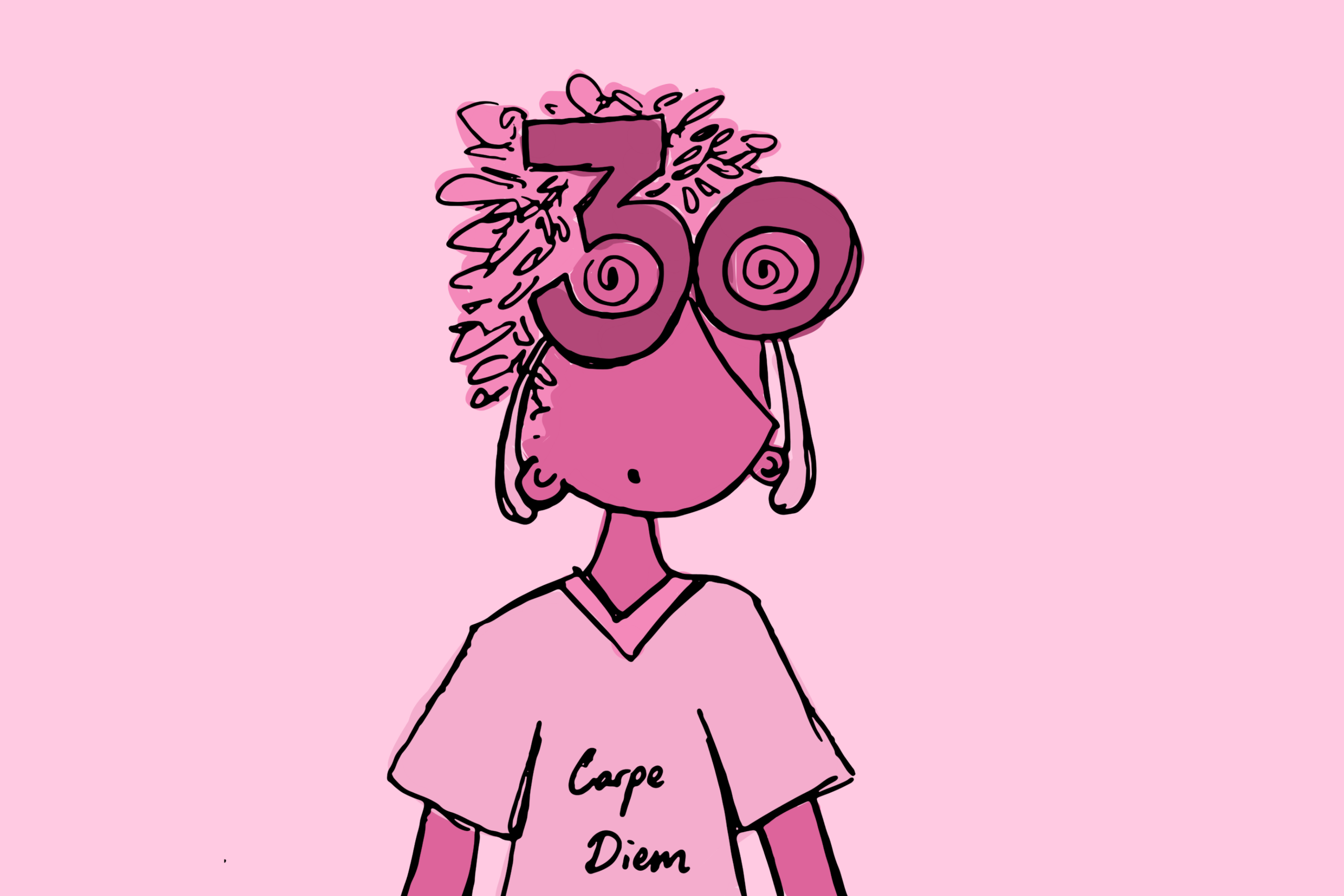
Illustration by Sage Blackwell.
By the time you’re reading this piece, I’ll have turned 30 years old, and my twenties belong in the past tense. Returning to university for yet another year, this will be my first fall semester back since 2014, when I maneuvered my way through the undergraduate writing program as gracefully as a bulldozer.
Looking back, that period of my life was a blur of campus living and unsupervised access to the city, all without the support system I had at home or in high school. After two years of trying to pull myself together, I chose to step away from university, assuring myself that I could return when the time felt right. Instead of education, I opted to jump from job to job in the hospitality industry. The connections and experiences I’ve had through the hospitality industry, and having the opportunities to travel and live in different cities from Victoria can’t be replicated, and I know they’ve taught me many valuable lessons about understanding others, but most importantly, about myself.
Now, after a decade away from my half-baked bachelor’s with UVic, and having completed a diploma from a polytechnic college in Calgary, I’ve come to recognize there’s no “right time” to give your passions another shot; you simply have to take the leap.
Returning to complete my undergraduate degree has been my plan for years, but it was only after an uncontrollable change in my employment that I realized the ground was shifting underneath me. I needed to act quickly. Whatever anxieties I had about returning to an undergrad program as a near-30-year-old student, I realized that time was passing anyway. I’m not growing any younger. Now, I embrace those parts of me that feel anxious, or embarrassed about the truth that I’m still a novice at thirty. It’s time to leap headfirst into the chance to learn from instructors and other students I wouldn’t meet elsewhere.
Since taking that leap and returning to UVic, I’ve noticed how some aspects of the culture here on campus have shifted, and others seem frozen in time.
Post-secondary and university studies are designed to challenge us socially and mentally. Every fall, the old adage makes the rounds: in post-secondary, you choose from good grades, decent sleep, and a robust social life — but you only get two of the three. I won’t deny it. Many students juggle a full course-load, clubs and course unions, jobs outside of class, and even family responsibilities. The greatest lesson of post-secondary and growing into adulthood is learning how to manage your time and take advantage of the endless opportunities — and, just as importantly, knowing when to say no.
I’ve seen students burn out within the first months of the semester, looking at their coursework as only a box to tick. I used to do the same, forgetting that a class isn’t just a credit but a chance to learn from instructors that want to engage with you.
The rise of AI has only made it easier to bypass the stress of research and writing under a time crunch. I’m not here to police anyone’s choices — these tools are readily available, and students will inevitably use them. But I’ll argue this: if you’re going to use AI, you should treat it as an aid for the real work, not as a substitute for the experience of wrestling with your studies and actually learning something from them — and never in a way that violates academic integrity.
The confidence to trust your own abilities is what makes post-secondary studies such a formative experience. Every day on campus, you are surrounded by students whose lives overlap and diverge from your own in infinite ways. I’ll always cherish the friends I made a decade ago in Victoria and elsewhere, but what excites me now is returning to campus and making new connections with students and instructors alike.
The time we have at university is precious. In an attention economy where every moment is fleeting, it’s worth asking yourself: what do you want from today? What tomorrow are you working towards?