

Graduate students can vote from March 4–6 on this and four other referendum questions
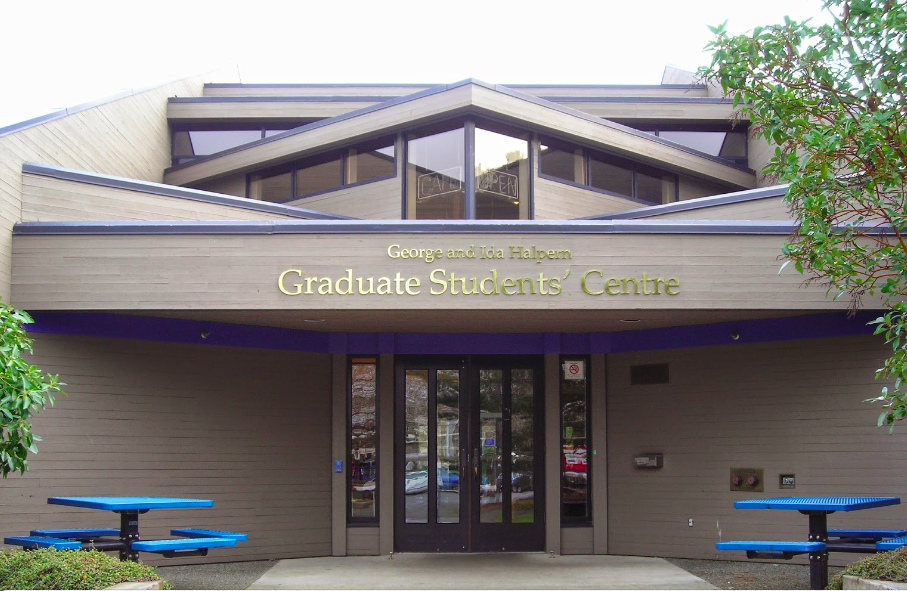
Image via Google Maps
UVic’s World University Service of Canada (WUSC) local committee, which sponsors three to four refugees each year to study at UVic, is currently the subject of a fee reduction proposal that critics say, if approved, would force the organization to sponsor “at least one” fewer refugee each year.
WUSC is a Canadian non-profit organization focusing on education and economic change for young people across the world. Through their student refugee program and partnerships with Canadian campuses, the organization supports the resettlement of refugees to pursue university studies.
WUSC describes the program as the only one of its kind that combines refugee resettlement with access to higher education.
According to Charlie Edgett, a volunteer co-coordinator for WUSC UVic, UVic has one of the longest-running local committees in Canada.
WUSC UVic is primarily funded through student fees collected by the University of Victoria Students’ Society (UVSS) and Graduate Student Society (GSS). All money collected through those fees goes toward sponsoring refugee students and supporting them during their first year at UVic, said Dr. Marlea Clarke, a political science professor at UVic who has long been involved with WUSC.
Funds for other club activities, such as social events for volunteers and sponsored refugees, are raised separately.
This election period, the GSS is proposing to reduce the fee collected per graduate student, per term for WUSC from $5 to $1, which could have long-term funding consequences for the committee’s operations at UVic.
“The cost of one cup of coffee [could be the difference between] keeping a young person trapped in a refugee camp” or attending UVic, said Dr. Scott Watson, a political science professor at UVic, expert on international refugee movements, and faculty adviser for the WUSC local committee.
The proposal will be decided via referendum, meaning graduate students can vote for or against the fee reduction from March 4–6. A minimum of five per cent of graduate students is needed for the referendum to reach quorum.
Critics of the referendum question say the proposal is highly concerning.
“Perhaps [it’s] unintended, but the referendum question does seem to come at a very problematic moment of an anti-immigration, anti-refugee sentiment growing in various parts of the country,” Clarke said.
“Instead of fighting that, and instead of continuing to work to create a university environment which is inclusive, which fosters and facilitates educational access to marginalized people, we seem to be turning our back on those values and those priorities that have long been a feature of UVic’s internationalization goals [and] our mission statement.”
However, the GSS Director of Finance, Maggie Lawton, who has been involved in planning the referendum questions “since day one,” said in an interview with the Martlet that the GSS is “pro refugee,” though she acknowledged that “people can interpret things in various different ways.
“The reasoning behind this decrease has nothing to do with the refugee crisis, it has nothing to do with immigrants,” Lawton said, “it has everything to do with organizational capacity and the communication received.”
Lawton said that “it is deeply unfortunate” that one less refugee will get access to education at UVic, should the referendum pass.
“But if that is what our membership wants … to save that four dollars, I understand. Graduate students are currently in a cost-of-living crisis, substantially so, more than most other demographics,” Lawton said.
“They may feel they’re in a position to not be able to afford support for that one person.”
A “frequently asked questions” document by the GSS about the referendum questions notes that GSS members currently pay $5 per term to WUSC, while undergraduate students pay $2.50 per term. The GSS cites budget surplus and a “lack of graduate student involvement” in the WUSC, as reasons for lowering the fee. The document says they are “seeking to reduce this fee to a similar level to each of the UVSS constituency groups.”
The GSS also state in the document that WUSC was slow and unresponsive to their inquiries during the fall 2025 semester.
Why do grad students pay twice as much to WUSC as undergrads?
WUSC previously lobbied to increase student fees — through both the UVSS and GSS fee levies — to sponsor more refugees and cover additional basic necessities for sponsored students. In 2020, graduate students voted to support a fee increase, raising it from $3 to $5 per term.
A similar UVSS referendum failed — not due to a lack of support, but because voter turnout did not meet quorum, so no referendum questions went through. The UVSS referendum had 1 747 votes in favour, and 837 against.
Watson thinks that the will of graduate students historically has been to contribute to refugee resettlement, and that one reason the fee increase passed was that “most of these [graduate students] recognize the value of post-secondary education as a public good, and that the job of an academic, therefore, is to increase access to this public good and, in everything we do, to limit harm, or cause no harm.”
For WUSC UVic volunteers, Edgett said, student fees are not just how their sponsored refugees are supported, but are an important part of the organization’s mission of uplifting refugee education.
Whether students know it or not, Edgett said, they are involved in WUSC’s work by helping fund refugee resettlement and contributing to a “collective responsibility” to support accessibility, diversity, and refugee support on campus.
If successful, the referendum would reduce the fee to below pre-2015 levels.
Budget surplus
The GSS cites “WUSC UVic’s history of budget surpluses (in part related to services being unable to run during the pandemic)” as one reason for proposing a fee reduction.
According to Watson, WUSC UVic accumulated surplus funds during the pandemic, when it was unable to sponsor refugees to UVic. However, Watson said the surplus has already been accounted for. Before the pandemic, WUSC UVic alternated between sponsoring three and four students each year. Because of the surplus, Watson says it currently sponsors four students annually, and will continue to do so until those funds are depleted.
If the referendum succeeds, Watson said, WUSC UVic would sponsor three students or fewer per year.
Slow response time
Lawton said both she and the GSS Executive Director, Kyla Turner, began discussing the referendum questions this time last year. Others involved in developing the WUSC UVic fee decrease question, Lawton said, include the GSS finance committee, the Graduate Representative Council, and the remainder of the GSS executive board.
In June 2025, the GSS reached out to the WUSC for information. They followed up several times, but said they did not hear a response until Dec. 5.
In September, Lawton said she attended WUSC UVic’s orientation meeting for new volunteers to raise the GSS’s request for information. After the meeting, Lawton said she spoke with WUSC UVic executives about the GSS’s information request, and asked for a response by October. She said the GSS did not hear back through email from WUSC UVic afterwards.
Lawton said that if WUSC UVic had responded to GSS inquiries earlier, the referendum may have looked different.
According to WUSC UVic, the delay in responding to the GSS’s questions was due to several factors: sorting out the management of the organization, prioritizing the resettlement of refugees, and the fact that certain information, such as some financial data, is managed by the UVSS, instead of by student volunteers.
WUSC UVic is run mostly by volunteers, who are responsible for everything from finding housing accommodation for refugee students to babysitting the children of refugee students.
Volunteers are not fully trained in budgeting or financial statements, Watson said, especially considering that the UVSS technically controls WUSC UVic’s money.
Meanwhile, Lawton said, GSS Executive Board members are paid a stipend — as opposed to a wage — for 34 hours a month, at the same rate as teaching assistants, but are “not employees” of the GSS.
One of the volunteer co-coordinators, Edgett said she and her co-coordinator lacked adequate training on how to run the organization as they took on the role suddenly when the existing coordinator unexpectedly quit, resulting in some confusion on how to fulfill coordinator responsibilities.
She also said that due to changes in WUSC UVic’s management structure, nobody was checking the WUSC UVic email for most of the summer.
When WUSC UVic read the GSS’s request for information early in the fall, the executive team was unsure what information they could share outside of the organization. Edgett said they reached out to the broader WUSC organization for support, but as this email was sent during a busy time for WUSC, when refugees were being resettled into campuses, the response was slow.
“We’re a student-led club. We do the best that we can.… We as coordinators, management, and volunteers come and go,” Edgett said.
“But what is permanent is that we have these [sponsored refugee students] come in every year, and every year the need is greater.… The need for the [student refugee program] will always be the same, and I don’t think it should be evaluated on individual management.”
Graduate student involvement
A key reason given by GSS for the referendum question is limited graduate student involvement with WUSC. Lawton said the GSS is designed to respond to and advocate for graduate student needs, and the referendum question states that a WUSC fee decrease was proposed to “better reflect graduate student interests and needs.”
According to Lawton, the push to decrease the WUSC fee was not raised directly by students, but was created in consultation with the Graduate Representative Council, which is composed of an elected graduate representative from each department.
Since announcing the referendum, Lawton said graduate students have expressed a range of reactions, including concerns about the size of the WUSC fee, the lack of communication from WUSC, and limited graduate student involvement. Others, she said, remain interested in continuing to support WUSC UVic with the current fee.
Lawton noted in the interview that, to her knowledge, graduate students are not involved in the volunteer committee, and that WUSC takes in undergraduate refugee students, not graduate students.
Clarke, on the other hand, said WUSC UVic “had always had involvement of grad students.” She said that, because many sponsored refugees have had limited prior access to education, it is rare for the organization to sponsor someone pursuing a graduate degree.
However, she noted that many sponsored students go on to pursue graduate degrees at UVic.
“Graduate students are here to pursue continuing education…. Everything that they stand for is what WUSC stands for,” Edgett said. “The way we were approached about this [referendum] question was how do graduate students use [and benefit from the WUSC]…. I don’t think that WUSC exists to be used by undergrad students anymore than it is to be used by graduate students, in my opinion. WUSC really is a service for refugees.”
Given that the WUSC has received significant graduate student support in the past, Clarke said that she hopes and assumes that the referendum question “stems from a misunderstanding of what WUSC does and how absolutely critical the support is, and maybe … treating WUSC as if they are simply another club on campus, which is not accurate.”
WUSC UVic limits advertising to protect the privacy of the refugee students it sponsors. Watson said that while this privacy is important, it unfortunately means many students on campus are unaware of WUSC and the work it does. WUSC is now reaching out to students, especially graduate students, in hopes that they will recognize the importance of their work in resettling and supporting refugees and reducing barriers to education.
How are UVSS constituency groups involved?
If all referendum questions pass, there will be no overall increase in GSS fees, making the referendum cost-neutral. Among the other 2026 GSS fee referendum questions is a proposal to increase fees for UVSS constituency groups, including the Native Student Union (NSU), Society for Students with a Disability (SSD), Students of Colour Collective (SOCC), Gender Empowerment Centre (GEM), and UVic Pride Collective.
In the WUSC question, the GSS states that it wants to “reduce [the WUSC] fee to a similar level to each of the UVSS Constituency Groups,” while the FAQ document reads:
“Upon further examination of fees and services that our members use, we felt that we could also eliminate the Student Advocate Fund and reduce the World University Services Canada (WUSC) fees in order to increase support for the Constituency Groups and Food and Beverage fund without an overall increase in membership fees.”
Some have interpreted this as an attempt to divert funding from WUSC to the constituency groups — a move that, Clarke argues, forces students to “choose between important groups on campus who are all doing excellent work.”
While the WUSC and constituency group questions are separate on the ballot, critics say they are effectively linked.
Lawton, however, rejected the claim. “I think that is completely wrong and absolutely not our intention,” she said.
As a referendum, Lawton said, each fee is determined independently by students and cannot be reallocated without it being voted on. However, because the referendum questions overall are cost-neutral, and because the WUSC question explicitly references constituency group fees, Lawton said she understands why some students might draw that connection.
In a joint statement to the Martlet signed by all five groups listed in the question, they wrote: “It wasn’t until Jan. 27, 2026, that we received the finalized referendum campaign package…. Here, the rationale of funding the UVSS constituency groups was paired with defunding the World University Service (WUSC).
To be clear, at no point did the UVSS constituency groups request the GSS defund other organizations, such as WUSC, in order to pass a fee increase.”
“We are disappointed by the [proposed] reduction in funding to the WUSC. Support for refugees and displaced students is deeply important, particularly in the current political climate, where refugees and immigrants continue to face forced displacement, restrictive immigration policies, and increasing precarity,” the statement continues.
At the same time, they noted that the “GSS has also indicated that WUSC programming was not being ‘actively used by GSS members,’” and that “graduate students are not eligible to receive WUSC funding.”
The groups stated that WUSC and the constituency groups do not have competing interests, but also acknowledged “the GSS’s responsibility to steward graduate student funds carefully and to consider financial pressures on students.”
What happens if the question passes?
One of the refugee students sponsored by WUSC spoke with the Martlet on the condition of anonymity. In an interview, the student said that before coming to Canada, he lived in Lebanon, where he worked to support his family. His family had previously left Syria because of the war. He applied to be sponsored by WUSC UVic several times before being accepted, which he described as a “very happy moment.”
In Victoria, he said he was greeted at the airport by a group of WUSC volunteers, which he described as another happy moment — despite being unable to see anyone’s smiles, as he masks were still being mandated at the time.
“Even one extra student every year will make a big impact overall for the student. It would give hope for people like me who applied for the program, have the skills, and the ability to get accepted.”
If funding to support refugees is cut, “that will destroy this hope,” he said.
The opportunity to study at UVic through WUSC, he said, allowed him to build a stable life. After completing a master’s program at UVic, he is now working and able to support his family back home.
He said it is currently unlikely he would ever return to Lebanon or Syria. “Things are not stable at all in Lebanon and [in] Syria … the infrastructure is totally destroyed,” he said.
Now, he said he is giving back to the community by volunteering with WUSC. “I stayed engaged with the local [WUSC] committee because they provide a lot for me.”
He said he has seen firsthand how the organization supports refugee students as they adjust to a new culture, helps them secure housing and food, navigates academics, and builds a social life.
“When we moved here, we [didn’t] know anyone, so it’s really helpful to know there are some people around you,” he said.
According to the UNHCR, 2024 saw around 123.2 million people forcibly displaced globally, an increase of 7 million from the year prior. Clarke and Watson said that, while statistics cannot capture the entire story of the refugee crisis today, the data paints a bleak picture, making it “an absolutely terrible time to reduce UVic support to WUSC and to refugee resettlement.”
Clarke said that the work of WUSC UVic extends beyond refugee support. In her view, the organization’s presence on campus helps create a diverse community oriented toward social justice goals.
What comes next?
Graduate students will get the chance to vote on the referendum questions from March 4 to 6.
Critics of the referendum question say the outcome may signal where graduate students’ values lie when it comes to supporting refugees. They argue it is a high-stakes decision that could deny many refugees the opportunity to study at UVic in the years ahead.
Proponents say the referendum is not about reducing refugee support. Instead, they point to high costs and what they describe as a lack of graduate student involvement in WUSC, arguing the current fee is disproportionately high compared to other student group fees, and should be reduced accordingly.
The constituency groups have encouraged students to “review each referendum question carefully and vote in a way that reflects their priorities.”
“This [WUSC fee reduction] question was posed based on the impressions we got from a small subset of our membership,” Lawton said. “The referendum is [proposed] so that we can hear from our membership as a whole.”
“If our prediction of what our members want is proven wrong by our membership, voting not to decrease the WUSC fee, I [will be] very happy to hear that. The purpose of the referendum and our organization is to be democratically led by our students and elected representatives.”
Editor’s note: This article has been updated to include accurate information about the hours, role, and compensation of GSS Executive Board members.