
The meeting, Acting President Qwul’sih’yah’maht, Dr. Robina Thomas’ final one as Senate chair, heard lengthy debate over the new academic integrity policy, among others
The final scheduled Senate meeting of 2025–2026 lasted nearly three hours, and heard significant discussion, as the proposed changes to the Academic Integrity Policy were brought back before Senate after the policy was rejected last month.
The meeting was also Acting President, Qwul’sih’yah’maht, Dr. Robina Thomas’ final meeting as Senate chair, and during her remarks she acknowledged the passing of Dr. LEXIXELEK, Dr. Baptiste Harry “Skip” Dick, an Elder of the Songhees Nation, who was a founding member of the Elders Voices program and had been involved with the university for years.
Dr. Thomas also noted her upcoming retirement, and senators thanked Dr. Thomas for her years of service to the university, including as the university’s inaugural Vice President Indigenous, as well as her stepping in as acting president and chair of Senate.
Both Thomas’ comments and those thanking her were met with applause.
Disputes over the agenda and minutes
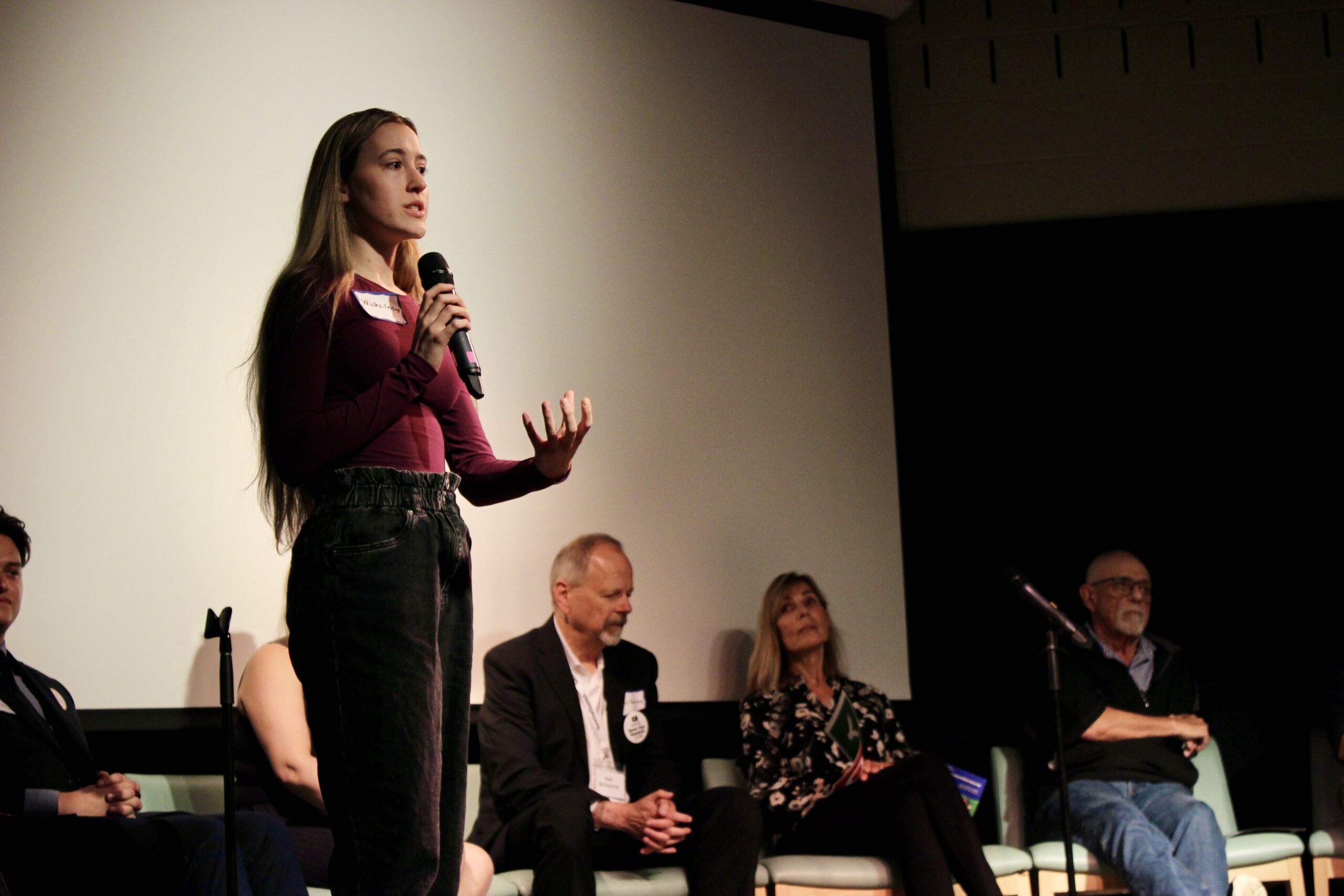
At the beginning of the meeting, a student senator opened with a flurry of motions, requesting a formal vote on approving the agenda (adoption of the agenda is normally not determined by formal vote), requesting that the meeting be recorded and made public due to the significant time until the next Senate meeting (October 2026), and called for Senate to formally vote (by way of secret ballot) on whether Senate has the ability to challenge the ruling of the chair.
The senator was seeking to challenge the chair’s decision not to record the meeting.
Senate’s ability to challenge the chair was a point of contention in the April 10 meeting.
The University Secretary said this was not submitted to the Senate Committee on Agenda and Governance (SCAG) to be included in the agenda and thus could not be voted on. Senate then approved the agenda, with the student senator requesting their objection be recorded in the session’s minutes.
Approval of the minutes was also contested, with the student senator requesting an interaction between a senator and an invited speaker where the speaker told the senator they “had [their] time to speak” be recorded in the minutes. The student senator said this was out of order, as rules and procedures state the Chair determines speaking rights. The student senator also asked the Chair to state whether this comment was out of order.
Dr. Thomas, the chair, said she could not make a determination in the moment but the matter would be taken up in a future SCAG meeting. The senator who was told they “had [their] time to speak” said they would like this to be dropped, and received applause from several individuals in attendance. Another senator said they raised a point of order about the comment at the last meeting and said they believed it was dealt with then.
The student senator said they would rescind their request to amend the minutes but asked that this discussion be included. As such the minutes were not approved and have not yet been made available online.
Consent agenda
A number of items were grouped under a consent agenda at the beginning of the meeting, meaning they were addressed simultaneously and did not receive discussion. These items included:
- The Campus Planning Committee’s Semi-annual Report to Senate on Campus Development
- The Office of the Ombudsperson’s 2025 Ombudsperson Report – January to December 2025
- The Annual Report on UVic-approved Research Centres
- The 2025 Policy Annual Report
- The list of 2025/2026 Emeriti
- The results of the 2026/2027 Senate Elections
And the 2025–2026 annual reports from Senate committees on:
- Appeals
- Learning and Teaching
- Libraries
- Planning
- University Budget
Following the consent agenda, a student senator acknowledged a recent meeting with Saanich Council regarding the 510-bed student housing project that the B.C. government announced funding for in October, but said it was “re-pacing” in February following the announcement of the provincial budget.
Council voted on May 4 to write to the province, requesting they reinstate funding for the development, and also approved the development variance permit for the building.
Changes to the Academic Integrity Policy
The main item on the agenda for many were the proposed changes to the Academic Integrity Policy, which had been brought before Senate the month prior. Senate voted in April not to approve the changes, but to instead send it back to committee for further work. Recaps of that discussion can be found here and on BlueSky.
In anticipation of the vote, one student senator made public statements criticizing aspects of the policy. The lead directors of the UVSS Board of Directors also published a statement expressing concerns.
Discussion of the policy opened with a speech by Dr. Danu Anthony Stinson, a professor of psychology at UVic who also serves as chair of the Senate Committee on Academic Standards (SCAS) — the committee responsible for the policy. In the speech, Stinson sought to address some of the concerns raised, including that the policy had been brought back to Senate too soon.
Stinson said the previous discussion of the policy “did not go well” and explained the changes she said had been made since the April 10 meeting, including removing sections relating to intellectual property, which some saw as putting students with certain CAL accommodations at risk, clarity relating to “multiple submissions” violations, and an “explicit” prohibition on the use AI detection tools when evaluating possible violations.
Stinson said her main motivation in bringing the policy back is “supporting and championing students rights” and said she believes that the main benefit of the policy is to students.
Stinson also addressed an accusation the Martlet reported on, that SCAS had skirted procedural deadlines to bring the policy back before Senate so soon. Stinson said in her presentation that the “only reason” SCAS brought the policy back so soon was so that the policy could be put in place for September 2026, rather than potentially having to wait another year before implementing it.
“I feel like that’s a worse outcome,” she said.
Following Stinson, Dr. Yasmine Kandil, chair of the Department of Theatre — who also chairs the SCAS subcommittee responsible for the policy — gave a presentation, outlining the criticisms of the existing policy they had heard during the four years since the subcommittee was struck, and explained the intent behind aspects of the policy.
Following Kandil’s presentation, Stinson moved that Senate approve the proposed revisions to the Policy on Academic Integrity in the academic calendars, effective September 2026, and discussion was opened to senators.
A faculty senator said the way penalties are described in different sections of the policy is inconsistent, with the section on penalties stating certain violations “should” result in a given violation, whereas the section dealing with instructor’s responsibilities providing multiple options for penalties.
This concern seemed to confuse respondents and after some discussion, the senator said they had made their point, but a motion was not introduced to amend the policy to clear up any language causing confusion.
Another senator said faculty training on this policy should be made more robust to ensure it is not applied inconsistently, and suggested data collection be implemented so any patterns of inconsistent penalization could be identified.
Kandil thanked the senator for their feedback and said these things could be addressed during the implementation stage.
Further discussion from faculty surrounded if having instructors be the decision-making party for first violations would necessarily introduce variability in how penalties were applied, and also expressed concern that putting more of the workload on instructors may discourage, rather than encourage, reporting of suspected violations.
“I’m concerned about what the implications of this will be for academic integrity,” they said.
Kandil said that they’ve heard this concern before, and that there will be more work at the beginning, but the aim is to, through remediation, students will have learned enough about academic integrity after first year or second year.
She said that cases of high workload due to much larger class sizes should be raised with the academic integrity advisor attached to the instructor’s unit, and Stinson said that uncertainty with the current policy already creates large workload issues for instructors, leading to instructors choosing not to report.
Stinson acknowledged an increased initial effort, but said the policy aims to reduce “individualized” effort for instructors through standardization.
Stinson urged Senate to evaluate the policy compared to the existing one, rather than an idealized policy that may exist in the future.
Several faculty senators expressed support for the policy, stating that it is “not perfect” but is an improvement on existing policy.
Student senators expressed similar concerns to those outlined online; one asked when it is “okay to break” materials deadlines for Senate committee meetings, stating that the deadline for the last SCAS meeting on April 20 was April 3 and materials relating to the policy were introduced April 16 — mere days before SCAS was set to meet.
Stinson said the dates primarily serve to allow herself and the associate university secretary enough time to review external materials. As the Academic Integrity Policy was coming from “in house,” Stinson said they were able to evaluate things in a more timely manner. The senator requested the Agenda and Governance committee clarify when deadlines can be broken for extenuating circumstances.
A student senator asked for an explicit reference that UVic’s position statement on artificial intelligence be included in the policy. They raised this concern regarding references to “university-approved software” in the policy, as they said any unit of the university can approve software.
Stinson said that approval of AI software — what the senator was concerned about — would have to pass through 4 committees prior to approval, and that because this policy explicitly bans “AI software,” the policy would need to be amended before any such tool could be approved.
Stinson said there is no plan to approve certain AI software via a “back door-ing” method, and said such a thing wouldn’t be possible under the policy.
A student senator began to acknowledge having “the pleasure” of meeting with two members of the subcommittee and a senator earlier in the day. They began to say they admire the hard work and dedication taken by the subcommittee to create this policy, but Stinson interjected, asking if reiterating points from a conversation that took place earlier in the day was “the best use of our time” and said it feels “non productive … and frankly kind of hostile.”
The student senator then expressed concern about the burden of proof, and a request was passed to the Associate University Secretary to read the relevant passage that explicitly prohibits AI detector tools, and the passage that was read was “Instructors must not use unapproved university software, including detection tools or analytical systems … only university-approved tools and processes may be used in the application of this policy.”
The senator asked if this then meant AI detection software could be used if it became university approved, and Stinson said yes, but the policy would have to be revised through multiple committee meetings in order for that to happen.
“It is a hypothetical possibility…. But at present it is not allowed, and there’s no horizon that I’m aware of where the university is going to be changing that, either.”
After being granted permission to resume speaking by Dr. Thomas, the student senator then shared their concerns about limiting appeals to “procedural” matters and suggested that the UVSS had not been sufficiently consulted during this policy — having been consulted only once four years ago.
The student senator moved to send the policy back to SCAS for further work, including additional consultation with groups like the UVSS, advocacy groups, and faculty, and called for the vote to be held by secret ballot.
Stinson said that very little could be accomplished at UVic if consultation had to be repeated every time personnel on Senate or the UVSS change, and urged Senate not to send the policy back to SCAS, but rather to vote on it as that would provide the committee “more useful” information.
Stinson also urged that the conversation be allowed to continue. A point of order was raised to second the motion, then Dr. Thomas determined that vote would be held once the speaker’s list for this issue had concluded, to allow those that had raised their hands to get the chance to speak. A point of order was raised asking if rules permitted this.
A student senator asked how instructors and teaching assistants would be trained to detect AI in the absence of having AI detection tools at their disposal. Stinson responded that faculty would be instructed to ask students pointed questions about their knowledge of a subject as part of the evidence-gathering process.
A student senators asked again about “unapproved software,” stating they didn’t see much information about the details on this in the policy, and further expressed concern about the “balance of probabilities” standard of proof being adopted, and suggested a “beyond reasonable doubt” standard would be more appropriate.
Kandil responded that the academic integrity policy is not the policy that governs software approval, and this would be found elsewhere.
Another senator said in Canada, only balance of probabilities and beyond reasonable doubt are the two standards of proof used. The standard of beyond a reasonable doubt, used in criminal proceedings, they said, is not used in civil or administrative contexts in Canada and would be improper to use here.
A senator suggested this policy should not have taken four years to write, and suggested it was already out of date. “Policy needs to reflect the current situation at UVic,” they said.
The senator said SCAS should take six months to get the policy “not perfect, but right” so it could be introduced next year.
They also said the five-step escalating penalty structure was inadequate, suggesting that anyone who reaches five violations likely has many more that went unreported. The senator also highlighted an inconsistency in language between “1st minor violation” and “2nd or more serious violation” in the penalty structure.
The senator said that they know colleagues are not reporting minor violations due to the hassle involved.
Stinson suggested this senator’s concern that it was not punitive enough is at odds with the student senators’ concerns about it being too punitive. This statement was also met by applause.
The senator then called for a point of order to respond, stating Dr. Stinson was not on the speaker’s list when she responded. Someone present in the meeting was heard to say “I’ve listened to him … far too many times.”
The senator said they are not at odds with the student senators and in fact share many of the same concerns.
Other senators expressed concern about harm being done to students under the current policy, and one said “balance of probabilities” is not a “coin toss” as some critics had likened it.
Two graduate student senators distanced themselves from the undergraduate student senators position and spoke in favour of the policy, with one stating they support the “balance of probabilities” standard and suggesting any attempt to make it stricter would be a “disservice” to people trying to catch students who cheat.
Having been on this item for one hour and 41 minutes, Dr. Thomas returned to the student senator’s motion to table the policy via secret ballot. During the discussion of these proceedings, a student senator was heard to state “point of order” multiple times but was not given an opportunity to state their point of order. Both the motion to vote by secret ballot and the motion to table the policy failed.
A majority of Senate then voted to approve the proposed revisions. A number of senators, both faculty and students, requested their votes be recorded in the minutes on both the vote to table and the vote to approve the proposed revisions.
Senate chambers were again filled with applause when Dr. Thomas announced the result of the vote.
One senator highlighted the near-unanimous undergraduate opposition, and asked a frank question of how Senate should move forward as one collective Senate in the implementation stage.
Other business
The rest of the motions on the agenda passed largely without controversy, save for the motion that Senate approve, and recommend that the Board of Governors also approve, the revised Procedures for the Appointment and Review of the Associate Dean of Social Sciences (GV0645) and the motion to approve, and recommendation that the Board of Governors also approve, the attached updated Resolution of Non-Academic Misconduct Allegations Policy (AC1300).
One senator was concerned that approving these would set a precedent for appointment and review procedures for Associate Deans in other faculties. The aspect in question was extending the period not ratified to twelve months from six.
Some senators mentioned that a precedent for twelve months exists in other faculties, and another said that 12 months might fit better if tied to an academic year.
The motion was eventually carried with several senators opposed. One student senator requested that their vote be recorded.
On the Resolution of Non-Academic Misconduct Allegations Policy (AC1300), one student senator said they had heard concern from students concerns about what happens if a student is removed from campus for a period of up to 30 days — the student senator said they could not find language in policy pointing to the university’s duty of care to the student in such a scenario.
The senator asked if the university would be required to provide them with off-campus housing and food, if the student has paid for a meal plan. The senator also said removal from one’s courses for a period of 30 days would be difficult if not impossible to recover from academically.
An invited speaker responded that “provisional interim measures” are not intended to remove a student from campus, but rather to ensure an investigation can happen without interaction between students. It emerged during discussion that it might happen in the event the student lived in dorms, but the decision would be made under the residence contract with Residence Services.
The student senator asked for confirmation that no student would be removed from campus while being investigated, or would at least be provided alternative housing if removed from on-campus housing. The speaker responded that regardless of the applicable policy, the university will always provide safe and suitable housing alternatives and access to food in the event of removal from campus housing.
The motion to approve the updated policy carried.
The following items all passed with significantly less or no discussion.
- Approval of the revisions to the Undergraduate Academic Concessions Regulation in the Undergraduate Academic Calendar, effective September 2026
- Approval of the changes to the admission requirements for the Master of Nursing in the graduate academic calendar, effective September 2026.
- Approval of the changes to the admission requirements for the Master of Science, Clinical Psychology in the graduate academic calendar, effective September 2026.
- Approval of the calendar entry for the Graduation Dean’s List for undergraduate degree-seeking students in all faculties except Law in the undergraduate academic calendar, effective May 2026.
- Approval of the changes to the Graduation Standing language for the Faculty of Science in the undergraduate academic calendar, effective May 2026.
- Approval of the appointment of Evan Maher to the 2025/2026 Senate Committee on Learning and Teaching as the UVSS representative, effective immediately and ending June 30, 2026.
- Approval of the appointments to the 2026/2027 Senate standing committees for the terms indicated in documents attached to the agenda.
- Approval of, and recommendation to the Board of Governors that it also approve, the list of new and revised awards set out in the agenda.
- Approval of the curriculum changes recommended by the Faculties and the Senate Committee on Curriculum for inclusion in the September 2026 academic calendars.
- Authorizing the Chair of the Senate Committee on Curriculum to make small changes and additions that would otherwise unnecessarily delay the submission of items for the academic calendar.
- Opening and approving one nomination for election to the Senate Committee on Agenda and Governance.