
“We’re going to figure it out. We’d like it to be easier, but try and stop us”
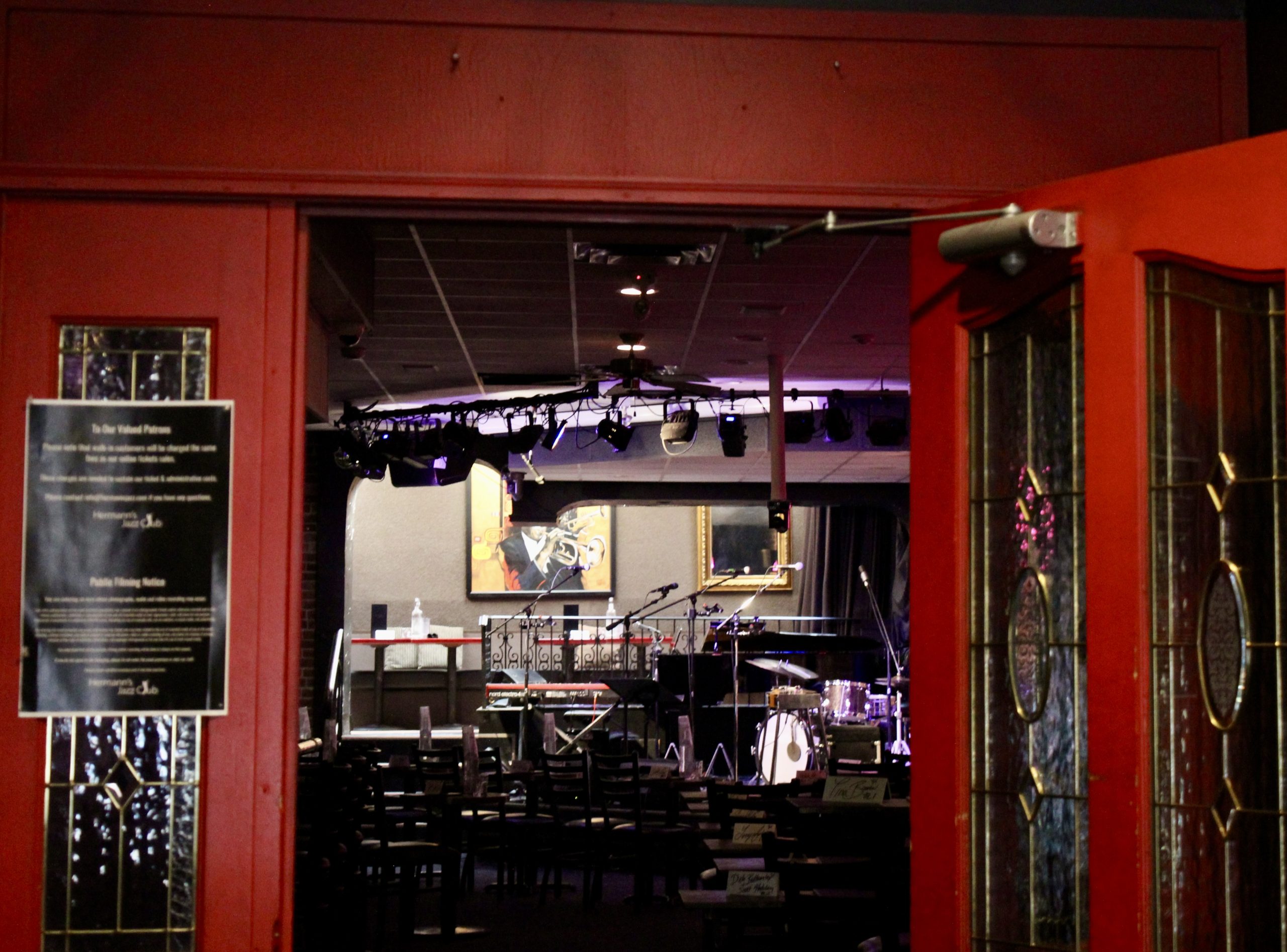
Photo by Sabina Mendoza-Brown.
On Mar 16, The Other Guise Theatre Society announced that they may have to sell their venue at 716 Johnston St after an investor had to back out of the project back in June 2023.
“While we’ve raised a lot of money, we have not raised enough to complete the buy out,” said Matthew Payne, artistic and executive director of the Other Guise Theatre Society, in a media release.
“If we don’t find the majority of the $1.25-million we owe by the end of March this year, we anticipate a for sale sign going up.”
On Mar 21, Times Colonist reported that Hermann’s Jazz Club would be closing. Al Smith, chair of the Arts on View Society — which operates both Hermann’s Jazz Club and the View Street Social lounge — told Times Colonist the society was in a “financial hole” of $300 000, with an estimated $150 000 needed for maintenance.
For the arts community, these two announcements mark the latest in a growing list of disappearing venues and arts spaces.
“We’ve seen this trend in Victoria in the last several years of many venues disappearing, and you know the lists are very long,” said Payne. “Everything from Carlton Club over in Esquimalt to the Copper Owl and Logan’s Pub, the Victoria Events Centre (VEC), the list just keeps growing. It’s pretty challenging, the scene right now in Victoria.”
Claire Pollock, who performs under the stage name Miss Rita St. Clair, and is the founder and director of Pandora’s Box Cabaret, has also felt the squeeze of fewer venues in Victoria. Pollock teaches comedy and burlesque dancing, and has struggled to find a dance studio for her classes, which frequently reach 90 per cent capacity.
Any established dance studio is usually booked solid during the week, Pollock said, and may have a few non-prime hours on weekends or during the middle of the day.
“When I was first looking at doing classes back in the autumn, the only time slot I could get was 8:45–11:00 p.m., and I was like ‘No one’s going to sign up.’” said Pollock. With the shrinking of venues, there are fewer and fewer places for Pollock to rent for their lessons.
They did eventually find a space at the satellite Theatre SKAM studio that she also teaches comedy at. But she had to personally install mirrors to make it suitable for a dance studio, which then has the benefit of making the space usable for other companies teaching dance searching for space.
Sean Guist, the artistic director of Intrepid Theatre, spoke on the difficulty of finding funding to run a venue. “At Intrepid Theatre, we receive operational funding and that goes towards our programming and festivals, but we don’t receive grants to run venues. Operating these venues comes out of our operating budget, and that’s why we need rental programs and we need these things to keep them afloat.”
Guist explained that when applying for funding, it is possible to write into the grant that money is needed to rent a venue — but if those venues don’t exist, who are you renting from?
“Where’s the funding for operating venues? And I think that’s the critical piece to look at. There’s money to get, you can write an infrastructure grant to replace some equipment, which is really helpful and really amazing, but it’s really about the venue operations.”
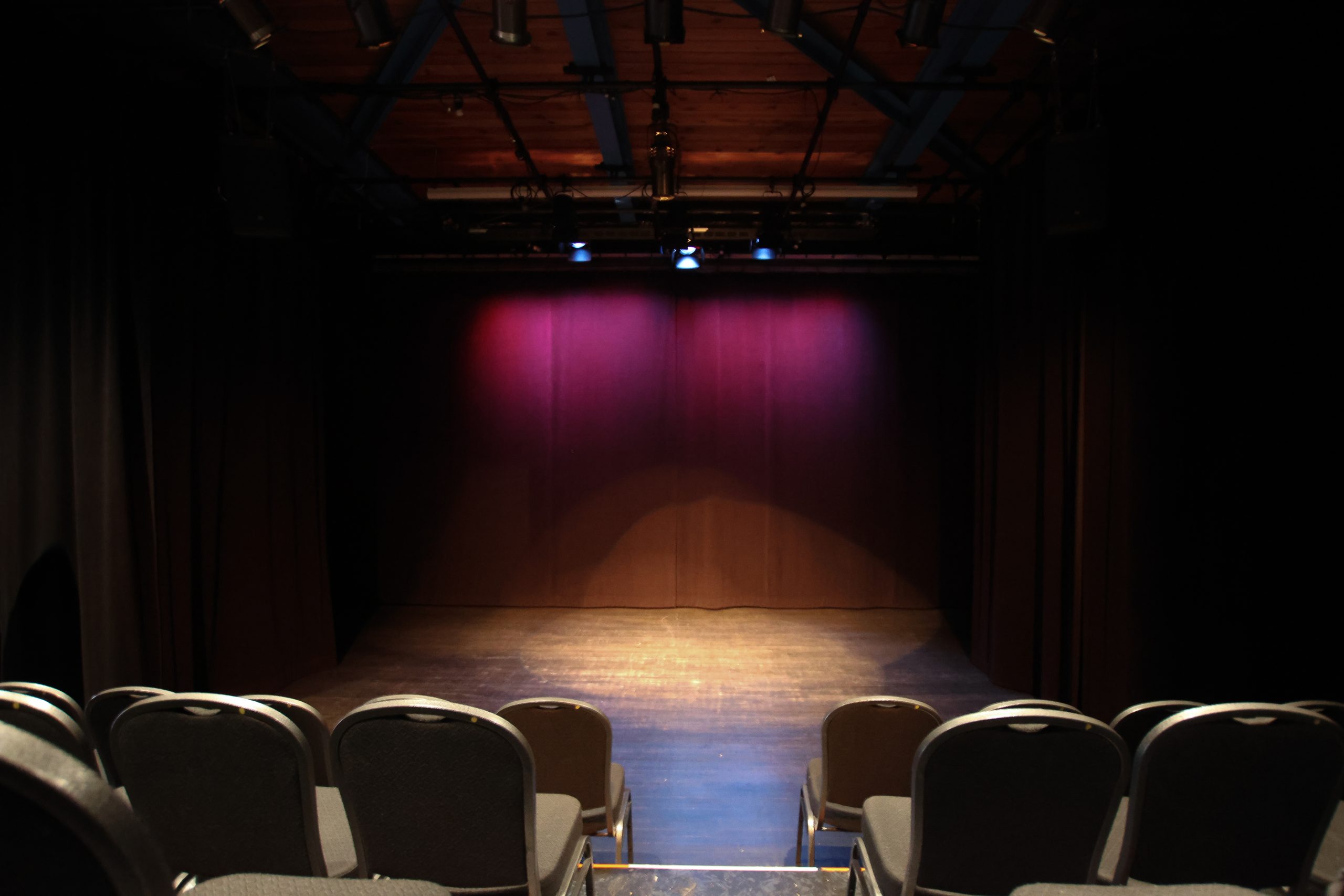
Photo via Intrepid Theatre.
On Aug. 7 of last year, Intrepid Theatre announced that they would be ending their shared lease with the Victoria Conservatory of Music, resulting in the closure of the Metro Studio. Guist said that the reasons for the end of the partnership was the “increased costs, increased insurance, increased rent, increased operating [costs] — things just got more expensive.”
But despite all of this, people are finding ways to fill in these gaps.
The Victoria Fringe, produced by Intrepid Theatre, regularly books unconventional venues during the festival, which includes residential houses, parks, coffeeshops, and downtown alleyways.
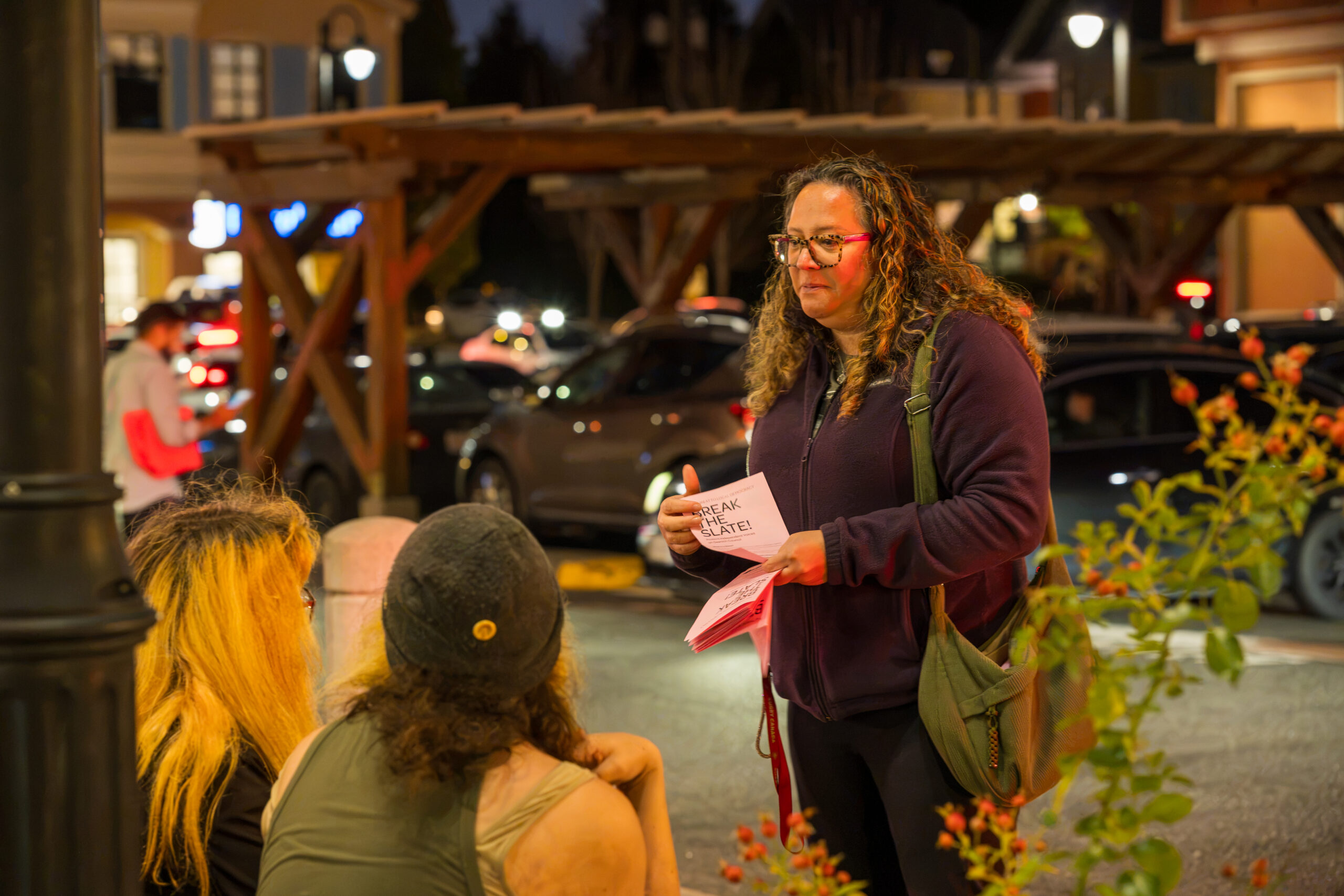
Sarah Smith, also known as Ruby Peepshow, is a sex worker’s rights advocate and member of Cheesecake Burlesque Revue, and runs what she calls the “world’s first travelling” peep show.
Ruby’s Pop Up Peepshow, run out of a mobile trailer, was inspired by a venue in Amsterdam, and was brought to life thanks to a COVID-era grant, as it was COVID safe with the performer being located inside the trailer.
Smith uses the Peep Show as both a promotional tool and a social justice project.
“Knowing that the word ‘peepshow’ is causing some caution . . . we had to make a little carnival to go along with it in order to make people understand that this is playful, this isn’t fully nude, it’s burlesque in a box, it’s intimate, it’s radical joy, it’s playful.” Smith said. “You’re not going to be seeing some sort of weird porn in there or something like that.”
Alongside the trailer, Smith has included a vintage popcorn machine, games and prizes and a kaleidoscope photo booth.
But unconventional venues are not a miracle cure to Victoria’s shrinking art spaces.
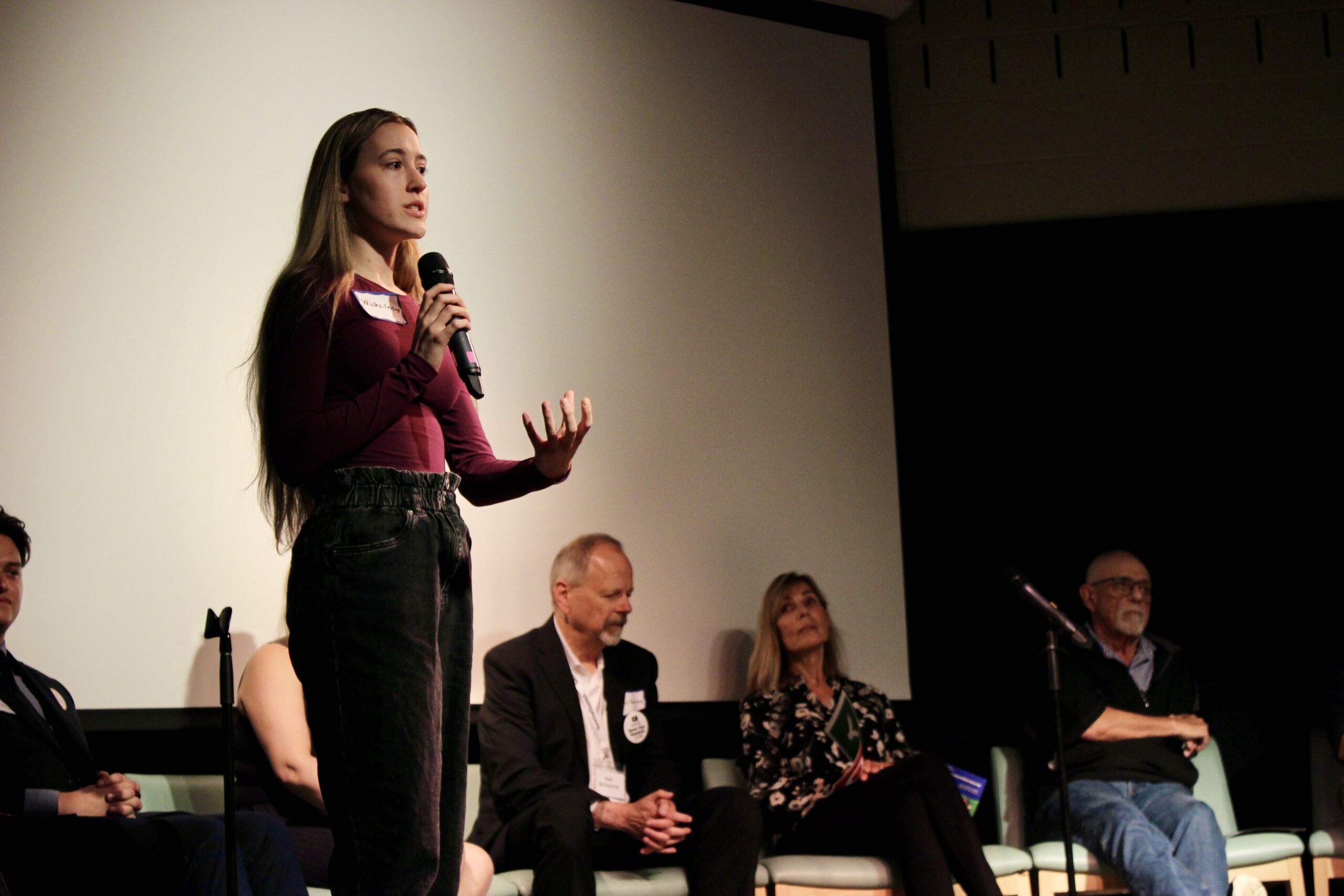
“Art, proximity in general, it offers so many profound forces.” says Jordan Dack, founder and executive director of Victoria’s coworking club of creators, Haus of Owl.
Dack explained that proximity to artists helps to build local cultural identity. “Throughout history, for distinct cultural identities, like the Portland grunge scene, French New Wave, Harlem Renaissance, they didn’t come from artists creating in isolation, they came from artists creating in community [with each other],” said Dack.
“When we get together and create, in relation to our location, it becomes something new and different and not just a globalized, homogenized representation of where our capitalist society is at right now.”
A stable art hub offers more than space. It offers community.
When Haus of Owl hosted their first photography club, Dack found eight people who “I don’t think knew each other very well before [that] night, they’re all in there with their cameras out, trying different angles, music’s playing, they’re talking about their own techniques and sharing their techniques.”
Dack knew some of these photographers, describing them as “big deal pro photographers” who despite being busy, still came out to share and hang out with other photographers.
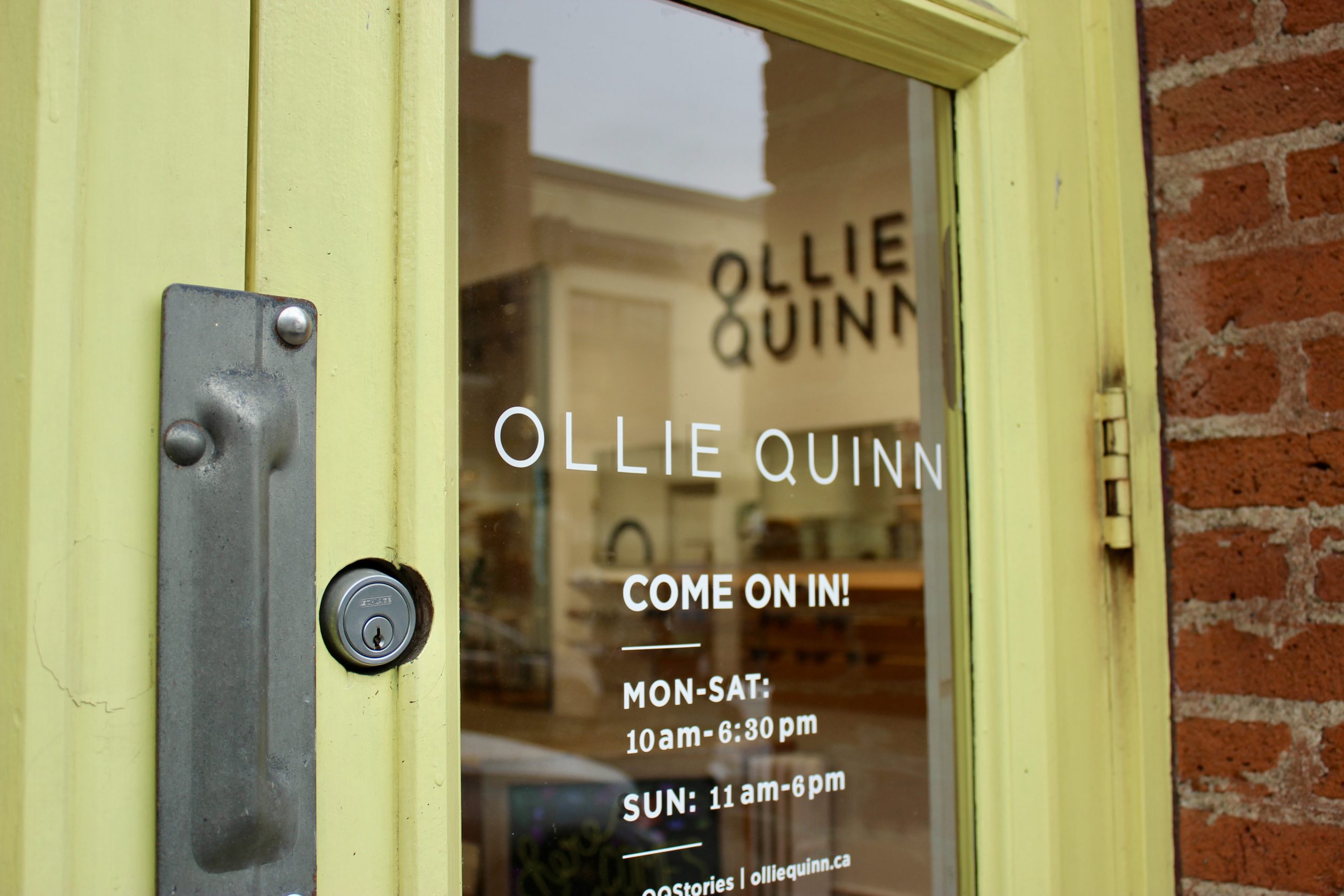
Photo by Sabina Mendoza-Brown.
Emmi Redlin manages Ollie Quinn in Market Square, a glasses store, which also doubles as an arts venue for “virtually” no cost to rent. Redlin said that people “absolutely love” the Ollie Quinn space and that a low or no cost space is “vital.”
Redlin said that an essential part of Ollie Quinn is its accessibility. “[It’s] so nice to have a space where it’s accessible in that sense, and it’s really important, and we need it.”
“Not everything can [work in an unconventional venue], so we often have black box studios, or opera houses, or dance studios, I think you really need both,” said Guist, Intrepid’s artistic director. “You need third spaces as well as equipped spaces…. I think that’s how you have a healthy artist centred community.”
Working to make art venues more affordable is the Arts & Community Infrastructure Foundation (ACI), who is working to “[address] what could be titled a crisis right now for arts and community spaces.
“What we’re looking to do is create a regional, locally created, nonprofit landlord model, essentially trying to stop the bleed, stop [the] displacement of arts and community spaces, and this constant gentrification that’s happening without any consideration [for] the cultural well being of the community,” said Erin Lannan, one of ACI’s co-founders.
Established December 2024, ACI was born out of grief of the VEC’s closure in October 2024.
“I was really upset when the VEC closed, like so many of us, and it was like, ‘okay, what’s going on here, what is the common denominator to prevent it from happening again?’” said Jenn Neilson, the other co-founder of ACI.
“What I saw over and over again in interactions is that the people who would have had the power to prevent those closures, were the for-profit landlords,” said Neilson. The idea of ACI was to take for-profit landlords out of the equation to prevent art venue closures from happening in the future.
ACI plans to obtain funding, primarily through grants, to buy buildings and lease them to arts and community organizations to ensure that their landlord is someone sympathetic.
“It’s a nonprofit, it’s a charity. And that means we can do things like apply for grant funding ourselves to pay for improvements to the building rather than the tenants having to do that.”
Lannan said ACI has a “legal mandate as a charity to steward that land and to use the building in the best interest of the public.”
Their mandate also includes providing “education to the arts and community leaders around things related to infrastructure,” including teaching people about triple net leases, running seminars on the differences between commercial and residential real estate.
It also includes providing property management support for their tenants offering services such as pest control and repairs, treating their tenants less like commercial tenants and more like residential ones.
The idea behind ACI is to bring people who are interested in the longevity of the arts and culture community together and help them share tools,resources and information.
“I’ve definitely heard of organizations recently who have been looking for space and who have … spent time and energy and money pursuing options that other folks in the community have previously explored, and would have been able to tell them that they weren’t really viable.” said Neilson.
Matt Dell, Victoria City Councillor and arts advocate, supports the goals of the ACI, and thinks that Victoria needs to look into creating a coworking space in the city for artists.
Dell also mentioned that the Victoria Foundation is also looking into funding its own building. “So there’s a lot of alignment in that direction,” he said.
As Lannan described, part of the reason finding spaces for the arts is a challenge is the large variety of needs. “Theatre spaces need black boxes and different audiences, and potential pull out auditorium seating. And then you have visual arts that have big open spaces that they can exhibit their work, and then you need the studios and all the work spaces that are in between.” said Lannan.
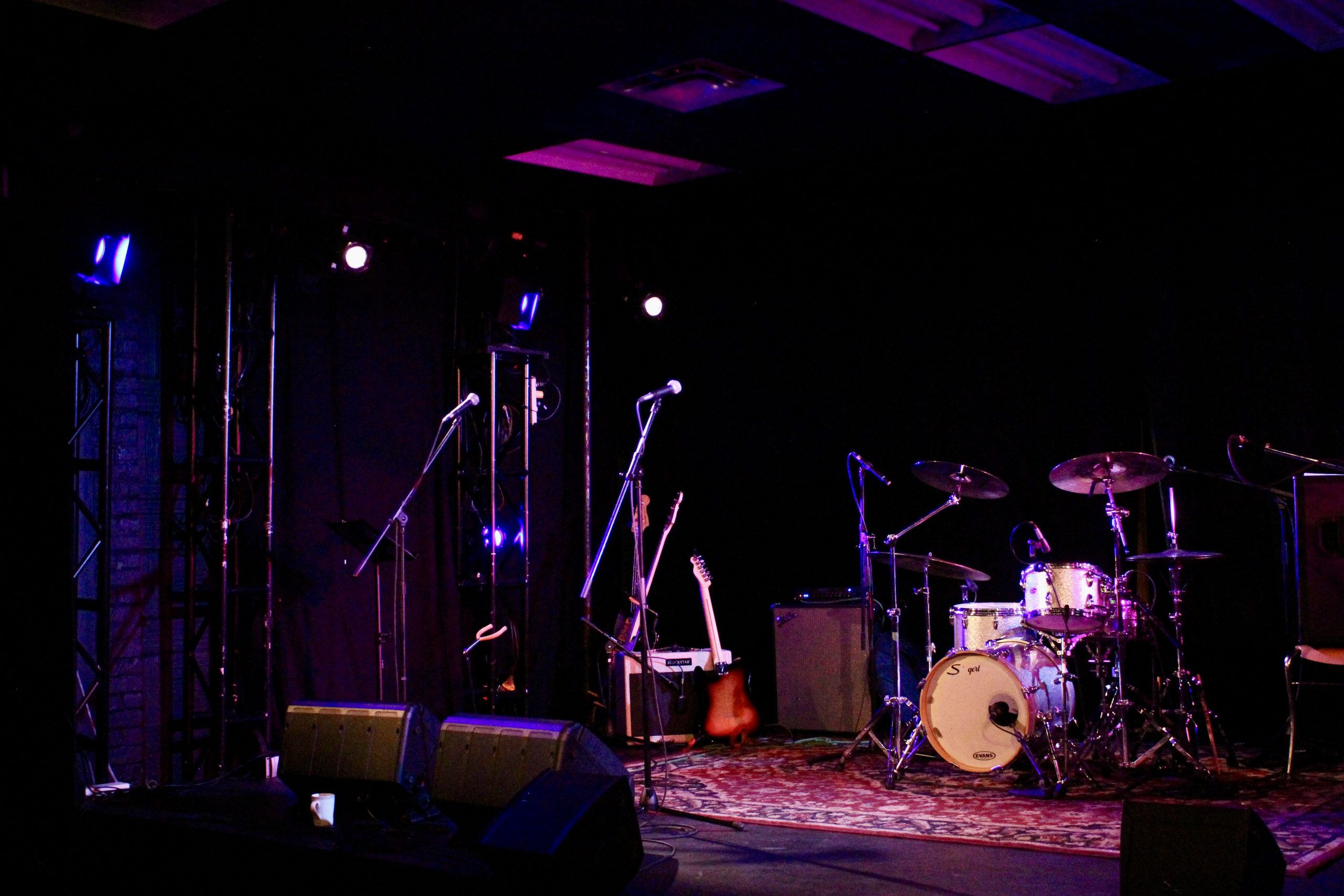
Photo by Sabina Mendoza-Brown.
Dell mentioned that musicians face further barriers in finding space, as soundproofing is often a requirement for their rehearsals.
ACI is currently undergoing its feasibility study, which is required to get down payments for potential venues. Dell thinks that moving forward, a partnership between the city, ACI, the Victoria Foundation, and something like the Vancouver Island Visual Arts Society (VIVAS), could work together to identify properties that would fit their needs.
While the initial news of two more venues potentially vanishing from Victoria is distressing, this isn’t the first time, nor will it probably be the last. Guist described it as “a flux of venue crises that happen when [faced with] financial constraints, zoning, [etc].”
Dack, Haus of Owl’s founder and executive director, nevertheless finds reasons to be hopeful of Victoria’s art scene.
“There’s so much movement in the city towards building a sustainable art scene right now, and I’ve been in many cities in part of many art scenes and haven’t seen the kind of motivation and organization I am seeing in Victoria at this moment in time.” said Dack.
On Mar 25, a fundraiser was launched to raise the money needed to pay off Hermann’s Jazz Club’s costs — the target amount in pledges was exceeded well before the Apr 26 deadline, two days later.
“And so that’s what makes me hopeful. A group of organized, creative individuals is a pretty powerful thing, and once you get artists organized, anything can happen,” Dack said.