
Advocates urge province to reverse major policy changes and improve access to gender-affirming care
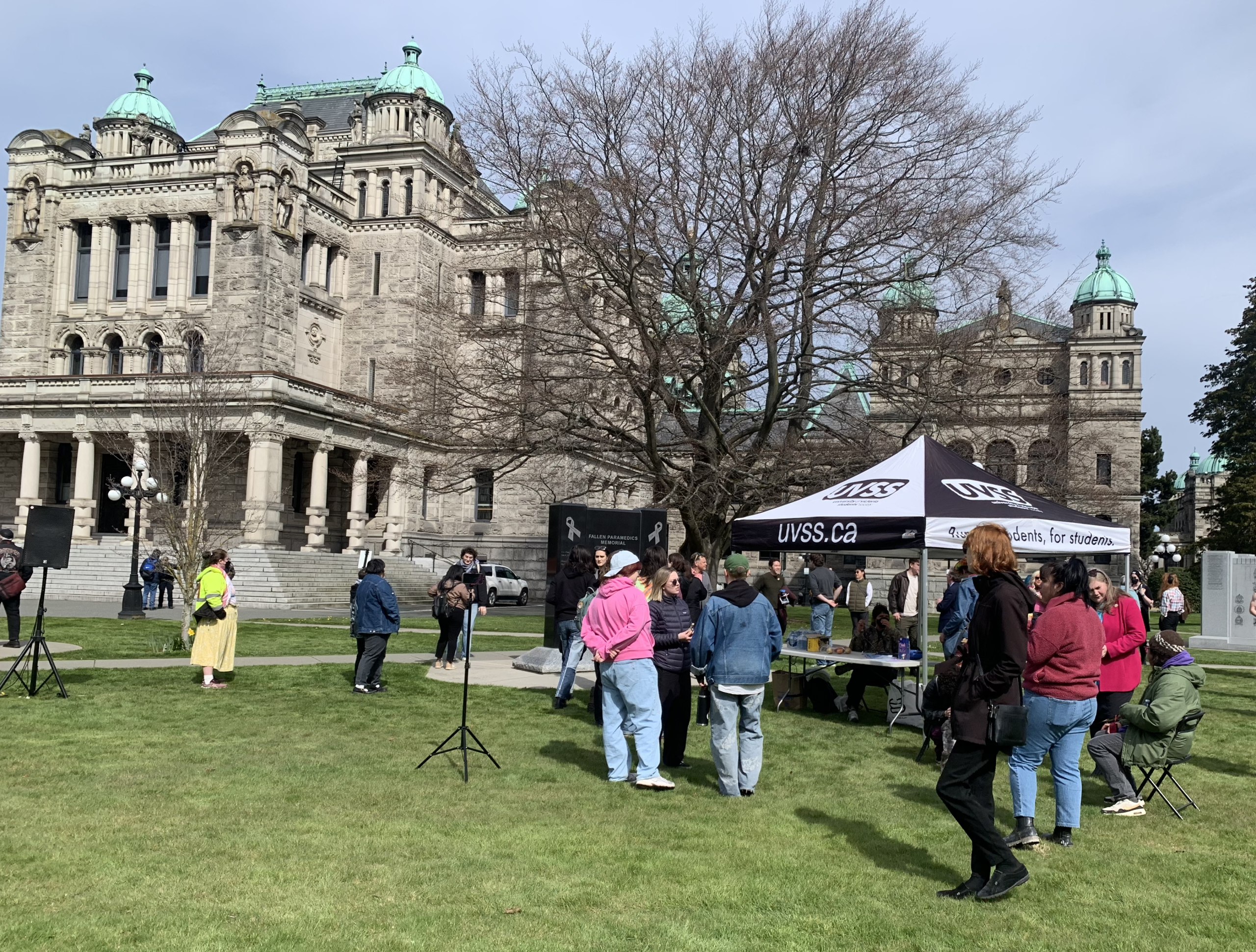 Photo by Rae Dawson.
Members of Victoria’s queer community gathered on the lawn of the B.C. legislature on Tuesday, March 31, for a Trans Day of Visibility Rally. The rally blended celebration with protest, calling on the provincial government to reverse recent policy changes and improve access to gender-affirming care.
The rally was organized by groups including the Society for Advocacy for Gender-Affirming Healthcare (SAGAH), the UVSS Pride Collective, and other local organizations.
While Trans Day of Visibility is often an avenue of recognition, this year many attendees and speakers emphasized that visibility without meaningful policy change is not enough.
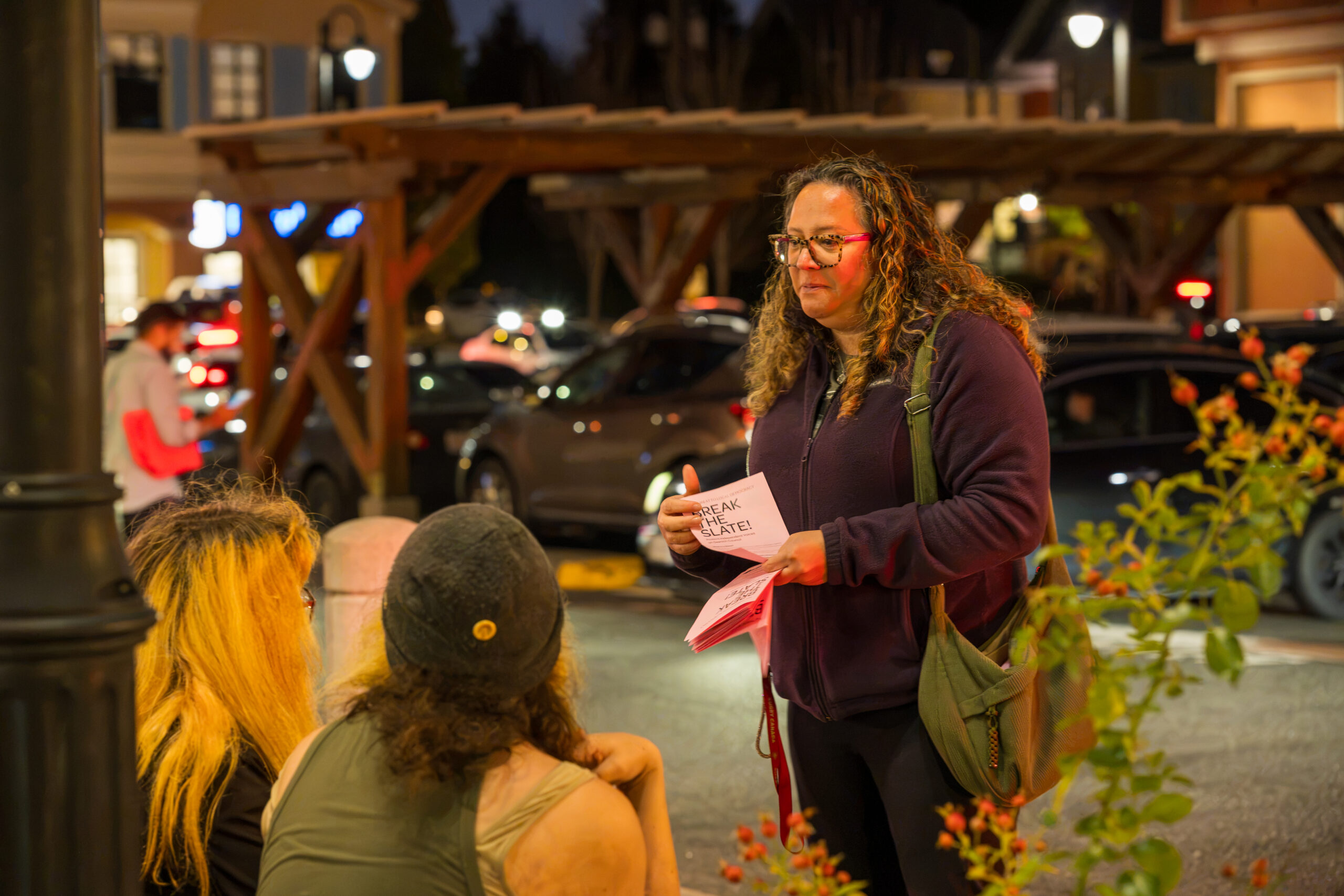
Liya Tensae, UVSS Pride Collective office coordinator, said that the day carries “a lot of good sentiment,” but stressed that sentiment must be backed by action.
“One of our pride collective members … often will say visibility without protection is just vulnerability,” Tensae said. “You can’t do a performative day of visibility without proper actions and protection to follow it up.”
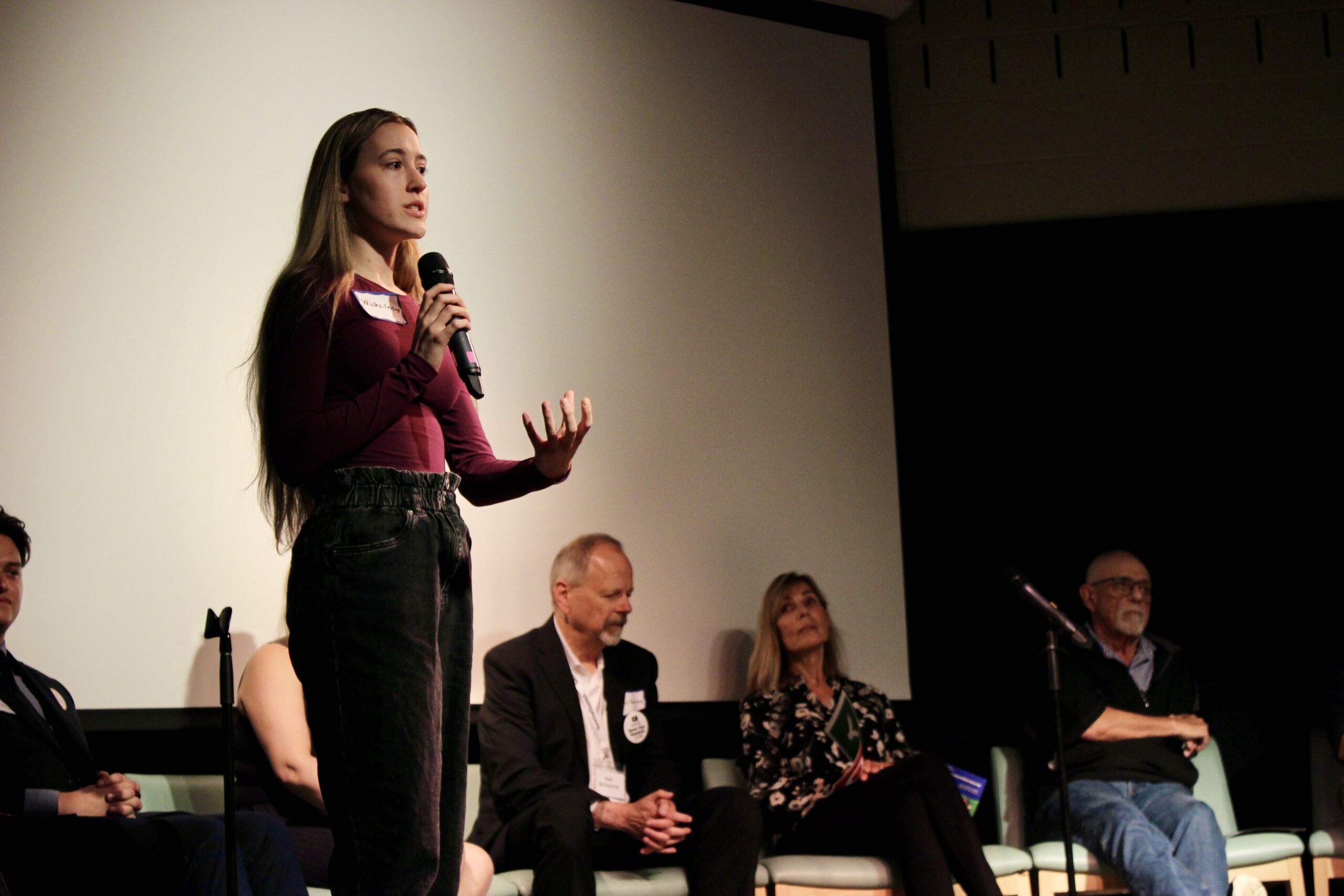
That same sentiment was shared by Sarah Buchanan, a former UVSS events director, who spoke at the rally. “I have a bit of a complicated relationship to this holiday. Honestly it feels a lot of the time like visibility without protection is just vulnerability. It’s just risk,” Buchanan said. “Frankly, I’m feeling sick of being made visible without having my needs prioritized, having my care prioritized.”
Much of the rally focused on two key provincial policy issues: recent changes to B.C.’s Name Amendment Act and the phased closure of the Montreal surgical pathway for gender-affirming care.
Under the Name Amendment Act (No. 2), all applicants 12 years of age and older must undergo a criminal record check, and individuals convicted of certain offenses are barred from legally changing their names. The province has claimed that these changes are intended to “prevent dangerous persons convicted of serious Criminal Code offences from legally changing their names,” and to ensure accountability.
However, Tensae argues that the policy creates additional barriers for marginalized groups. The changes affect not only trans individuals but also “Indigenous peoples trying to reclaim their names. It impacts survivors fleeing violence. It impacts people who have been overly criminalized.”
Concerns about health care access were equally as present, drawing strong concern from speakers. On April 1, the province stopped offering MSP-funded lower surgeries at GrS Montreal, ending routine access to the long-standing clinic pathway. Advocates warned this could significantly increase wait times by concentrating demand into a single system, and will put people’s lives at risk.
Tensae said that current wait times in Vancouver already reach four to five years, and could extend even further. “That is going to increase wait times in Vancouver, possibly up to six years, seven years, ten years,” she said. She also noted the serious mental health impacts that delays in accessing gender-affirming care can have.
“I have friends who have been on that wait list for four years, and it’s looking like they’ll be on it for a fifth. That is unacceptable,” Buchanan said.
“The closing of the Montreal pathway just puts a lot more people at risk and clearly shows the trans community that their health concerns and needs are maybe not being taken so seriously by the government,” Tensae said.
Buchanan also pointed to the timing of the rally, noting that elected officials were attending a FIFA-related event on the front lawn of the legislature. “They care more about their personal celebrity than they do about our needs, our healthcare, our lives,” she said.
“We were in the back [of the legislature] and David Eby and some other government officials were up front at the FIFA event. We did have a few MLAs joining us out back as well. But I think that is just quite telling,” Tensae said.
B.C. Green Party leader Emily Lowan, who attended the rally, argued that trans communities are often used as scapegoats in larger economic and political narratives. “Trans rights, trans people have been under attack for a very, very long time,” Lowan said.
“Politicians keep our fingers pointed at one another, so that working people avoid looking up at those who truly oppress them.”
Green Party MLAs in attendance also emphasized the importance of visibility and rights protections. Jeremy Valeriote, MLA for West Vancouver-Sea to Sky, said that “since people have been on this land we call British Columbia, there have been transgender people … and so it’s really important to stand up for people’s rights and recognize that everybody deserves those rights.”
Rob Botterell, MLA for Saanich North and the Islands, added that he wants to ensure that trans people are “treated with dignity and respect for everything they do.”
Despite the political tensions, the rally was also marked by a strong sense of community. Tensae described the experience as empowering.
“This is my community…. These are the people that will come together and we’re here to uplift each other,” she said. “We will not be ignored.”