
Sandor wants to tackle housing affordability, community support needs, and improved transit

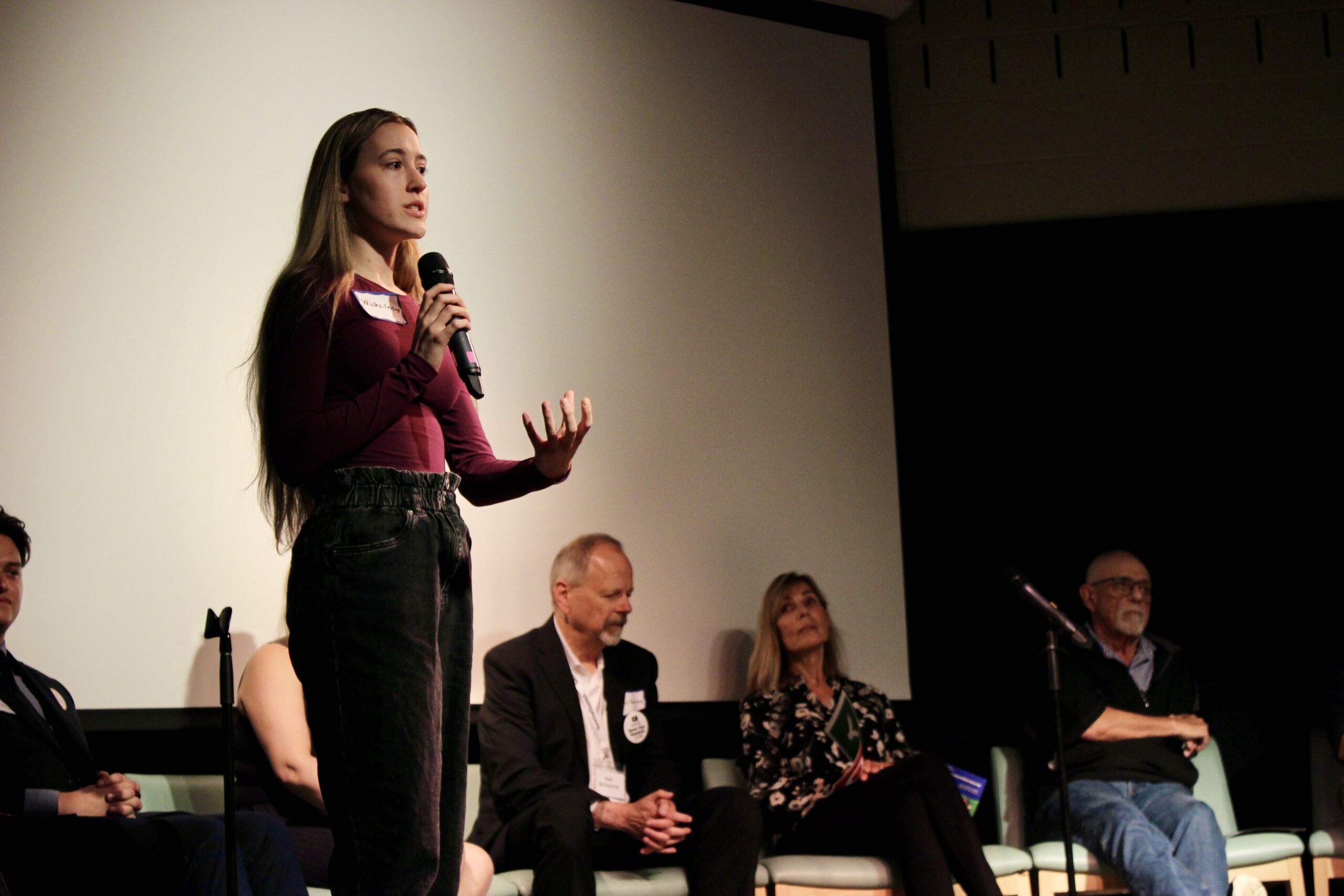
Photo courtesy of Jack Sandor.
Jack Sandor, a 27-year-old electrician, is running for a Victoria city council seat. Sandor is the former vice president of Homes for Living — a registered B.C. non-profit society that advocates for affordable housing across the province — and a current board member of BetterTransitYYJ, a grassroots group advocating for improved public transit in Greater Victoria.
Sandor first became involved in politics while volunteering for Homes for Living, which he says taught him about the housing challenges in Victoria and how to face them. He says addressing the housing crisis, which he calls “the everything crisis,” is one of his main priorities.
“I feel like in the West, we’re seeing a very large shift to the right, towards authoritarianism, towards fascism. And I think a large part of the reason that’s happening is that the fundamental promise that used to be true for most people, at least in Canada, was that if you got a decent job and you worked hard and you were not [reckless] with your money you’d be able to afford the white picket fence, two kids, that modest but comfortable and stable life … that promise has been fundamentally broken,” he said.
Although housing is largely in the province’s jurisdiction, Sandor believes the City of Victoria has a role to play. Sandor said the city does not have the financial means to solve the housing crisis itself, but he is advocating for streamlined bureaucratic processes, so when provincial funding for housing projects is provided, it is spent on building, rather than getting caught up in municipal red tape.
Sandor believes his experience as an electrician gives him a “unique insight” into how municipal policies could affect building processes. “[There are] complexities to the building process that I think you can only really intuitively understand if you’ve actually worked with it,” he said.
Sandor also hopes to improve transit, though he acknowledges that many of the challenges facing public transit lie outside of the jurisdiction of the City of Victoria.
“Most of the big bottlenecks that transit faces are actually outside of the borders of Victoria proper, places like McKenzie, [or] the entirety of Esquimalt. So Victoria is actually a little bit more limited than a lot of other places in the region in terms of what they can actually do,” he said.
Sandor believes in expanding the bus lane network in the city and implementing transit signal priority technology, which aims to reduce delays for large transit vehicles at intersections.
Sandor believes transit, housing, and infrastructure also largely affect the climate. “Housing and climate action are inextricably linked. You cannot have proper climate action without proper action on housing,” he said. According to Sandor, suburban sprawl results in clear-cutting trees as well as increased road paving, car use, and related greenhouse gas emissions.
Recently, the City of Victoria has seen discourse regarding policing and police budgets, with many opposing the Victoria Police Department’s request for more funding in 2026. Sandor, on his website, said: “police play an important role, and their work should be focused where it is most effective.”
Sandor told the Martlet that he believes police should only be used when necessary, and that mental health workers and crisis response teams should be utilized when police are not strictly needed. “Right now, we’re asking police to do traffic enforcement, to solve violent crimes, to be social workers, to be mental health workers. All of these jobs on their own are pretty difficult. Doing them all at once is impossible.”
Sandor also believes in working proactively to prevent crime. “An ounce of prevention is worth a pound of cure,” he said. “Focusing on investing money in things that reduce the need for police, reduce the need for bylaw, reduce the need for crisis response teams, I think would go a really long way.”
One way of doing this, according to Sandor, is through funding programs like the Rent Bank, which provides financial assistance such as no-interest repayable loans to individuals at risk of eviction.
Sandor’s website also says he is committed to “good governance,” and wants to hold community listening sessions, push for reforms to make engaging with local government easier, and make council meetings more accessible by livestreaming them on platforms like YouTube.
Sandor is in the process of creating a full policy platform, but more details on his priorities can be found on his website.
Voting for the City of Victoria’s 2026 Municipal Election opens on Oct. 17, 2026. Canadian citizens 18 years of age and older who have been residents of B.C. for at least six months and are residents of Victoria are eligible to vote.